Pizza al Taglio: What It Is and How to Order It in Italy
Pizza al taglio is Rome's rectangular pizza sold by weight and cut with scissors. Here is what the name means, how it is priced and how to order it.
On this page
Pizza al taglio is Roman pizza baked in large rectangular metal pans, sold by weight and cut to the size you ask for, usually with scissors. The name means "by the cut", which describes the transaction rather than a recipe or a protected style. This guide covers what the base is like, how to order at the counter without holding up the queue, which Roman addresses are worth a detour and how to bake a pan at home.
Expect a light, crisp, bubbly base rather than a floppy Neapolitan centre, topped right to the edge with no raised rim. It is Rome's everyday street food, eaten standing or walking, and it rewards a little understanding of how the counter works.
What pizza al taglio means
Al taglio translates as "by the cut", and that is the whole idea: a tray-baked pizza is sliced to your requested size rather than sold as a whole round or a pre-portioned square. The phrase belongs to Rome, where this is standard street food found on street corners across the city.
There is no strict regulation defining the style, so a shop's version may be thin and crackling or noticeably taller and airier. Treat the name as a format, not a guarantee of a single texture or topping list.
Why it is sold by weight and cut with scissors
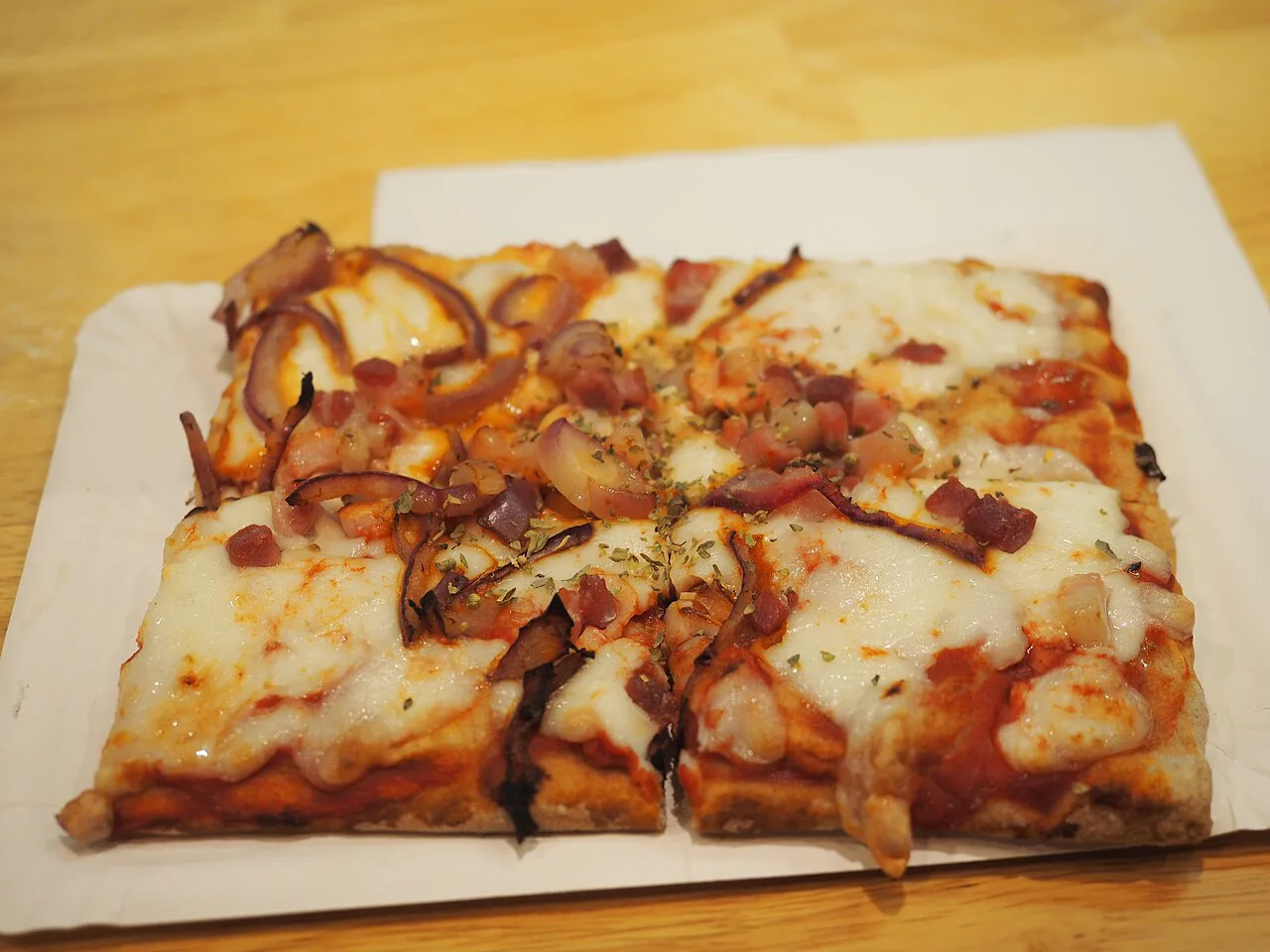
The pizza is baked in big rectangular trays and sold by weight, priced per 100g and cut to the customer's request. That is why you are asked how much you want rather than which size, and why a mixed selection is normal: a small piece of one topping and a larger piece of another makes a proper meal.
What does pizza al taglio mean? It means "pizza by the cut": a tray-baked pizza sliced to the size you ask for rather than sold whole. In Rome it is standard street food, sold by weight in rectangular pieces.
How much pizza al taglio should I order? Around 200g of one topping is a snack and about 400g of mixed slices makes a full lunch for one person. Point at the trays you want and say the weight, or indicate the length of strip with your hands.
Is pizza al taglio the same as Neapolitan pizza? No. Neapolitan pizza is a round, soft-centred pizza baked fast in a very hot oven and eaten at a table, while al taglio is baked in a rectangular pan, has a crisper base and is eaten on the move.
Scissors are the practical tool for this, since a crisp, high-hydration base shatters under a heavy blade. The server snips a strip, weighs it and hands it over in paper, which keeps the crust from steaming.
What the base is like: high-hydration dough in a rectangular metal pan
One widely used home method for the Roman tray style works at 80% hydration, meaning 400ml water to 500g flour, with a long cold rest of 18 to 24 hours and a final bake in a 40 by 30cm metal pan. A medium-strong Italian pizza flour with roughly 11 to 13% protein handles that much water and the long fermentation without collapsing.
The wet dough is stretched and folded rather than kneaded hard, which is why beginners can manage it. In the hot oven the water turns to steam and inflates the bubbles, giving the light, crisp result that distinguishes this from a dense bread base.
The metal pan matters as much as the dough: it conducts heat straight into the base and produces the crackling underside, and the pizza is topped all the way to the edge with no distinct rim. A little olive oil under the dough helps the browning.
How a counter visit works: point, choose, say how much, pay
Most shops work as a counter service: you point at the trays you want, the server cuts and weighs each piece, and you say how much you want in grams or simply indicate with your hands. Four hundred grams of mixed pizza is a generous lunch for one person, and two or three pieces of different toppings is the usual approach for a lighter bite.
Payment comes at the end of the selection, and the total follows the weight rather than the number of pieces. If the counter is busy, decide while you queue: the trays change through the day and hesitation at the front slows everyone behind you. Eat it straight away, while the base is still crisp.
Roman toppings and filled slices such as porchetta
Toppings run from a plain tomato marinara through cheeses and vegetables to richer combinations, and some additions go on after baking rather than before. At Antico Forno Roscioli near Campo de' Fiori, a historic address in the city, the slice to seek out is the one filled with porchetta, the herbed roast pork, or with chicken and peppers.
Filled slices are a different pleasure from an open-topped piece: the bread is split and stuffed, which makes them heavier and better suited to a proper lunch than a snack on the move. If you are pairing pizza with a fried starter, the Roman supplì, a rice croquette with a ragù centre, is the standard companion.
Elsewhere in the centre, Eroi della Pizza in the Trionfale neighbourhood is known for traditional, crunchy pizza, good for eating on a walk through the city. A mixed paper bag from two different shops on the same walk is a reasonable way to compare bases.
How it differs from Neapolitan pizza and pizza alla pala
Neapolitan pizza is a round, soft-crumbed pizza baked fast in a very hot oven, with a puffy rim and a wet centre, and it is eaten at a table with a knife and fork. Baked in a pan and sold by weight, al taglio is the opposite in format: crisp, portable and topped to the edge. The two styles share ingredients but not technique, and comparing them is not useful if you want the right thing for the moment.
Pizza alla pala is the long, oval paddle-baked relative, also sold by weight in some shops, with an airier crumb and often a thicker base than the tray version. Antico Forno Roscioli's pizza alla pala is described as low and crisp in exactly the right measure, which shows how blurry the boundary between the two can be in practice.
Pizza al taglio in Rome: the addresses to know
Sancho, in Prati on Via Giuseppe Gioachino Belli, began in Fiumicino and is known for a friable, crunchy tray pizza with both traditional and more inventive toppings. Bonci, on Via della Meloria, is credited with pushing long fermentation and high-quality flours into the mainstream, and its dough is noticeably taller and more open than the Roman norm. Ruver, on Viale Aventino, comes from a pizzaiolo trained under Bonci, pairing a thin base with original toppings.
These picks are the guide's own, drawn from a five-address roundup of Roman pizza al taglio. Use the street addresses when planning, and treat the tray in front of you as the real menu.
Making pizza al taglio at home: pan, dough and oven
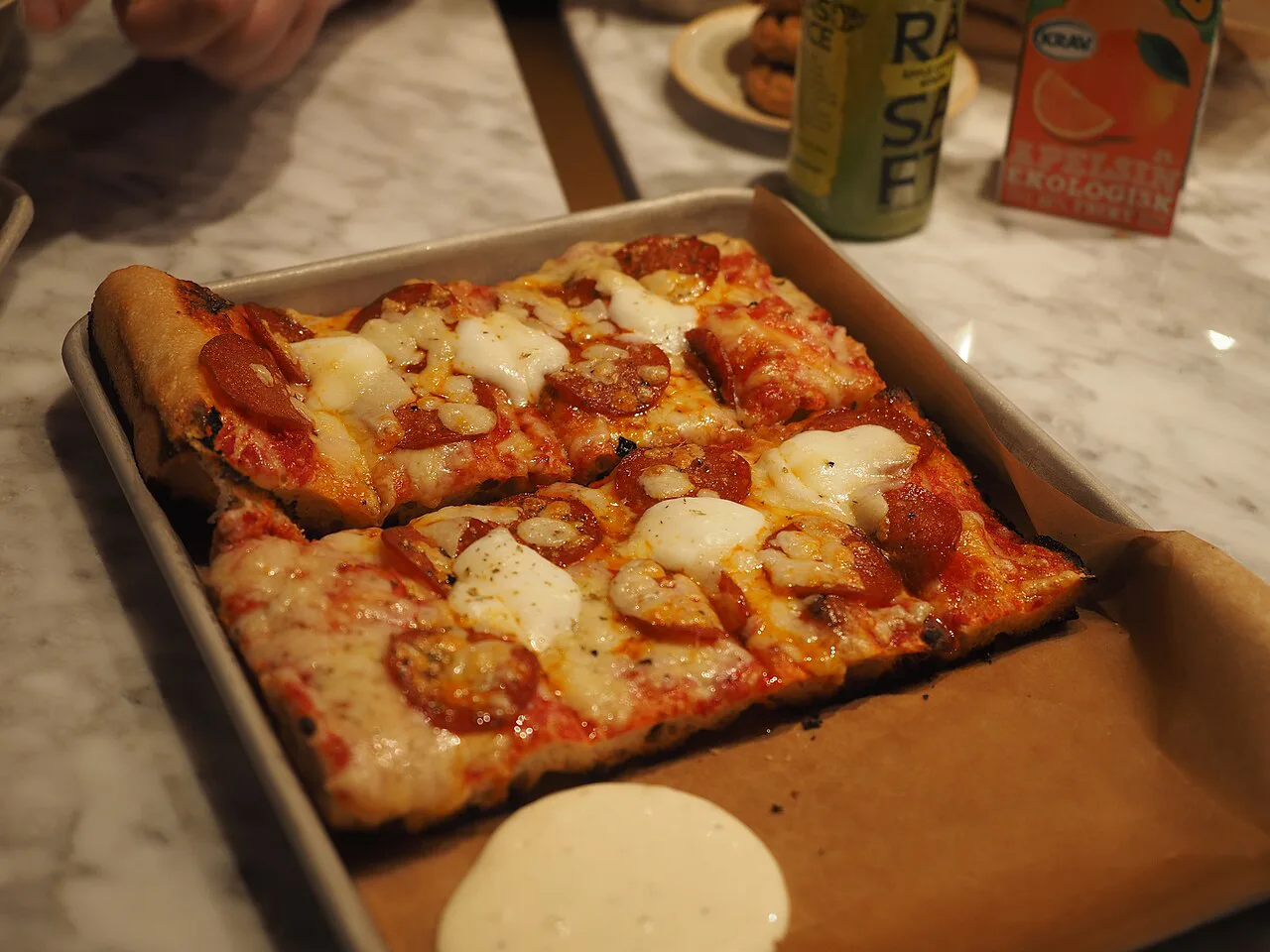
A domestic oven and a metal baking pan are enough, which makes this one of the easier Italian pizzas to reproduce. The home method described above mixes 500g flour, 400ml water, about 13g fine sea salt and 3g active dry yeast, stretches and folds instead of kneading, rests the dough in the fridge for 18 to 24 hours, brings it back to room temperature for around two hours, then bakes it in the oiled pan.
Two details make the difference: weigh the ingredients rather than using cups, because the yeast quantity is small and errors show, and give the dough the full cold rest for flavour and gluten development. A preheated pizza steel under the pan helps crisp the base if your oven runs cool.
For topping ideas, the classic combinations translate directly from round pizza: a Quattro Stagioni with ham, artichokes, mushrooms and olives, or a Quattro Formaggi for a richer tray, both work well cut into strips. If you want a change of shape, the same dough logic applied to a flat, dimpled bread gives you focaccia, finished with olive oil and flaky sea salt.
Which slice to order first
If you only buy one thing, make it a filled porchetta slice at Antico Forno Roscioli and a plain tomato piece from a second shop, so you taste both the topping and the base. Ask for roughly 200g of each, eat the crisp one first and let the filled slice be the sit-down part of lunch.
At home, start with the cold-rest method at 80% hydration in a metal pan and keep the toppings simple for the first bake. Once the base crisps reliably, the topping list is the easy part.
Frequently Asked Questions
What does pizza al taglio mean?
It means "pizza by the cut": a tray-baked pizza sliced to the size you ask for rather than sold whole. In Rome it is standard street food, sold by weight in rectangular pieces.
How much pizza al taglio should I order?
Around 200g of one topping is a snack and about 400g of mixed slices makes a full lunch for one person. Point at the trays you want and say the weight, or indicate the length of strip with your hands.
Is pizza al taglio the same as Neapolitan pizza?
No. Neapolitan pizza is a round, soft-centred pizza baked fast in a very hot oven and eaten at a table, while al taglio is baked in a rectangular pan, has a crisper base and is eaten on the move.
Sources
Notes for your next meal in Italy
Optional updates to our food guides.
You might also like

Continue reading
More guides you'll find useful