Focaccia: What It Is, How It's Made and How to Eat It
Focaccia is a dimpled Italian flatbread built on flour, olive oil and salt. Here is what sets it apart from other breads and how it is meant to be eaten.
On this page
Focaccia is a soft, open-textured Italian flatbread, pressed into a tray, dimpled with the fingertips, soaked in olive oil and finished with salt. Its crust is oily and crisp rather than hard, and its crumb is airy rather than close and chewy. This guide covers what goes into it, how the dimples and the oil shape the finished bread, which flour to buy, how it is eaten across Italy, and whether it suits a first-time baker.
What focaccia is
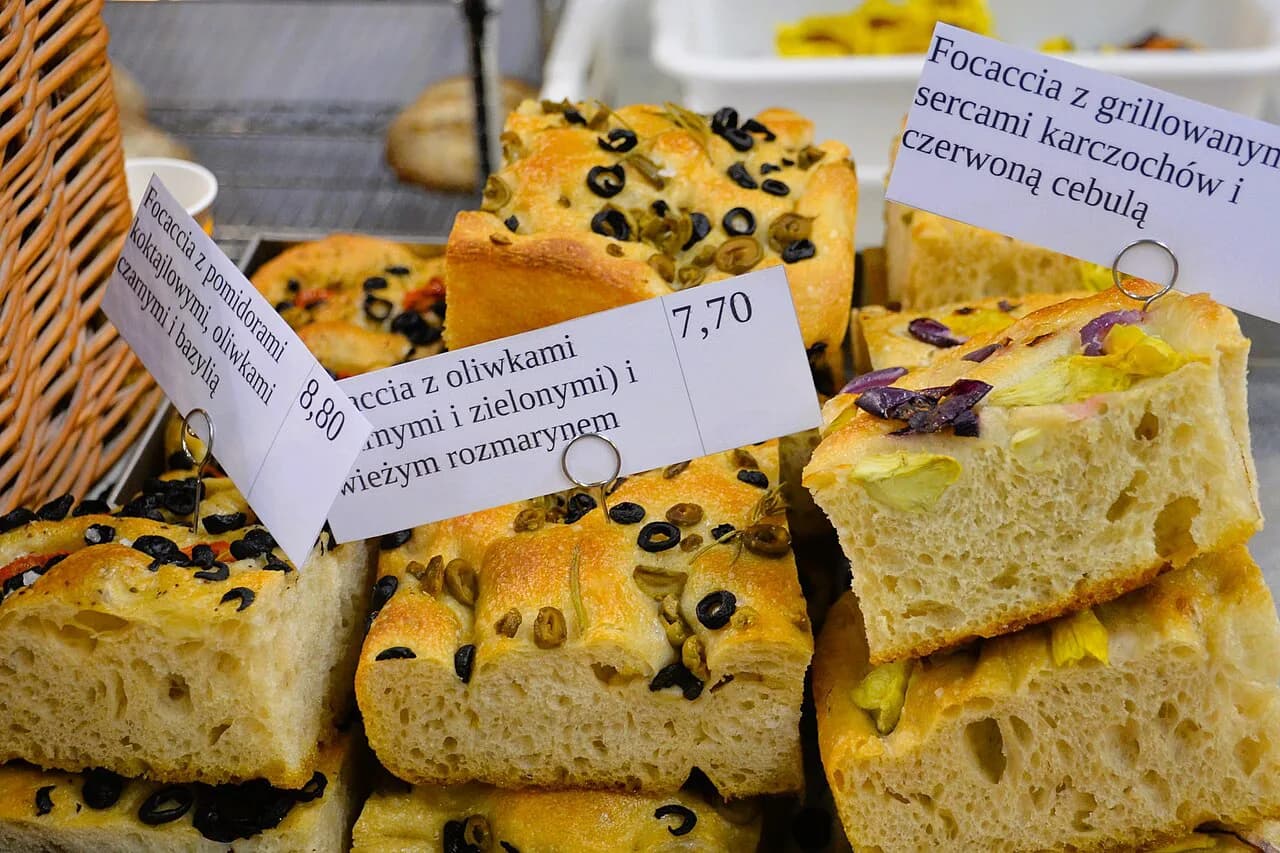
Focaccia is a flatbread raised with yeast and baked in a shallow tray, so it comes out as a thick slab rather than a loaf. Before baking, the dough is stretched into the tin and dimpled all over with the fingertips, then drizzled with olive oil and scattered with salt. Outside Italy the best-known version is the Ligurian or Genovese style: a fluffy, oil-rich slab that takes herbs and other toppings easily. A basic recipe uses flour, salt, dried yeast, warm water, rosemary, olive oil and flaky sea salt, mixed, proved twice and baked in a tray.
How focaccia differs from other Italian breads
The difference is in the crumb and the crust. A focaccia is proved in the tin and baked flat, so it develops a soft, open interior with large irregular holes and a shallow, olive-oil-crisped top and base. Free-standing Italian loaves get a tighter, chewier crumb and a firm shell, while focaccia stays pillowy and moist. It is also only lightly golden when underbaked, so a good one is taken to a deep golden brown with any large surface bubbles just catching at the edges.
Is focaccia a good bread for a beginner to bake? Yes, provided you are patient with a wet dough and give it time to prove. Instead of traditional kneading, use gentle stretch-and-folds during the first rise, then dimple and bake.
What makes focaccia different from ciabatta? Both are wet, open-textured breads, but focaccia is baked flat in an oiled tray and finished with olive oil and salt on the surface, while ciabatta is a free-standing loaf with a firm, floured crust. Focaccia's crumb is softer, its base crisper, and it is usually eaten as a slab rather than sliced from a loaf.
Can I serve focaccia as pizza? Yes. The dough can be treated as a pizza base, topped and baked flat, and the result is closer to a tray bake than a thin Roman slice.
The short ingredient list and what each one does
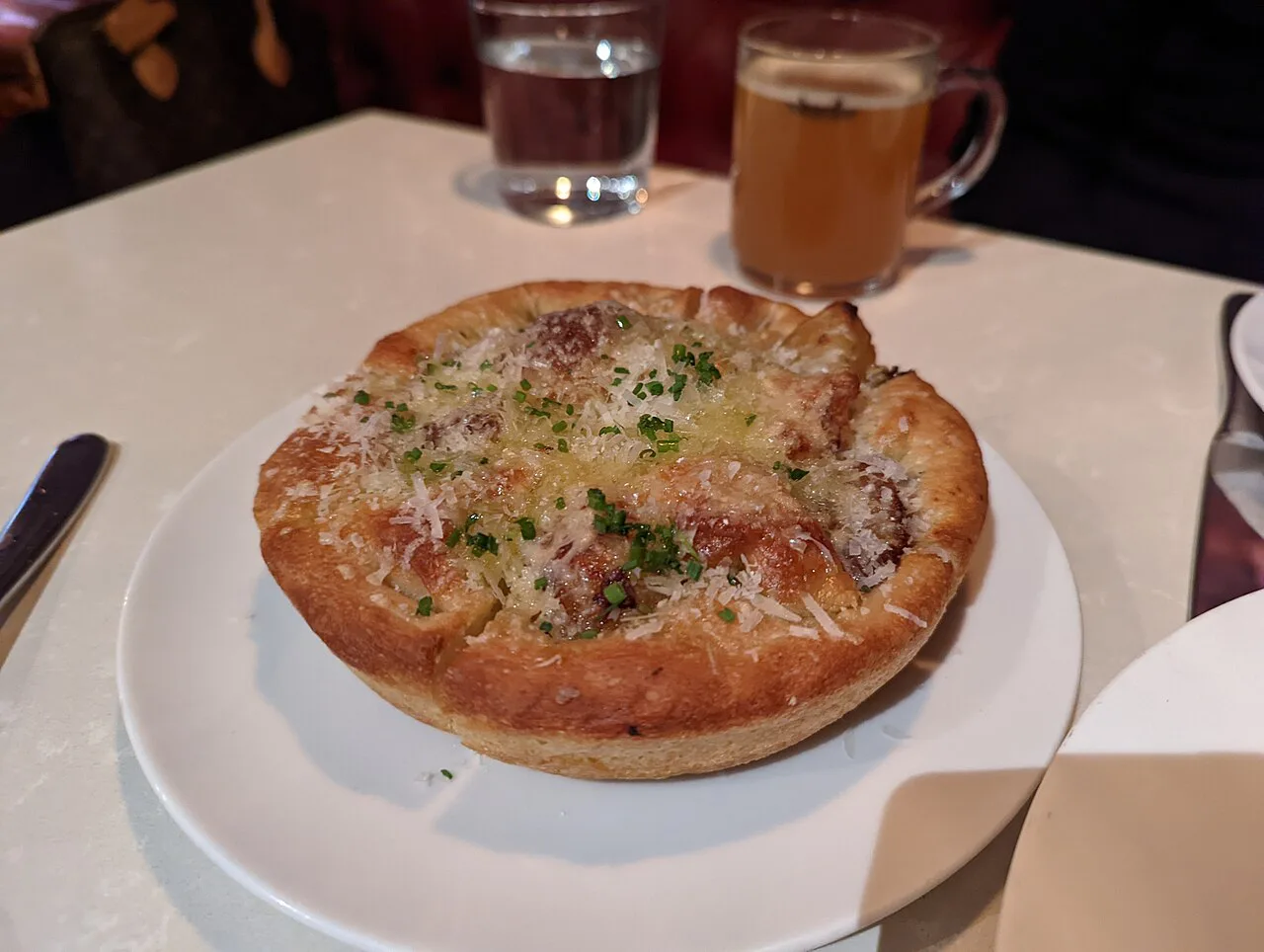
Flour, water, yeast and salt make the dough; olive oil and flaky salt finish it. Olive oil is not a garnish here: it goes into the dough, coats it during proving, covers the tin and is drizzled over the dimples, giving the crust its colour and crispness and keeping the bread from sticking. Salt seasons the crumb and, with the flaky salt scattered over the dimples, gives a plain focaccia its defining savoury note. Use a good olive oil, because its flavour is the dominant note in a plain focaccia.
Why the dimples matter
Dimpling is not decoration. Pressing the fingertips into the proved dough creates wells that hold pooled olive oil and flaky salt, and it gives the bread its craggy, uneven top, which browns faster than the flat areas and produces the mix of crisp and soft that defines a good focaccia. Do it gently and all over, straight before the final drizzle and the oven.
Which flour to use: 00, bread flour or plain
Italian 00 flour is finely milled and gives a light, airy crumb with a crisp crust, which is the closest match to a good bakery focaccia. Bread flour, higher in protein, makes a chewier, more structured loaf; plain flour works but produces a slightly denser result. The method stays the same whichever you use, though a thirstier flour may need a splash more water. For a UK kitchen, strong white bread flour is the dependable everyday choice and 00 is the step up when you want the classic texture.
How focaccia is meant to be eaten
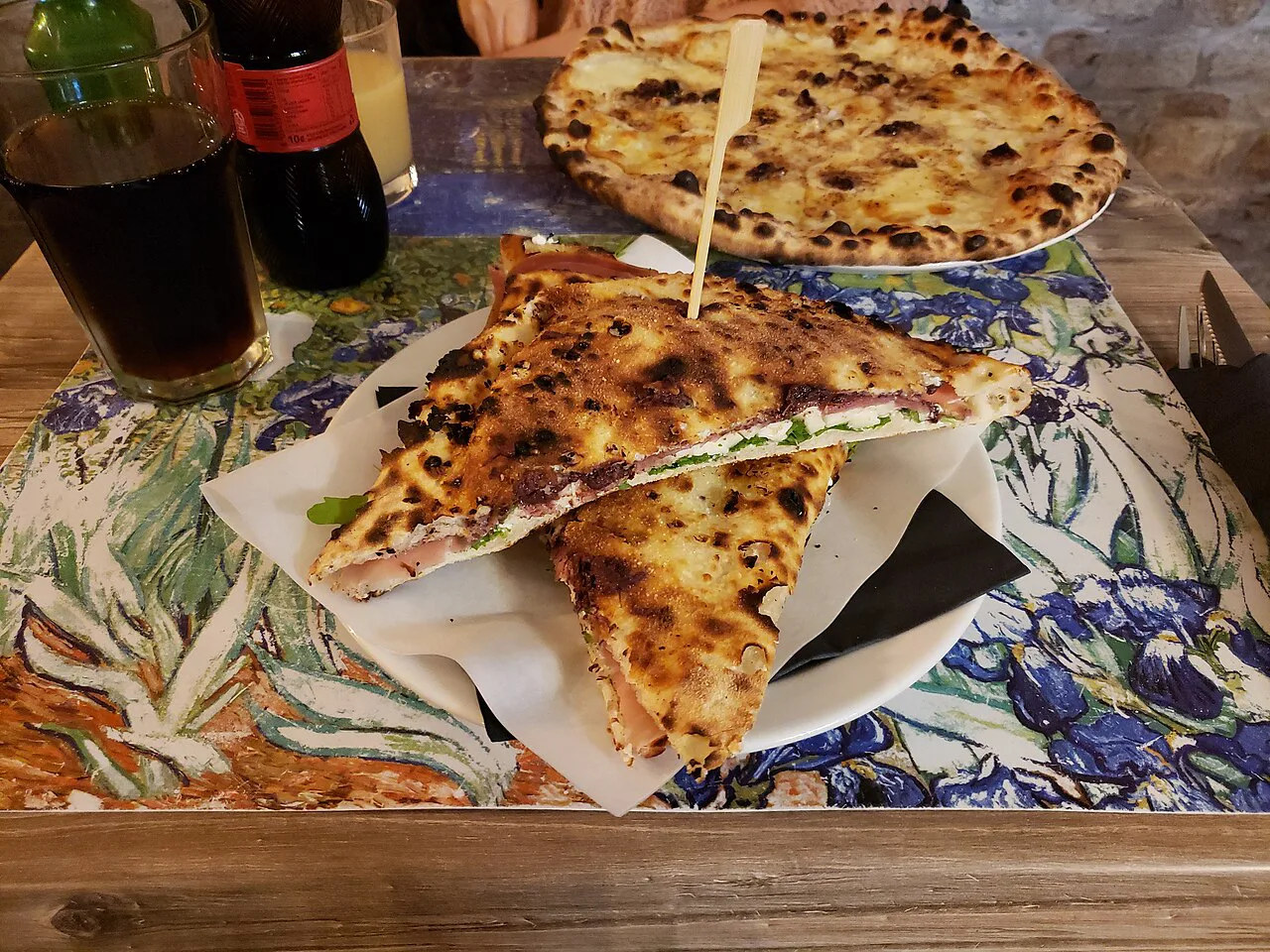
Focaccia works at three levels. Serve it as a side with pasta or a main course, or on its own with a bowl of olive oil for dipping. It also takes toppings directly on the dough and bakes as a flat, bread-based pizza, and a split slice makes an excellent sandwich with salami, rocket and cheese. If you want to branch out into the wider world of Italian pizza, our guide to Italian pizza explains the main styles and where each fits in a meal.
The most common toppings and how to add them
Keep the first bake simple: flaky sea salt, rosemary or oregano scattered over the oiled surface, nothing more. Once you trust the dough, olives, cherry tomatoes, basil or caramelised onions can go on top just before baking, and the same dough can be treated as a base for your favourite pizza toppings. For a more structured bake, look at our guide to Neapolitan pizza and the way a slow-proved, wet dough is stretched and topped.
Is focaccia a good bread for a beginner?
Yes, with one honest caveat: the dough is wet and slack, and it needs time and folding rather than traditional kneading. The forgiving route is a mix of gentle stretch-and-folds during the first prove instead of a long knead. A same-day version proves in a few hours in a warm spot; a slower overnight prove in the fridge builds more flavour and is more forgiving of timing, though it takes planning the day before. A wet dough is harder to handle than a stiff one, but it bakes into a better crumb.
Baking temperatures and times vary with the method and the tin. A standard tray bake is baked in a preheated oven at around 220°C, while a deeper dish version is usually run cooler and longer. Follow one method through rather than mixing two, and judge doneness by colour and the hollow sound when the base is tapped, not by the clock alone.
How to judge a good focaccia when you buy it
Look at the colour first. A good focaccia is deep golden brown on top and underneath, with the larger bubbles just catching, not pale blond. Check the crumb through the cut side for large, irregular holes and a moist, open interior, and press the surface gently: it should spring back rather than feel dense or greasy. Finally, smell it; a good bake should carry the sharp, grassy scent of olive oil.
Where to buy it in Italy is a matter of the bakery and the street. A baker's tray bake and a pizza slice shop are different propositions, and our guide to pizza al taglio explains the tray-baked, sold-by-weight style. If you are looking for a crisp, Roman-style base, the Roman pizza guide is the place to start.
How to store baked focaccia and what to do with leftovers
Focaccia is at its best on the day it is baked. After it has cooled, store it in a paper bag so it can breathe without drying out; sliced and tightly wrapped, it also freezes well. Reheat leftover slices in a warm oven to bring back the crisp base, or split them, fill with salami and cheese, and press them. Day-old focaccia also makes a useful base for a quick tray-baked lunch.
Should you bake or buy your focaccia?
If you want a first baking project, bake a plain tray focaccia with olive oil, flaky salt and rosemary: the wet dough is the challenge, and stretch-and-folds handle it. If you want a shortcut to the real thing, buy a deep golden loaf from a bakery, press it gently and smell the oil before you commit.
Frequently Asked Questions
Is focaccia a good bread for a beginner to bake?
Yes, provided you are patient with a wet dough and give it time to prove. Instead of traditional kneading, use gentle stretch-and-folds during the first rise, then dimple and bake. Start with a plain topping of olive oil and flaky salt before adding vegetables or cheese.
What makes focaccia different from ciabatta?
Both are wet, open-textured breads, but focaccia is baked flat in an oiled tray and finished with olive oil and salt on the surface, while ciabatta is a free-standing loaf with a firm, floured crust. Focaccia's crumb is softer, its base crisper, and it is usually eaten as a slab rather than sliced from a loaf.
Can I serve focaccia as pizza?
Yes. The dough can be treated as a pizza base, topped and baked flat, and the result is closer to a tray bake than a thin Roman slice. Keep the olive oil and salt, go light on wet toppings, and bake until the base is crisp before you add any soft cheese.
Sources
Notes for your next meal in Italy
Optional updates to our food guides.
You might also like

Continue reading
More guides you'll find useful