Cornetto: Italy's Breakfast Pastry Guide
A cornetto is Italy's breakfast pastry, close to a croissant but softer and sweeter. Here is what to order at the bar, the fillings to know and how to eat it.
On this page
A cornetto is Italy's breakfast pastry, a crescent of laminated dough that is softer, sweeter and more brioche-like than a French croissant. You buy it at a bar or pasticceria, usually standing at the counter with a coffee. This guide covers what goes into the dough, the fillings named on the glass case, and the words to use when you order.
It is the dough, not the shape, that separates a cornetto from a croissant, and knowing that helps you choose between a plain one and a stuffed one without pointing at the display.
What a cornetto is and how it differs from a French croissant
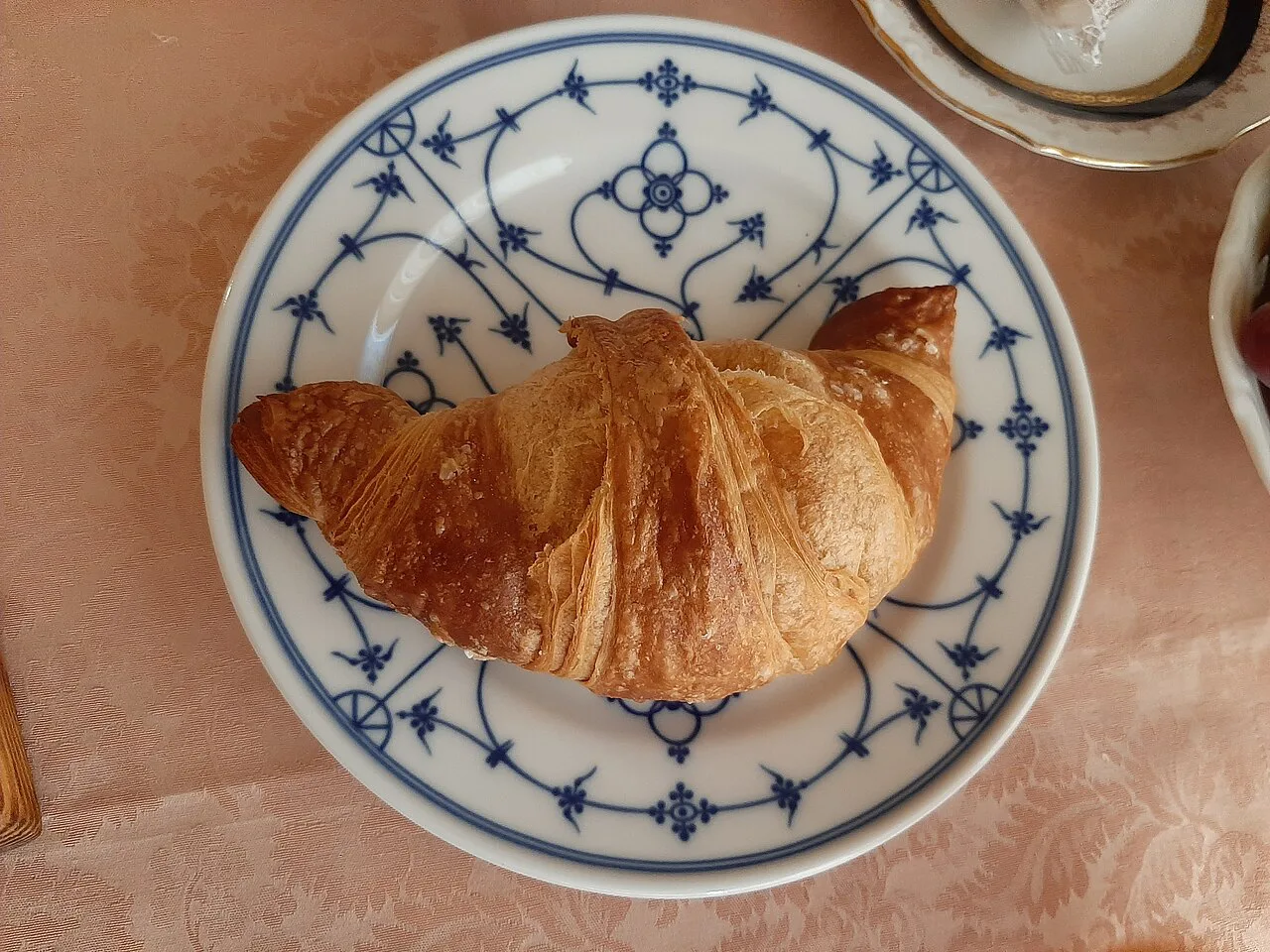
A cornetto is made from a laminated yeasted dough, rolled and folded with butter so it bakes into layers, then shaped into a crescent. It is the standard Italian morning pastry, eaten with coffee at a bar counter. The dough is enriched with sugar, eggs and butter, which is why it tears like soft bread rather than shattering like a crisp croissant.
Italian cornetti are very close to French croissants, and what sets them apart is mainly the eggs and vanilla in the dough, which soften the crumb inside while keeping a thin crust outside. That is why a cornetto feels more like a sweet brioche than a flaky croissant when you bite into it.
Size varies more than you might expect: some bars sell small cornetti that vanish in three bites, others turn out palm-sized ones. Neither is more authentic than the other. What stays constant is the laminated structure, the thing to look for when you are deciding whether a pastry is worth your morning.
Why Italians eat a cornetto for breakfast, and with what
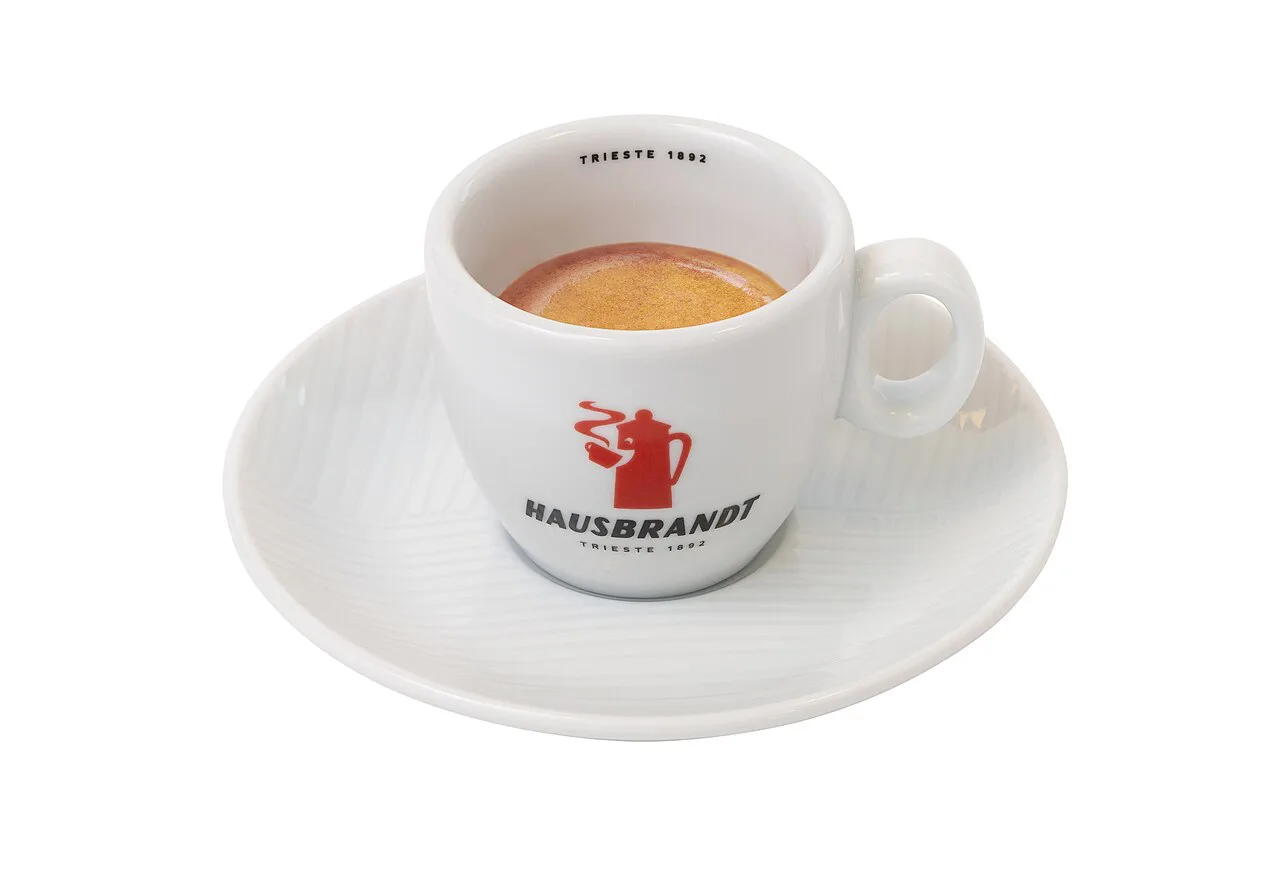
The cornetto is a breakfast food in the practical sense: quick, sweet enough to carry a coffee, and sold wherever Italians stop on the way to work. The pairing is almost always a small coffee, drunk standing at the bar in a couple of minutes. The pastry supplies the sugar and the coffee resets the palate.
Is a cornetto the same as a croissant? They are close relatives but not identical. Both are laminated pastries, but the Italian cornetto dough includes eggs and vanilla, which makes the inside softer and sweeter, closer to a brioche than to a crisp French croissant.
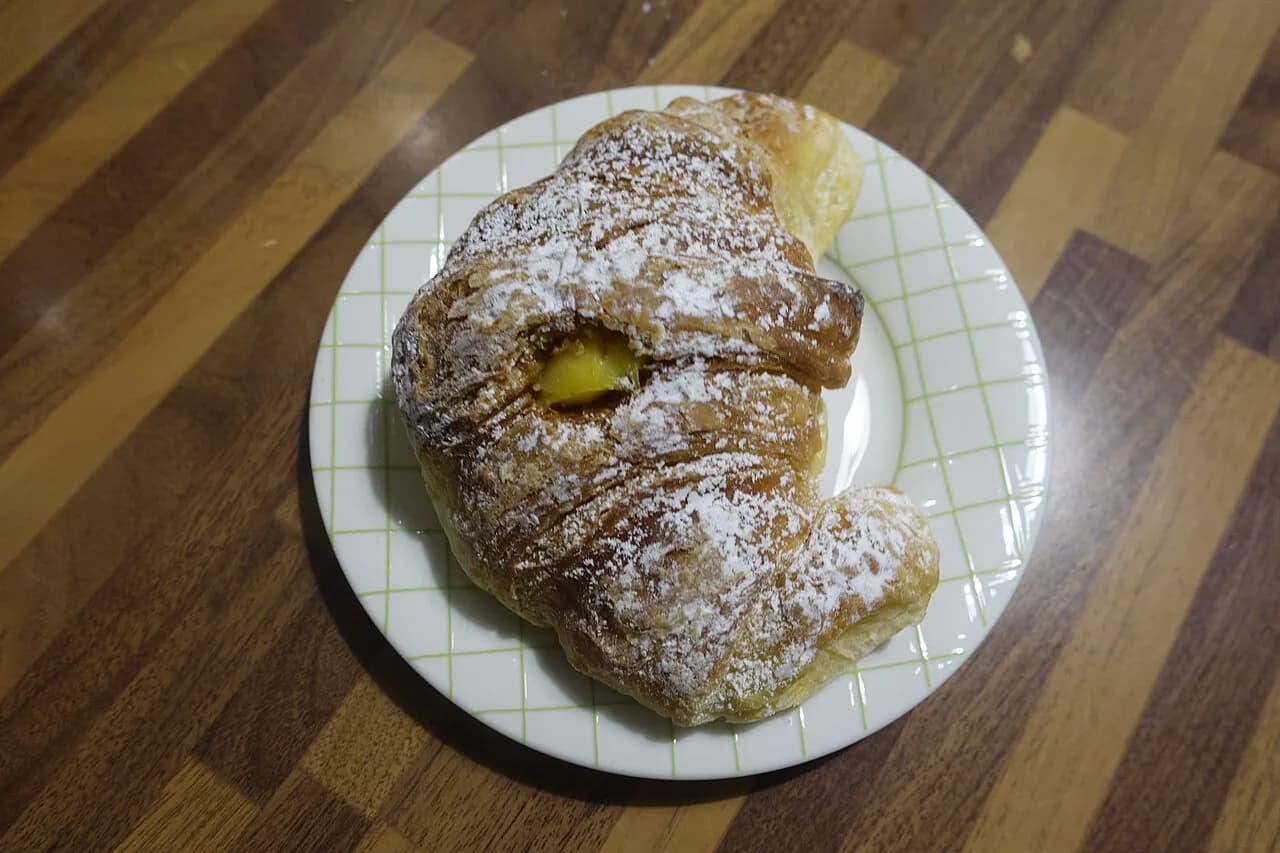
What is the difference between cornetto vuoto and cornetto ripieno? Vuoto means empty, so a cornetto vuoto is the plain pastry with no filling. Ripieno means filled, and a cornetto ripieno has a filling injected after baking, usually crema, chocolate, jam, pistachio or honey.
Order a cappuccino or a caffè latte with it if you prefer milk, and you will see plenty of locals drinking a caffè macchiato instead. If milk drinks are what you want in the morning, the guide to Italian coffee sets out the options and how they are made.
A cornetto also appears mid-morning, eaten with a coffee or taken away in a paper bag. For the wider shape of the Italian morning, from the bar to what is spread on toast at home, the guide to Italian breakfast is the place to start.
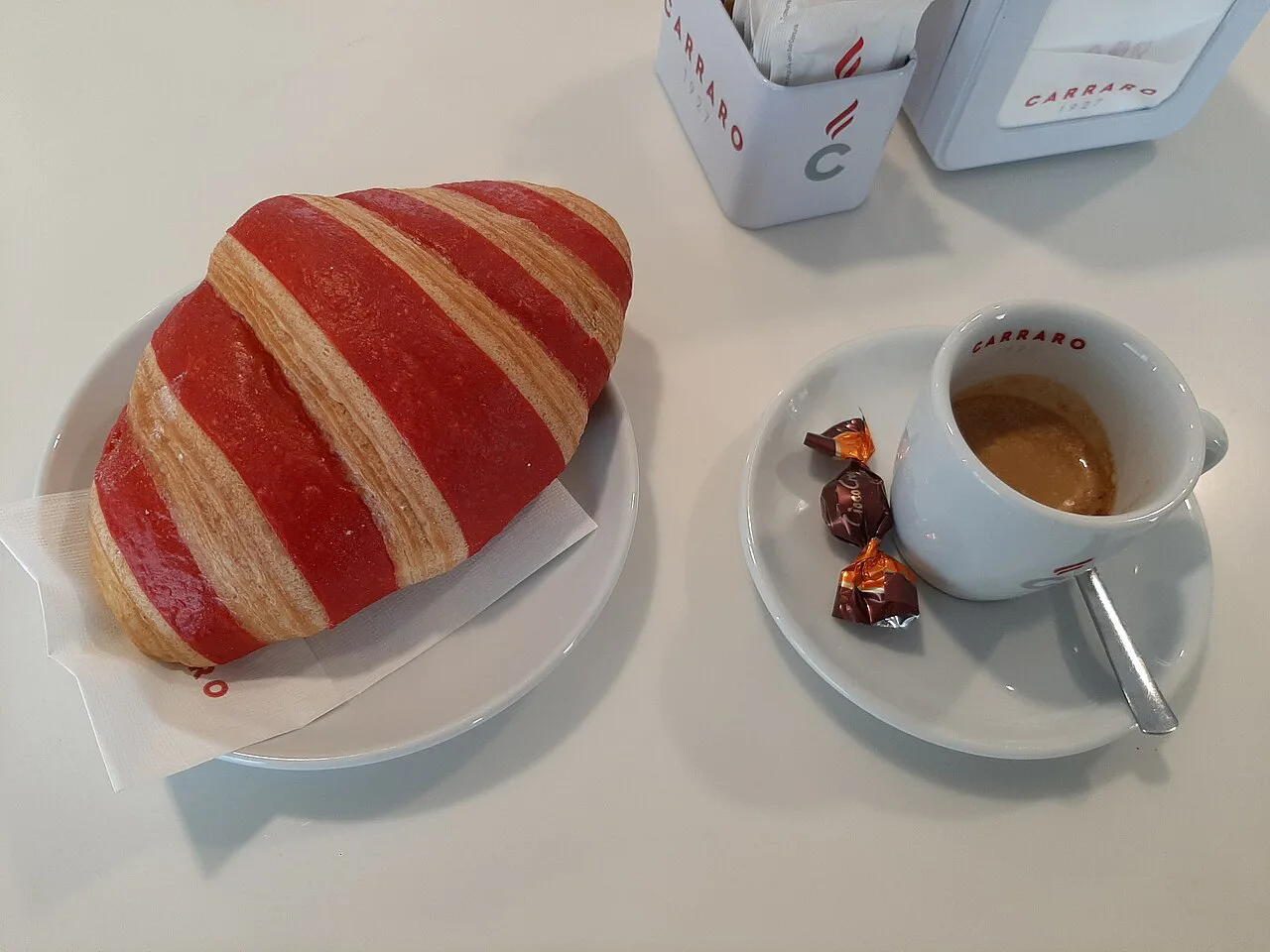
The fillings you will see: crema, cioccolato, marmellata, pistacchio
Most bars keep a glass case or a row of baskets with the fillings visible, and the names are worth learning once. Crema means pastry cream, the thick vanilla custard also called crema pasticcera. Cioccolato means chocolate, usually a dark, dense filling rather than a runny sauce. Marmellata means jam, most often apricot, cherry or berry. Pistacchio means pistachio cream, and miele means honey.
Filled cornetti are usually injected after baking through a small hole in the side, so the pastry stays crisp and the filling stays soft. That is why a crema cornetto can look identical to a plain one from the outside. Watch which basket the barista reaches into, or ask which fillings are available before you commit.
Fillings reflect each bar's own repertoire rather than a national rulebook, so one pasticceria may run apricot jam as its standard while another works mainly with chocolate and pistachio. If a particular filling is what you came for, ask at the counter — the case varies from one pasticceria to the next, so it is worth checking what that day's batch holds before you settle on one.
Vuoto or ripieno: choosing a plain cornetto or a filled one
Vuoto means empty, and a cornetto vuoto is the plain pastry with nothing inside. Ripieno means filled. Saying which one you want avoids the ambiguity of pointing at a case where everything is the same shape. If you simply ask for un cornetto, expect the plain one or a question about which filling you would like.
The plain version is the better test of a bar's baking, because there is no filling to hide behind a dry or heavy dough. Order it on your first morning, then decide whether the place deserves a second visit with a filling.
Filled cornetti are heavier and sweeter, closer to a dessert than a breakfast, and many Italians save them for weekends. With a milky coffee a filled one is a generous start to the day; a plain one is lighter and quicker to eat standing at the counter.
Cornetto integrale, cornetto al miele and other variations
Integrale means wholemeal, so a cornetto integrale uses wholemeal flour in the dough and comes out nuttier and a little denser. Cornetto al miele is made with or finished with honey, which gives a different sweetness from the standard sugar dough. Both are worth trying once if you eat cornetti regularly.
Cornetti made with lievito madre, a natural sourdough starter, change the flavour of the dough. The laminating technique is the same fold-and-roll method used for croissants and for pasta sfoglia, the Italian laminated pastry behind many other baked goods.
Savoury cornetti exist too, filled with cheese or ham rather than cream, and they turn up before dinner more than at breakfast. They are not the standard order, but if you see them in the case they make a decent small bite with a drink.
How to order and pay for a cornetto at the bar
At a bar, the usual routine is to tell the person at the counter what you want, eat and drink standing, then pay at the till on your way out. In some bars you pay first and hand the receipt to the barista; in others you consume first and pay afterwards. Watch what the people ahead of you do, and you will be fine.
Say the pastry and the coffee together, for example un cornetto vuoto e un caffè, and the barista will sort out the order in one go. Tipping is not expected at the counter, and rounding up is a courtesy rather than a rule.
A sit-down table usually costs more than standing at the counter, because table service is priced separately. That difference is one reason Italians drink their morning coffee standing. If you want a table anyway, it is worth knowing what you are paying for.
Cornetto at the pasticceria versus the bar counter
A bar is built for speed: a small counter, a coffee machine, a basket of cornetti and a stream of regulars. A pasticceria is a pastry shop first, with a wider range of baked goods and often a seat or two. The cornetto you get at each is the same idea made to different standards and for different purposes.
For the best pastry, the pasticceria usually wins, because the baking is the point of the business rather than a side line to the coffee. For speed and atmosphere, the bar wins, and the cornetto is often good enough that the difference hardly matters at eight in the morning.
Both get busy in the morning, when the counter fills and the barista is moving fast. Going slightly later means a calmer order and a better chance of the filling you wanted still being in the case.
What cornetto means elsewhere: the Spanish and ice-cream cone confusions
The Italian cornetto comes from corno, meaning horn, which describes the crescent shape. In Spanish the pastry is not called a cornetto at all, so a search in a Spanish context may land you on something else entirely.
In the UK and Ireland, Cornetto is also a well-known brand of ice-cream cone sold in supermarkets, unrelated to the Italian pastry beyond the shape. Those supermarket ice-cream cones are a separate product category. If you want the breakfast pastry, search for Italian cornetto or cornetto pasticceria instead.
The Italian word for an ice-cream cone is cono, so asking for un cono gets you ice cream and asking for un cornetto gets you breakfast. Keeping the two apart saves a confusing moment at the counter.
How a cornetto is made: the laminated dough and why it takes time
Making cornetti at home is a long project. The dough starts with a biga, a firm pre-ferment of flour, water and yeast left to mature for eight to ten hours, then mixes in sugar, eggs, vanilla and soft butter. It rests in the fridge for around twelve hours before the butter is laminated in, and the total maturation time runs to about 26 hours.
Lamination is the same fold-and-roll technique used for croissants and pasta sfoglia: a slab of cold butter is enclosed in the dough, then rolled and folded repeatedly to build thin alternating layers. That is why the baked pastry separates into sheets when you pull it apart. It is also why a proper cornetto cannot be rushed.
Once baked, cornetti are best eaten the same day, which is why a bar with a tray of fresh cornetti at eight in the morning is a reasonable bet over one with a tired display.
Cornetto vuoto or ripieno: which to order first
Order a cornetto vuoto with an espresso on your first morning to judge the baking, then come back for a crema or pistacchio version once you know the dough is good. Say the pastry and the coffee together, pay at the till as the bar does, and eat standing at the counter.
If you want the wider morning picture, read the guide to how to order coffee in Italy before you go. It is the quickest way to make the counter feel less hurried.
Explore more Italy food guides
Frequently Asked Questions
Is a cornetto the same as a croissant?
They are close relatives but not identical. Both are laminated pastries, but the Italian cornetto dough includes eggs and vanilla, which makes the inside softer and sweeter, closer to a brioche than to a crisp French croissant.
What is the difference between cornetto vuoto and cornetto ripieno?
Vuoto means empty, so a cornetto vuoto is the plain pastry with no filling. Ripieno means filled, and a cornetto ripieno has a filling injected after baking, usually crema, chocolate, jam, pistachio or honey.
Sources
Notes for your next meal in Italy
Optional updates to our food guides.
You might also like


Continue reading
More guides you'll find useful