How to Order Coffee in Italy: What to Say at the Bar
Learn how to order coffee in Italy: ask for un caffè rather than an espresso, pay at the till or the bar, drink standing, and skip milky drinks after noon.
On this page
To order coffee in Italy, ask for un caffè: that is the local word for a single espresso, while espresso itself is rarely used at the counter. The barista will hand you a small cup, you drink it standing, and you settle the bill either before or after depending on how that bar works. This guide covers the drinks worth knowing, the two payment routines and the morning-only custom for milky coffee.
An Italian coffee bar is a fast, standing-room affair, not a place to nurse a large cup for an hour. Once you know four or five words and the order of operations, the whole thing takes seconds and costs you nothing in embarrassment. It helps to know the vocabulary of Italian coffee before you walk in.
What to ask for: un caffè is an espresso
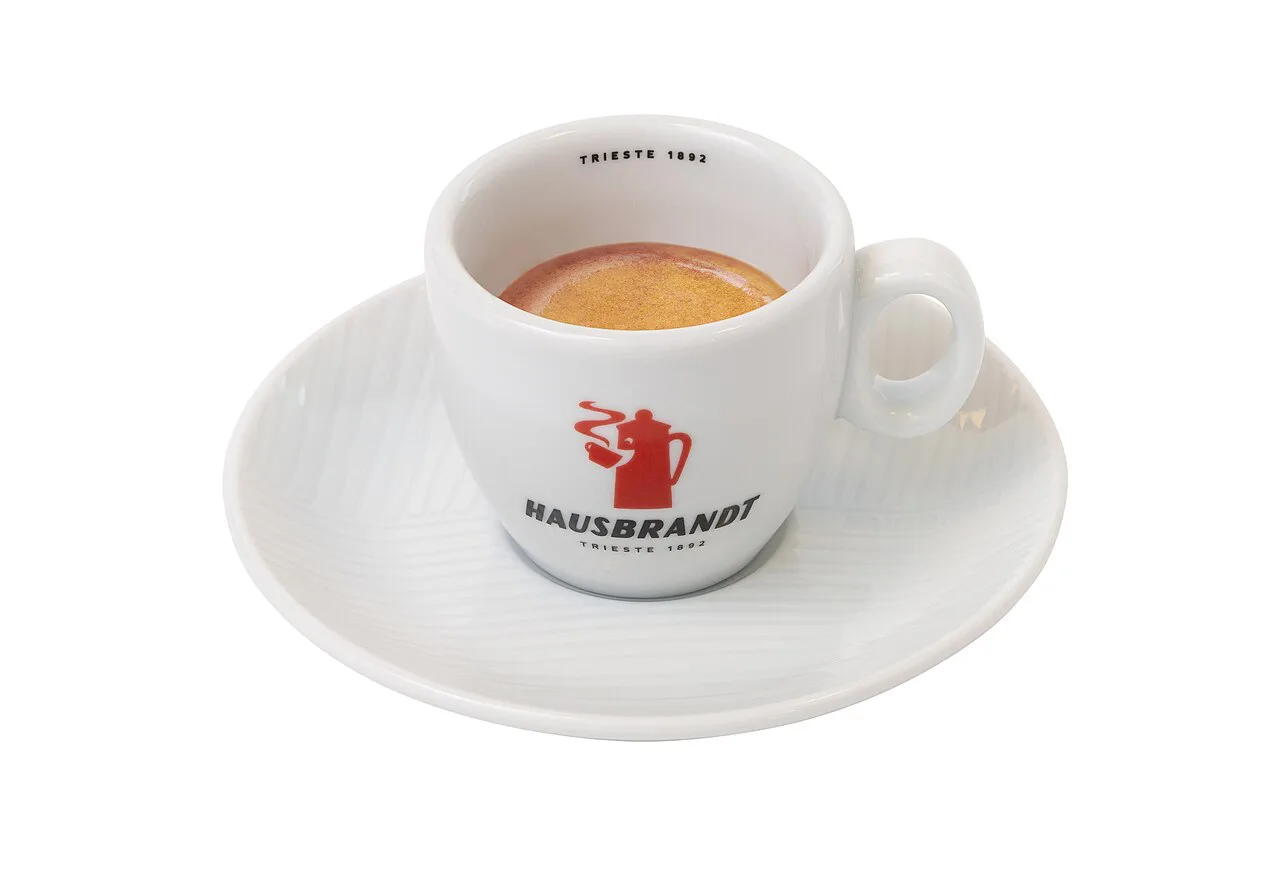
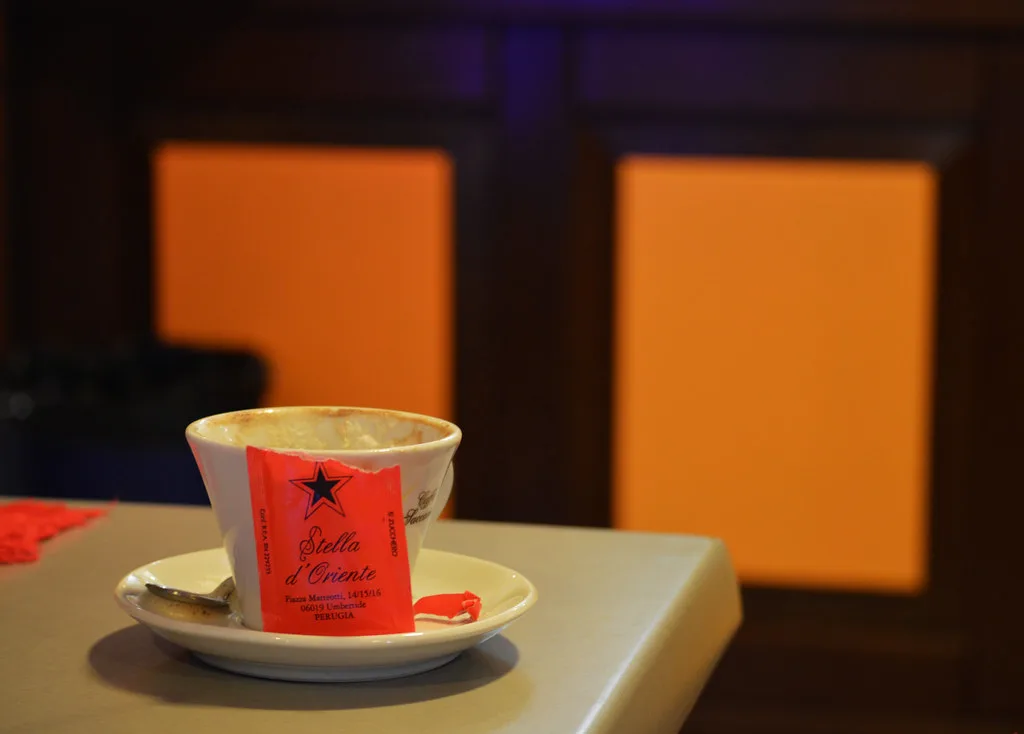
The default order is un caffè, a short espresso served in a small cup that Italians knock back in a couple of sips. Saying “espresso” marks you as a visitor; the word on every Italian lip is simply caffè. If you want a double, ask for un doppio, or simply order two caffè one after the other, which is the more usual habit.
The short list is easy to learn because it is mostly about length and milk. A lungo is a long espresso pulled with more water, a ristretto is a very short, intense one, and an americano is espresso diluted with hot water for something closer to a filter coffee. None of these involve flavoured syrups or whipped cream, which simply are not part of the offer.
The bar routine: till first or bar first
There is no single payment system across Italy, so the trick is to watch the room for a moment before you order. In many busy bars you pay at the cash register first, then hand the receipt to the barista; in smaller bars you order and drink at the counter and tell the cashier what you had afterwards. Looking at what the people ahead of you do settles it in seconds.
How do you say double espresso in Italian? Ask for un doppio, or simply order two caffè one after the other, which is the more usual habit in an Italian bar.
What is a caffè macchiato in Italy? It is a single espresso marked with a dash of milk, served in a small cup with no added sweetener. You may be asked whether you want the milk warm or cold.
How do you ask for a coffee with milk in Italian? Say caffè latte for espresso with steamed milk, or caffè macchiato for just a dash of milk. Never order a bare latte, which means a glass of milk.
Ordering itself is direct: step up to the counter and say your order clearly rather than waiting to be invited. There is rarely an orderly queue, so a confident “un caffè, per favore” gets you served. If the bar has table service, expect to pay more for the seat, which is the usual arrangement rather than a special tourist surcharge.
How to read the short list
A caffè macchiato is an espresso “stained” with a dash of milk, and it is the drink to order when you want a little milk without committing to a cappuccino. The barista may ask whether you want latte caldo or latte freddo, meaning warm or cold milk; the warm version is the usual default at the bar. It comes in a small cup with no added sweetener, so do not expect the large, syrupy version sold elsewhere.
A cappuccino is espresso with steamed milk and a thick foam cap, and you can steer the texture by asking for con poca schiuma (little foam) or con tanta schiuma (lots of foam). You can also ask for it ben caldo (very hot) or tiepido (lukewarm), which is useful if you plan to drink it slowly. These are small adjustments, not a custom drink menu.
Why milky drinks are a morning order
Custom, not law, keeps cappuccino and caffè latte in the morning: Italians generally avoid milk-based coffee after noon, and ordering one after lunch may earn you a raised eyebrow rather than a refusal. The practical compromise is a caffè macchiato, which gives you the milk taste without the full cappuccino. If you cannot face the day without a milky coffee, have it at breakfast and switch to black coffee later.
The classic Italian breakfast is a quick espresso or cappuccino with a sweet pastry such as a cornetto or a brioche, eaten standing at the bar. A cornetto is the Italian croissant, plain or filled, and it is the natural partner to a morning cappuccino. Order both at the same time and you have the full local morning ritual in one stop.
Why 'latte' on its own gets you a glass of milk
Latte means milk in Italian, so ordering “un latte” alone will get you a glass of warm milk rather than a coffee. Say caffè latte for espresso with steamed milk, or ask for a latte macchiato if you want mostly milk with just a stain of coffee. Getting the word order right is the difference between breakfast and a puzzled barista.
The caffè latte sits at the milky end of the spectrum, closer to a flat white than to an espresso, and it is a breakfast or mid-morning drink by the same custom that governs cappuccino. A latte macchiato inverts the proportion, with the espresso poured into hot milk so the coffee stains the top. Neither is a dessert drink; both are simple café orders.
Useful variations to ask for
Beyond hot or cold milk in a macchiato, you can ask for a macchiato chiaro or scuro, meaning a lighter or darker stain of milk in the espresso. A cappuccino can be ordered chiaro or scuro on the same principle. These are standard adjustments in Italian bars, not tourist inventions.
If you want a coffee that sits between espresso and americano, ask for a caffè lungo rather than adding hot water yourself. For something sweeter and more indulgent, a marocchino coffee layers espresso with cocoa powder and milk foam in a small glass. It is a distinct order worth knowing when the plain list feels limited.
Caffè corretto: the after-dinner order
A caffè corretto is an espresso “corrected” with a small shot of grappa or brandy, and it is traditionally an after-dinner drink rather than a morning one. The spirit is a flavouring, not a cocktail, so ask for it when you want to close a meal rather than to start a session. It is a strong order, and one is usually enough.
You will find it at the same Italian bar counter as everything else, which is why knowing the routine matters more than knowing a long menu. Ordering it after lunch or dinner fits the custom of ending a meal with coffee, and it keeps the drink in its proper place. Do not expect it to come with a pastry.
Drinking it the Italian way
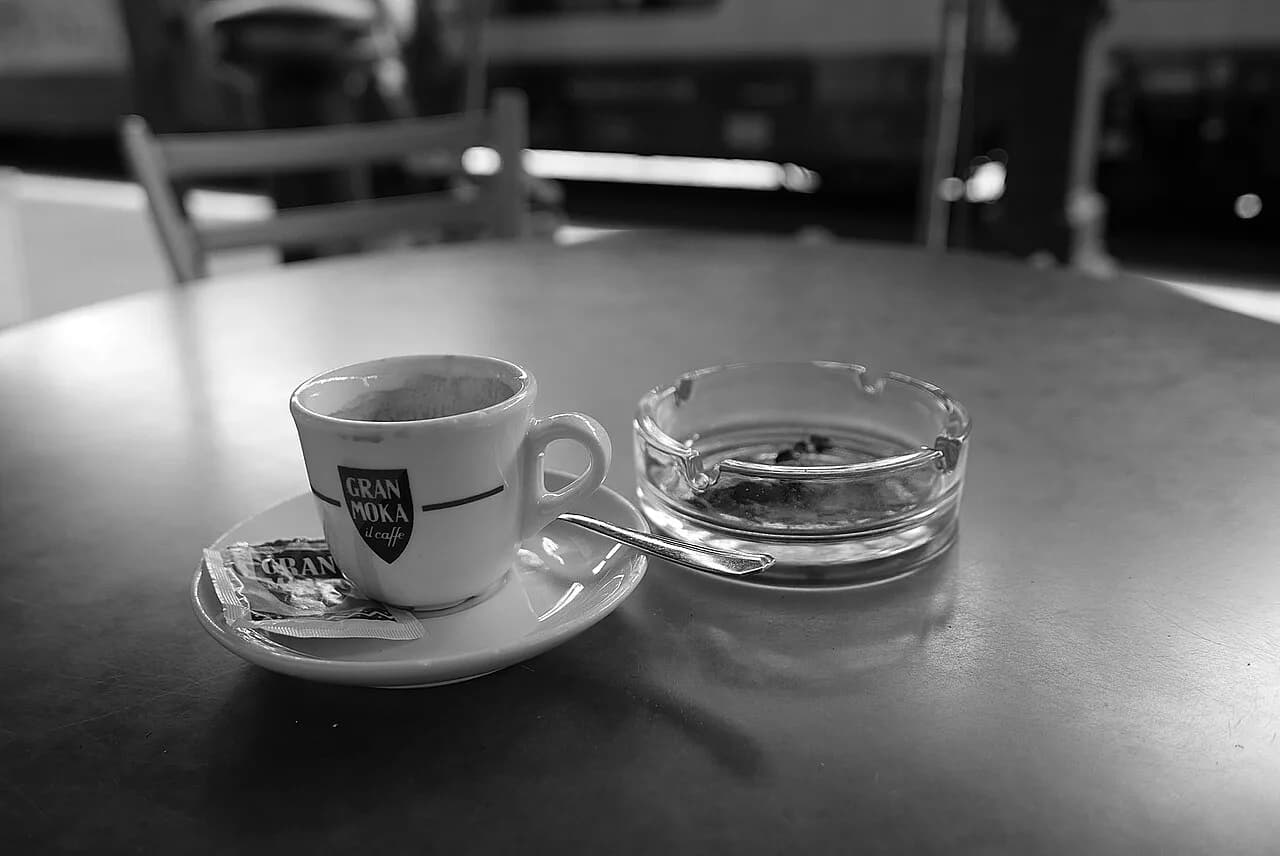
The standard Italian coffee is a tiny espresso drunk standing at the counter, often several times across a day. The idea of a single large cup nursed over an hour is foreign to the rhythm; you order, drink, pay and move on. That is why the bar counter, not the table, is the natural place to be.
If you want to linger over something larger, order an americano or a caffè lungo and take it at a table, accepting the higher table charge. The trade-off is simple: standing is faster and cheaper, sitting is slower and more expensive. Choose according to whether you want a pause or a pit stop.
What not to order
Takeaway cups, giant flavoured lattes and long menus of syrupy drinks are not part of the Italian bar offer, and asking for them usually gets a polite no or a blank look. The list is short by design, and that is what makes ordering quick. Stick to the named classics and you will fit right in.
Do not ask for a “double espresso” in English; say un doppio, or simply order two caffè, which is what Italians usually do. Do not expect skimmed, soy or almond milk as a matter of course, though some bars offer dairy alternatives. And do not order a cappuccino after a big lunch unless you are comfortable being the one who breaks the custom.
What to say at the counter
The whole routine comes down to a few words: un caffè, a macchiato if you want milk, and the right payment order at that particular bar. Learn the short list, watch the room before you order, and drink standing unless you want to pay for a seat. Do that and the Italian coffee bar stops being intimidating and starts being the best few minutes of your morning.
Frequently Asked Questions
How do you say double espresso in Italian?
Ask for un doppio, or simply order two caffè one after the other, which is the more usual habit in an Italian bar.
What is a caffè macchiato in Italy?
It is a single espresso marked with a dash of milk, served in a small cup with no added sweetener. You may be asked whether you want the milk warm or cold.
How do you ask for a coffee with milk in Italian?
Say caffè latte for espresso with steamed milk, or caffè macchiato for just a dash of milk. Never order a bare latte, which means a glass of milk.
How do you order a mocha in Italy?
There is no standard mocha on the Italian bar list. The closest order is a marocchino, an espresso with cocoa powder and milk foam, or a caffè macchiato with a little cocoa if the bar offers it.
Sources
Notes for your next meal in Italy
Optional updates to our food guides.
You might also like
Continue reading
More guides you'll find useful