Marocchino Coffee: What It Is and How It's Made
Marocchino coffee is a small layered espresso drink from Alessandria in Piedmont, made with chocolate, an espresso shot and frothed milk in a glass cup.
On this page
A marocchino is a small Italian coffee made in a glass cup with chocolate, a shot of espresso and frothed milk, finished with a dusting of cocoa powder. It is associated with Piedmont, and specifically with the city of Alessandria, where it was created.
This guide breaks the drink into its three layers, explains why the cup must be glass, walks through the method baristas use, and draws the line between a marocchino and a mocha. It also covers what the name means and what to expect when you order one at an Italian bar counter. For the wider map of espresso drinks in the country, our guide to Italian coffee sets out how the sips sit alongside each other.
What a marocchino coffee is
In its standard form a marocchino is a single espresso with a chocolate base and a cap of frothed milk, served in a small glass. The volume is closer to a macchiato than to a cappuccino, so you drink it standing at the bar in a minute or two rather than sitting over it.
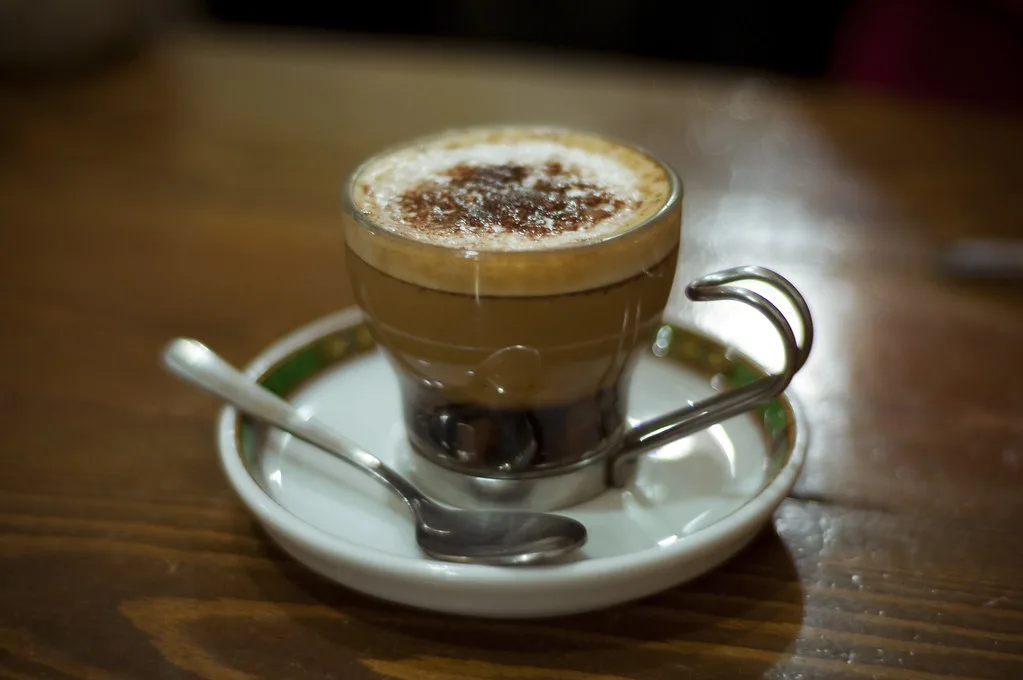
The drink has three distinct components that are meant to stay visible: chocolate, coffee and milk foam. Chocolate can be a spoonful of hazelnut spread pushed around the inside of the glass, or a layer of cocoa powder or hot chocolate at the bottom. The coffee is an espresso, sometimes a shorter ristretto for a more concentrated hit, and the milk is frothed to a silky consistency.
The result sits between a coffee and a small dessert. The chocolate sweetens the shot without the sugar bowl, and the foam softens the edges. It is a morning drink by habit, a short pick-me-up that goes down in a few sips before a cornetto.
Why it is served in a small glass cup
The glass cup is not decorative. Because the drink is built in layers, the glass lets you see the dark chocolate against the pale foam, and the whole point of the marocchino is that layered look. An opaque ceramic cup would hide the construction completely.
Where does the marocchino come from? The Caffè Marocchino was created in Alessandria in northern Italy, in the Piedmont region where Turin is the largest city. The name translates as 'Moroccan', but the drink has nothing to do with Morocco.
What is the difference between a marocchino and a mocha? Both combine chocolate and coffee, but the marocchino is built in visible layers in a small glass — chocolate, espresso and frothed milk, finished with cocoa — while a mocha mixes the chocolate and coffee together.
Small is equally important. A marocchino holds one espresso shot and a modest amount of milk, so a small glass keeps the proportions right: the chocolate base should not swamp the coffee, and the foam should not turn it into a latte. Ask for one at the counter and you get a stemless little glass.
The three layers: chocolate, espresso and frothed milk
The bottom layer is chocolate. In the modern bar version this is usually a chocolate or hazelnut spread smeared against the inside of the glass, and the espresso is pulled over it. The older method uses a dusting of cocoa powder or a spoonful of hot chocolate at the base. Both work, and both are found in Italian bars.
The middle layer is the espresso. It should be a proper shot, hot and short, because it has to cut through the sweetness below it. A ristretto, which is a shorter, more concentrated pour, gives a firmer coffee backbone; a standard espresso is the everyday choice.
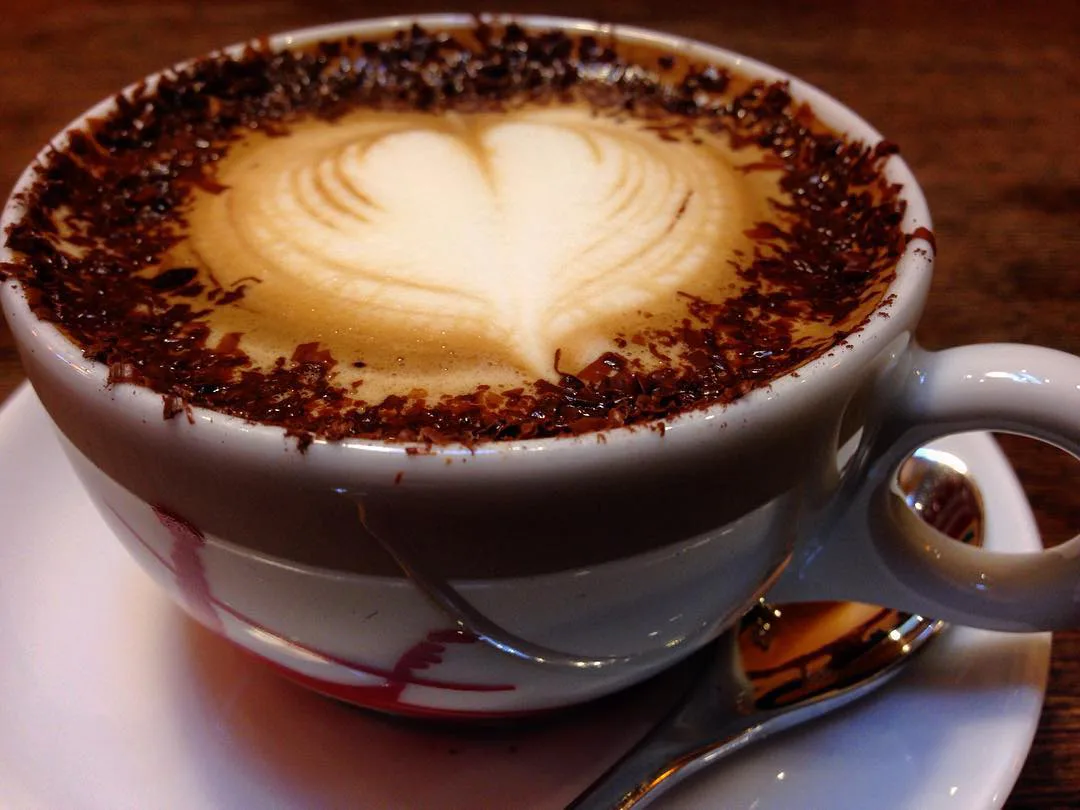
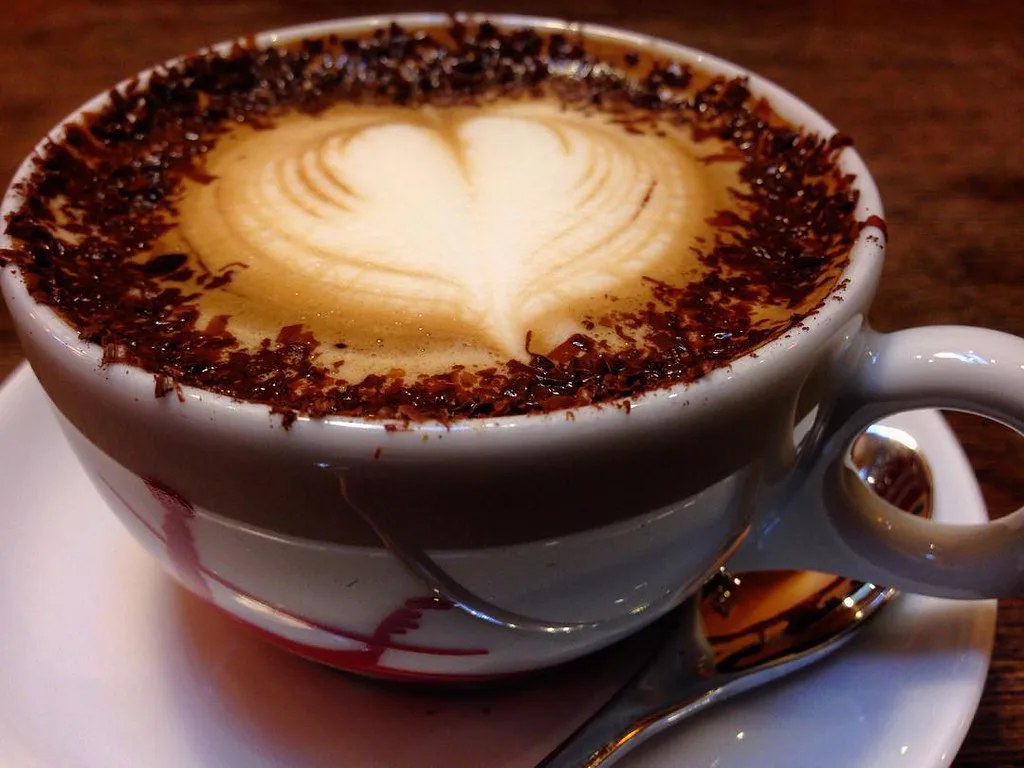
The top layer is frothed milk, poured over the shot so that it settles as a creamy cap. Whole milk is traditional, though plant milks work as well. The finishing touch is a dusting of cocoa on the foam, which balances the sweetness of the spread and gives each sip some depth.
How it is made, step by step
Making a marocchino at home is quick: take a heaped teaspoon of chocolate or hazelnut spread and work it around the inside of a small glass with the back of the spoon. The idea is to coat the walls rather than leave a lump at the bottom, so the chocolate melts into the espresso as it is poured.
Pull a single espresso into the glass, then froth a small jug of milk until it is foamy and creamy rather than bubbly. Pour the milk over the coffee, dust the top with cocoa, and drink it straight away while the layers are still distinct. If the milk is too stiff it sits in a lump; if it is too thin it sinks and the cap disappears.
Chocolate spread versus cocoa powder
The two methods produce noticeably different drinks. Chocolate spread gives a richer, sweeter cup with a thick, dessert-like body, and it clings to the glass so the chocolate arrives steadily as you sip. Cocoa powder or hot chocolate gives a drier, more bitter edge and a cleaner coffee flavour.
Neither version is universally authentic. Bars in Piedmont and elsewhere in Italy vary the chocolate, the milk and the proportions, and some use a ristretto instead of a full espresso. If you are sensitive to nuts, ask before ordering, because hazelnut spread is common in the modern version.
For the home version, cocoa powder is the simpler storecupboard option, while chocolate spread gives the thicker, sweeter cup many bar versions aim for. Our guide to Italian hot chocolate covers the drinking-chocolate end of the same ingredient if you want a longer, spoonable cup.
Marocchino versus mocha: what changes in the cup
A marocchino and a mocha both combine coffee, milk and chocolate, but the presentation sets them apart. The marocchino is built in visible layers in a small glass, with the chocolate at the base and the foam on top, and the coffee stays a single shot.
A mocha is a mixed drink, usually larger, with the chocolate and coffee stirred together rather than layered. Order a mocha and you get a mug of blended chocolate coffee; order a marocchino and you watch the chocolate rise through the espresso as you drink.
What the name means and where the drink comes from
Marocchino is Italian for Moroccan, but the drink has nothing to do with Morocco; the name is unrelated to the country. The drink itself comes from Alessandria, in Piedmont, in northern Italy, close to Turin.
That makes it a northern bar drink rather than a national ritual, and you are most likely to find it in Piedmont. If you are travelling through Turin or Alessandria, it is worth ordering to see how a local bar builds it.
How to order one at an Italian bar
Order at the counter and, at many Italian bars, pay at the till first, then hand the receipt to the barista and ask for a marocchino. Say it as three syllables with the stress on the second: ma-roc-CHI-no. If you want your espresso shorter and stronger, ask for a ristretto instead. The pattern is the same for every bar order, and our guide to how to order coffee in Italy walks through it.
Expect a small glass, a saucer and a spoon, often with a cocoa dusting on top. Drink it standing at the counter, the way locals do; a marocchino is not a drink to carry down the street. If you want a coffee with a kick of spirits after lunch, a caffè corretto is the neighbouring bar order.
Why the chocolate makes sugar unnecessary
A marocchino is already sweet from the chocolate, which is why the sugar bowl stays untouched at the bar. The spread or cocoa base does the sweetening, and adding sugar on top can tip the drink towards cloying.
If you want more sugar, ask when you order rather than hunting for the bowl. The chocolate also gives the drink a thicker texture than a plain espresso, so it works as a mid-morning stop, or as a short break with a piece of pastry from the counter.
Marocchino, mocha or a plain espresso?
Choose a marocchino when you want a small, layered, chocolate-edged espresso and the theatre of a glass cup. Choose a mocha if you want a bigger, blended drink to sit down with. If you want the coffee to do the talking, order a ristretto or a plain espresso instead.
If you are in Piedmont, order one at the bar where it belongs, then take a seat with a pastry. For the wider map of espresso variants, our guide to types of Italian coffee explains where the marocchino sits next to the macchiato and the latte.
Frequently Asked Questions
Where does the marocchino come from?
The Caffè Marocchino was created in Alessandria in northern Italy, in the Piedmont region where Turin is the largest city. The name translates as 'Moroccan', but the drink has nothing to do with Morocco.
What is the difference between a marocchino and a mocha?
Both combine chocolate and coffee, but the marocchino is built in visible layers in a small glass — chocolate, espresso and frothed milk, finished with cocoa — while a mocha mixes the chocolate and coffee together.
Sources
Notes for your next meal in Italy
Optional updates to our food guides.
You might also like
Continue reading
More guides you'll find useful