Italian Breakfast: What to Eat and How to Order at the Bar
Italian breakfast is a quick, sweet stop at a café: espresso, cappuccino and a cornetto, taken standing at the counter. Here is what appears and how to order.
On this page
An Italian breakfast is a quick, sweet meal: a coffee, usually espresso, and a pastry or a slice of plain cake, often taken standing at a bar counter. You will not be offered eggs, sausage or a cooked plate of any kind, because that is not how the morning meal works here. This guide sets out the drinks and pastries you are most likely to meet, how the bar routine works, and what a slow Sunday at home looks like by contrast.
The key distinction for a visitor is between breakfast at a bar and breakfast at home, which are different meals built on different foods. At the bar you get the fresh pastries; at home you get whatever keeps for days in a cupboard. Knowing which is which stops you ordering a bombolone you will not find, or asking for jam with your cappuccino.
What an Italian breakfast is
The traditional Italian breakfast is deliberately light: it is designed to be simple, flavourful and efficient, so that the day can start without fuss. That means a sweet item and a warm drink, eaten quickly rather than lingered over. Lunch and dinner carry the weight of the day's eating; breakfast does not.
Breakfast is also, in practice, a solitary affair. People stand at the bar with an espresso and a pastry, exchange a few words with the barista, and leave. It is short, sociable in a passing way, and not a meal you are expected to draw out.
What to order at the bar
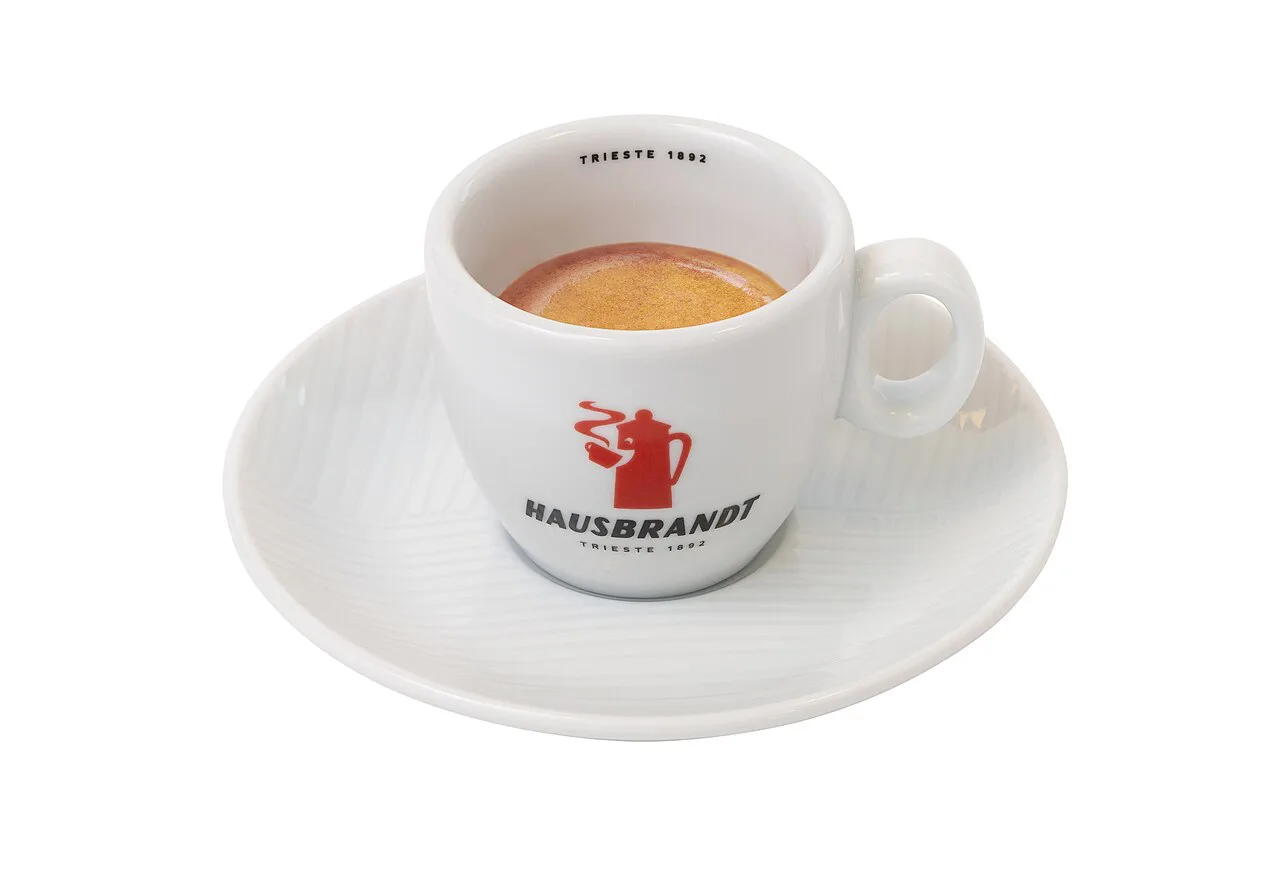
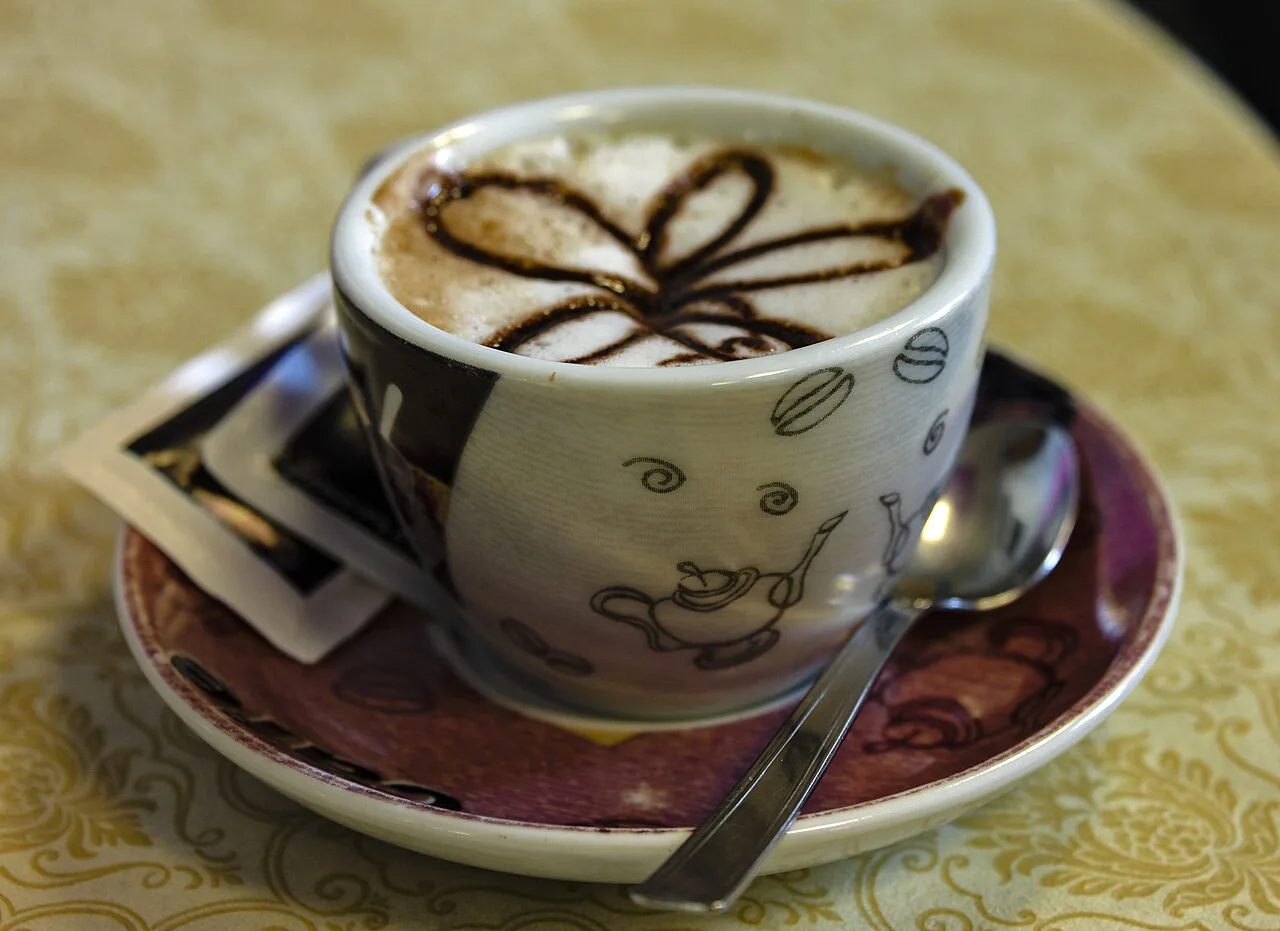
Espresso is the default, and it anchors almost every breakfast order. Around it you can order a cappuccino, a caffè macchiato (espresso with a small dash of milk), or a caffelatte, the milky coffee served in a big cup or bowl at home and often at the bar too. If you want the full vocabulary before you queue, our guide to how to order coffee in Italy walks through each name and the glass or cup it arrives in, and our Italian Coffee guide covers the beans, the bar and the machines behind them.
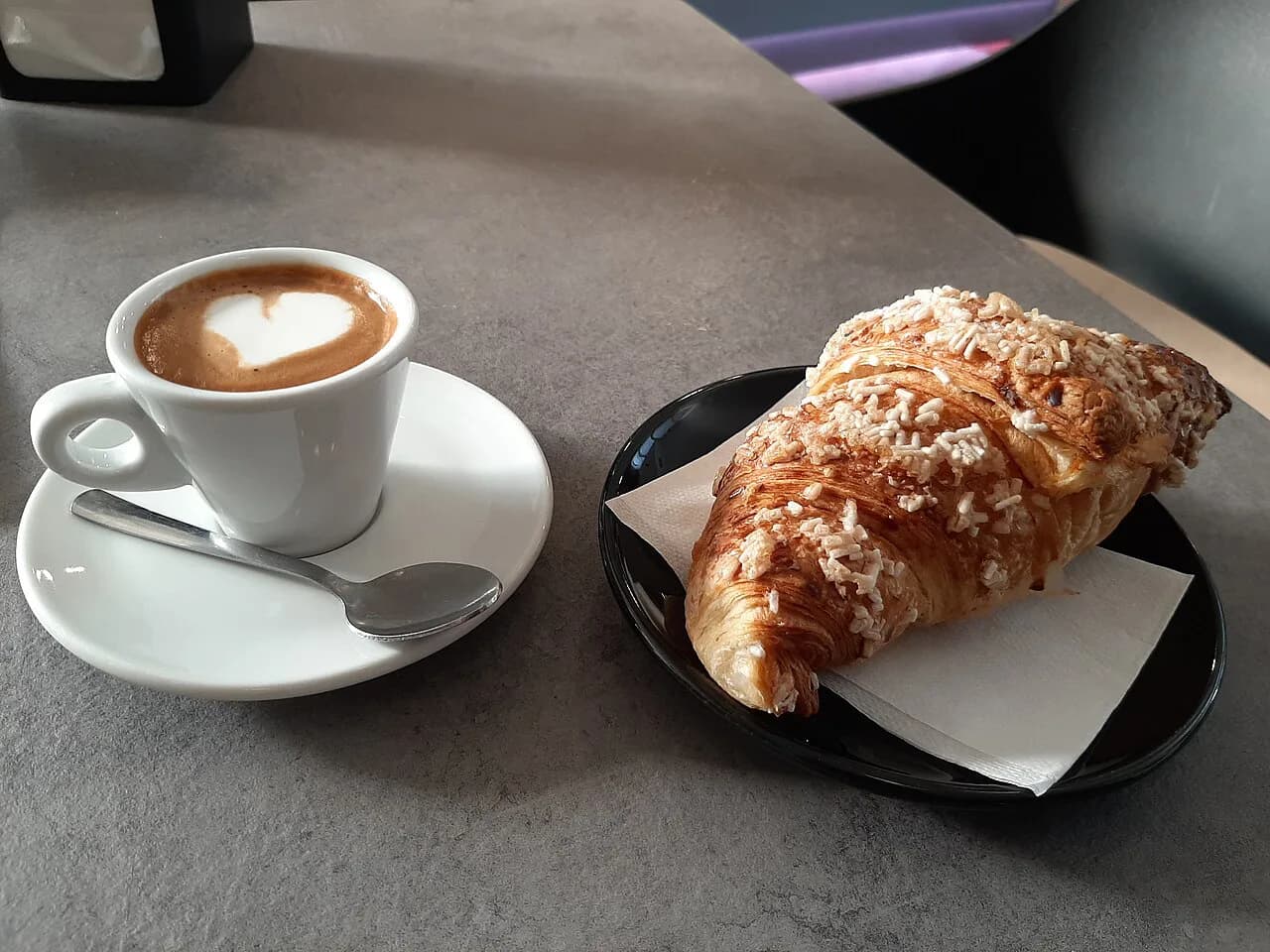
What pastries do Italians eat for breakfast? The cornetto is the everyday one, usually filled with jam, vanilla cream or chocolate. You will also see the bombolone, a fried doughnut rolled in sugar; the maritozzo, a cream-filled sweet bun associated with Rome and Lazio; the sfogliatella, a layered ricotta-filled pastry from Naples; and the Sicilian brioche, which is dunked in coffee or filled with gelato in summer.
What is a typical breakfast in Rome? A coffee at the bar and a maritozzo — a sweet bun split and filled with whipped cream, custard or chocolate. Romans take it standing at the counter rather than sitting down, and it is a quick stop before work rather than a long meal.
Do Italians eat eggs or bacon for breakfast? No. The morning meal is sweet and light, built around coffee and pastry or bread with jam.
For children, and for anyone who wants something sweet and warming without caffeine, Italian hot chocolate is thick enough to eat with a spoon, closer to a pudding than the thin cocoa you may expect. Cold fruit juices — peach, pear, apricot, orange — are normal alongside the coffee.
In summer, the hot coffee gives way to cold versions: coffee granita (iced coffee served with crushed ice and topped with whipped cream), caffè freddo (iced espresso), and crema di caffè, a creamy coffee semifreddo you can drink or eat with a spoon. All three are worth knowing by name, because the bar may offer them from a display rather than a menu.
The pastries that turn up
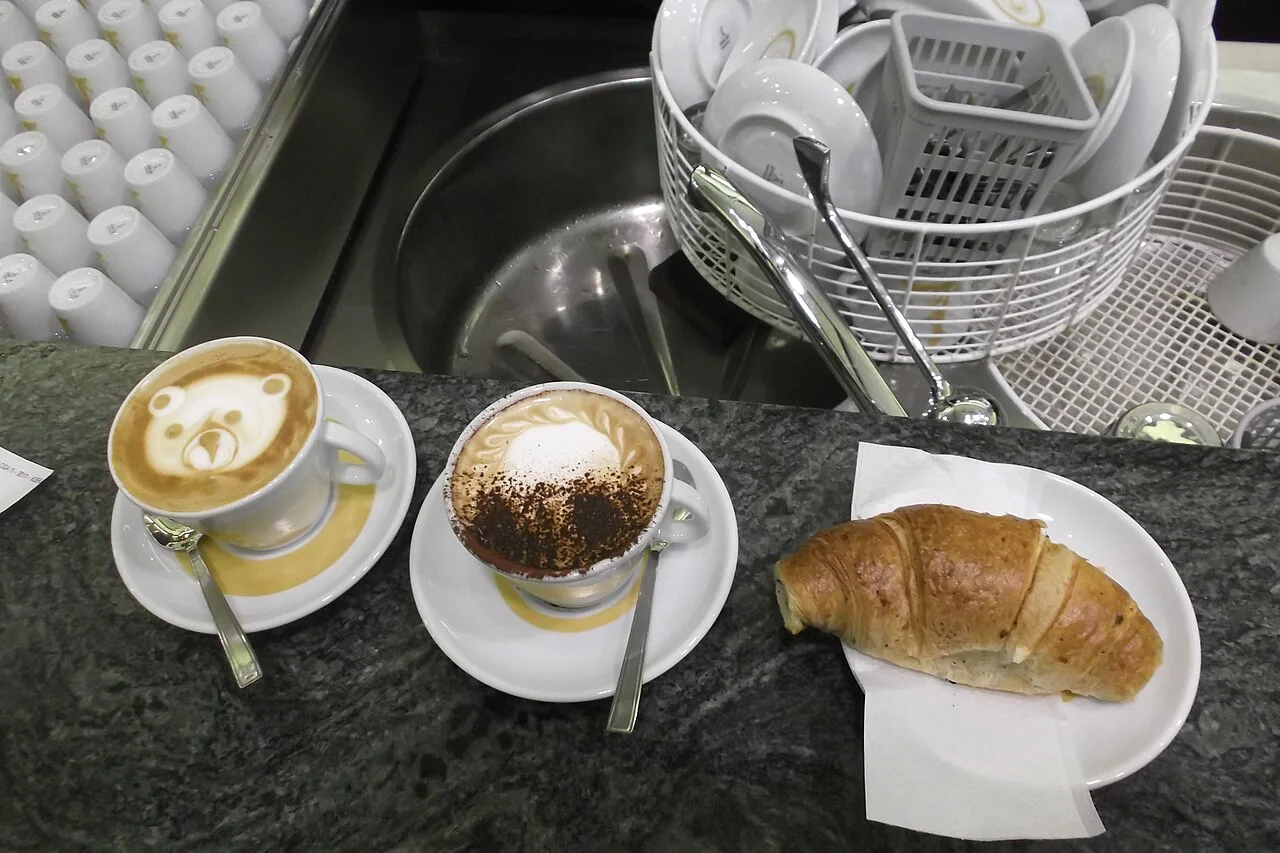
The cornetto is the breakfast pastry you will see most: a sweet Italian take on the croissant, softer and sweeter than the French version, usually filled with jam, vanilla cream or chocolate. Order it by saying "un cornetto" and, if you want a filling, name it. A whole-grain version, the cornetto integrale, exists for anyone after something less sweet.
Beyond the cornetto, three filled pastries are worth knowing. The bombolone is a fried doughnut dusted with sugar and filled with vanilla cream or chocolate. The maritozzo is a Rome and Lazio speciality: a sweet bun split and filled with whipped cream, custard or chocolate. The sfogliatella is the Neapolitan fan-shaped pastry of layered dough filled with ricotta cream and candied fruit.
A fourth is the Sicilian brioche, also called brioscia: a soft, slightly sweet bread scented with orange zest, round with a small ball of dough on top. It is built for dunking in a cappuccino or a coffee granita, and in summer it is cut in half and filled with gelato. That gelato version is a legitimate breakfast in Sicily, not a dessert.
Cornetto versus French croissant
The two pastries look related but behave differently. The French croissant is buttery and crisp; the Italian cornetto is sweeter and softer, and it is almost always filled — jam, vanilla cream or chocolate. If you order one expecting a plain, flaky croissant, the filling will surprise you.
That sweetness is why the cornetto works as breakfast rather than a snack: it is designed to be eaten with an unsweetened coffee. You do not need to add anything. A cappuccino and a cornetto is a complete order, and the barista will not ask you what else you want.
Breakfast at home: biscuits, bread and jam
At home, Italians eat much more plainly than at the bar. The typical home breakfast is a slice of plain cake such as ciambella or crostata, served at room temperature, or pane, burro e marmellata — bread, butter and jam — or packaged breakfast biscuits. These keep for days and need no cooking, which is the whole point.
Fette biscottate are the other fixture: twice-baked bread slices, like a hard rusk, eaten with butter and jam. Biscuits should be crunchy rather than soft. Northern Italian households lean toward dairy at breakfast, while southern ones tend toward sweeter choices such as fette biscottate with jam — a tendency rather than a rule you can rely on.
The home breakfast is also where you see the cake habit that confuses visitors: a plain cake baked once and eaten in slices over several mornings. If you are staying in a flat with a kitchen, that is the breakfast to copy. It costs very little and it is what the person next to you on the bus actually ate.
Sicily and the south: sweeter, colder, more gelato
Sicily has its own breakfast grammar. The brioche col tuppo — the round roll with the small knob on top — is dunked rather than spread, and the summer version is filled with gelato. In the same season, coffee granita with cream sits alongside it as a cooling alternative to espresso.
The south generally likes its breakfast sweeter, while the north leans toward dairy-based items. Treat both as directions of travel rather than borders. In Naples, the sfogliatella is the pastry to ask for by name; in Rome, it is the maritozzo.
Cappuccino, macchiato, caffelatte: which coffee when
At breakfast, the milk drinks are on solid ground. Cappuccino and caffè macchiato are morning orders, and caffelatte belongs at the kitchen table in a big cup. If you want a longer, milkier drink at the bar, a latte macchiato is the one to ask for by name rather than "latte", which is simply milk.
If you want to branch out, the marocchino coffee is a small glass of espresso layered with milk and cocoa powder, and it fits neatly into a morning order. Hot chocolate is the no-caffeine option for children. Neither needs explaining to the barista beyond the name.
How a morning visit to a bar works
The routine is simple, but it differs from a British café. You order and pay at the till or the bar, then stand at the counter to drink and eat. Standing is normal and faster; sitting at a table outside usually costs more, because the service is different.
The unwritten rule is to drink your coffee at the bar rather than carry it out. If you want it at home, order it and drink it there — but the cornetto is best eaten where it was made that morning. A bombolone or a cream-filled cornetto does not keep well to the next day, which is why you see them fresh at the bar and not in the cupboard.
What you will not be served
You will not be offered a cooked breakfast. There is no Italian tradition of eggs, sausage, frittata or fresh vegetables in the morning; the savoury breakfast belongs to other countries' habits. If you want eggs, look for a brunch menu rather than a bar.
The frittatas and ricotta pancakes that turn up under Italian breakfast headings online are recipes, not a morning custom. Listing them as Italian breakfast ideas is a recipe-collection habit rather than evidence of what is eaten at an Italian bar. Ordering one at a café in Italy will get you a blank look.
The same goes for the hotel continental spread: a basket of pastries, orange juice and coffee arranged for visitors. It is a reasonable approximation, but it is not the bar, and it is not the home breakfast. If you want the real thing, walk to the nearest bar.
Coffee first, then the pastry
At the counter, order the coffee first and the pastry alongside it rather than saving the pastry for later. The barista will usually bring both at once. Eat the cornetto while the cappuccino is still hot; that is the point of the pairing.
If you want to round off the morning, a caffè corretto — espresso with a small amount of liqueur — is a bar order, not a breakfast habit, and best kept for later in the day. An Italian bar will make one at any hour, but it is not how most people start the morning.
Ordering your first Italian breakfast
Start with an espresso or cappuccino and one pastry: a cornetto if you want the safe choice, a bombolone or sfogliatella if you want something richer. Stand at the counter, eat it there, and you have done the morning the way it is actually done.
If you are in Sicily, make it a brioche with granita in summer; in Rome, a maritozzo; in Naples, a sfogliatella. Any of these tells you more about the local morning than a hotel buffet will.
Frequently Asked Questions
What pastries do Italians eat for breakfast?
The cornetto is the everyday one, usually filled with jam, vanilla cream or chocolate. You will also see the bombolone, a fried doughnut rolled in sugar; the maritozzo, a cream-filled sweet bun associated with Rome and Lazio; the sfogliatella, a layered ricotta-filled pastry from Naples; and the Sicilian brioche, which is dunked in coffee or filled with gelato in summer.
What is a typical breakfast in Rome?
A coffee at the bar and a maritozzo — a sweet bun split and filled with whipped cream, custard or chocolate. Romans take it standing at the counter rather than sitting down, and it is a quick stop before work rather than a long meal.
Do Italians eat eggs or bacon for breakfast?
No. The morning meal is sweet and light, built around coffee and pastry or bread with jam. A cooked breakfast of eggs, sausage or vegetables is not part of the habit, and you will not find it at a bar.
Sources
Notes for your next meal in Italy
Optional updates to our food guides.
You might also like

Continue reading
More guides you'll find useful