Italian Christmas Desserts: Panettone, Struffoli and More
Italian Christmas desserts run from panettone to struffoli and the coiled Calabrian pitta 'mpigliata. Here is what each sweet is and how it reaches the table.
On this page
Italian Christmas desserts are not a single cake but a spread of regional sweets, and the three you are most likely to meet are panettone, struffoli and pitta 'mpigliata. Panettone appears on tables across the country, struffoli belong to the south, and pitta 'mpigliata is a coiled Calabrian pastry cake filled with raisins and walnuts. This guide explains what each one is, where it comes from and how it fits into the Christmas meal.
The useful thing to know before you start shopping or baking is that the same fried honey dough carries different names from region to region, so you are not hunting four separate sweets. Read it alongside our wider guide to Italian desserts, which covers the sweets that fill the rest of the year.
What Italian Christmas desserts are
Christmas sweets in Italy divide roughly into two families: large leavened or pastry cakes that are sliced at the table, and small fried or biscuit-like sweets that are piled on a plate and picked at. The cakes suit a sit-down dinner, while the small sweets are made in quantity because they keep and because they are handed round with coffee or a sweet drink. Knowing which family a name belongs to tells you how it will arrive at the table.
Most of these sweets are made in the weeks before Christmas rather than on the day, which is why recipes so often mention storing, freezing or coating at the last moment. Struffoli in particular are coated in honey once they come out of the oil, and the coating is what keeps them tender for the days that follow.
Panettone and pandoro: the northern Christmas cakes
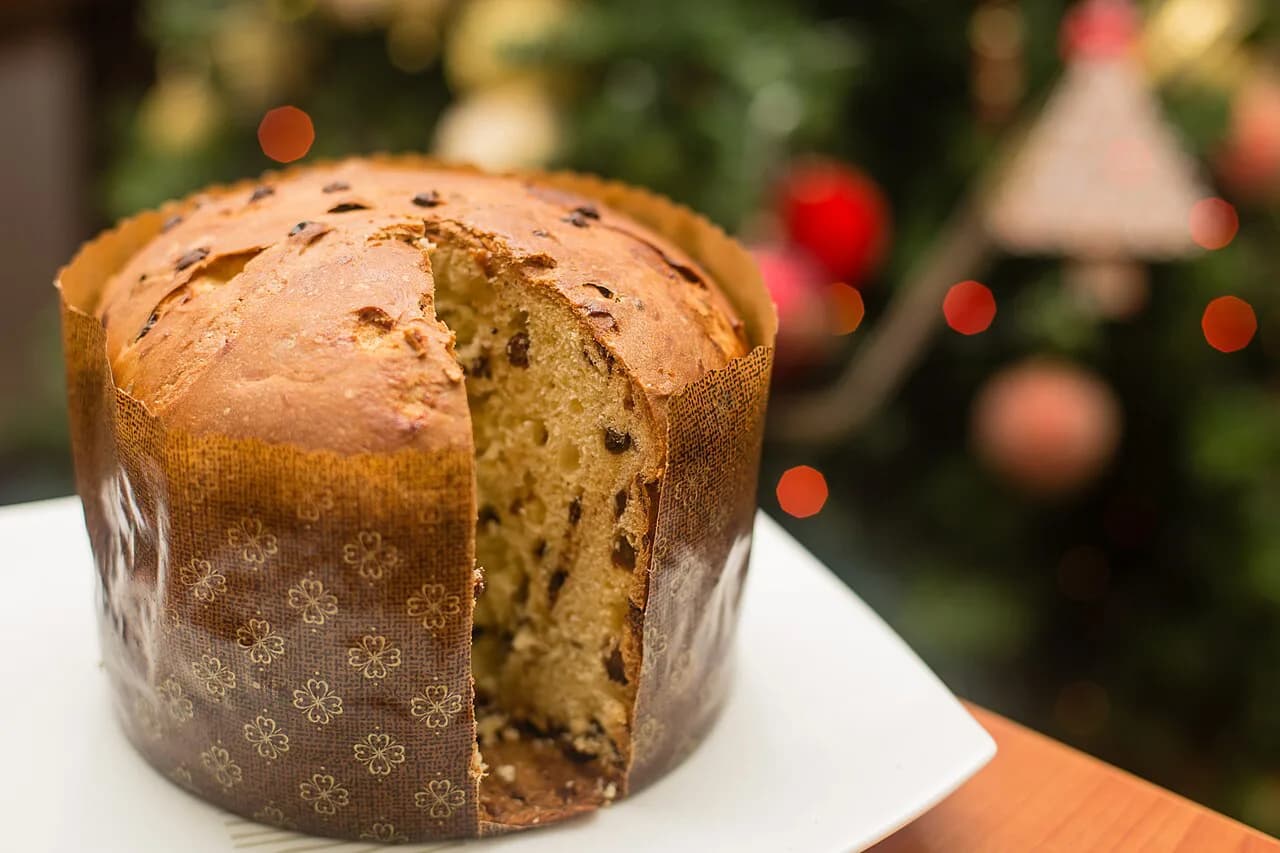
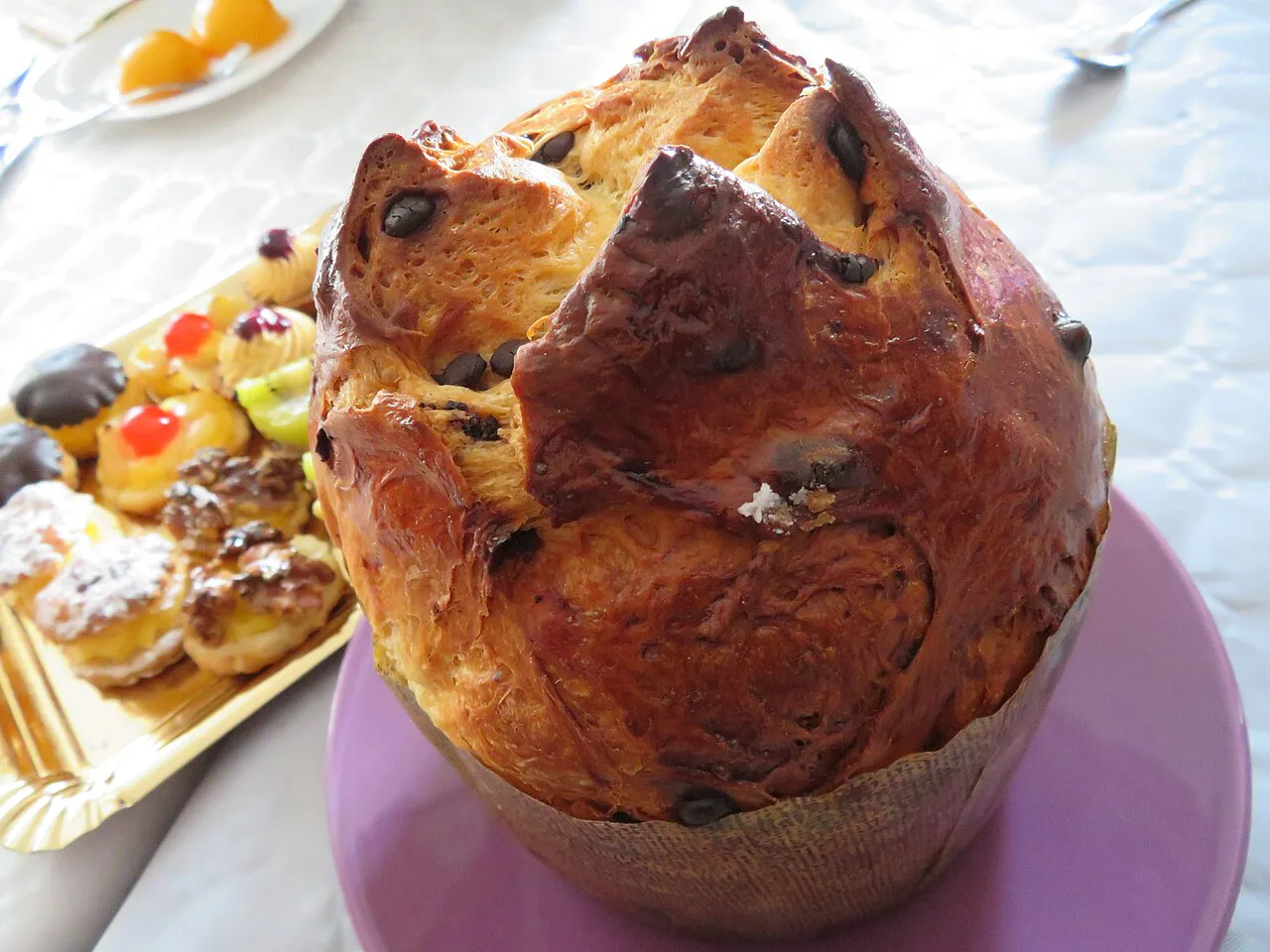
Panettone is the Christmas cake most associated with Italy as a whole, and it is the one that turns up on tables far beyond the region it comes from. You will also see pandoro, its plain, tall, star-shaped counterpart, sitting alongside it in the same shops and on the same tables. Both are sliced and served as the sweet finish to a long meal, usually with coffee or something sweet to drink.
What is the cake traditionally eaten at Christmas in Italy? Panettone is the Christmas cake most widely associated with Italy as a whole, and it appears on tables far beyond the region it comes from. Pandoro, a plainer star-shaped cake, is served alongside it.
What are the 13 desserts served at Christmas? The idea of thirteen Christmas desserts belongs to Provence in France rather than to Italy, and it is a different tradition from the Italian sweets described here. Italian Christmas tables vary by region: Campania has struffoli, Calabria has pitta 'mpigliata, and panettone and pandoro appear across the country.
Are struffoli and cicerchiata the same thing? They are the same idea under different regional names: small fried dough pieces coated in honey and finished with nuts and sprinkles. Campania calls them struffoli, Calabria uses cicirata or turdiddi, Umbria and Abruzzo say cicerchiata, and Sicily writes strufoli with one f.
For visitors, the practical distinction is that panettone is the richer, fruit-studded option while pandoro is plainer and taller, often dusted with icing sugar before serving. If you are buying one to take home, remember that these are large, soft cakes, so they travel better in a box than in a suitcase corner.
Struffoli: fried honey dough balls from the south
Struffoli are small balls of sweet dough, fried until golden and then dipped in honey while still warm, so the coating clings and the sweets stick together in a mound. They are finished with chopped nuts, coloured sprinkles, cinnamon and grated citrus peel, and the honey is what holds the whole pile together. In the United States the same sweet is sometimes sold simply as honey balls.
The dough is cut into strips, rolled thin and then cut into small pieces, and the pieces puff up and turn roundish in the oil without being rolled by hand. Frying them only until lightly golden keeps them tender; left longer, they harden into something closer to a nut. Drain them on paper first, then coat them while the honey is still warm, or the nuts and sprinkles simply will not stick.
The origin of struffoli is said to reach back to Italian convents, where nuns are said to have prepared them each Christmas for families known to be generous donors. Treat that as a story attached to the sweet rather than a settled record. What is certain is the shape: the honey balls are traditionally arranged as a wreath or a little tree for the Christmas table.
Struffoli belong to Campania and the wider south, and they are a fixture of the Neapolitan Christmas table, which puts them in the same pastry-shop window as the city's year-round classics, such as the crisp, shell-shaped sfogliatella riccia. If you are in Naples over the holidays, buy them fresh from a pasticceria rather than treating them as a year-round sweet.
Pitta 'mpigliata: the coiled Calabrian Christmas cake
Pitta 'mpigliata is a Calabrian Christmas cake made from thin strips of pastry filled with a mixture of raisins and chopped walnuts, then rolled into a coil. The coil is baked until lightly browned, brushed with honey and finished with coloured sprinkles, and it is cut into wedges to serve. The result looks like a small coiled snake of pastry rather than a conventional round cake.
The filling is mixed with sugar, cinnamon, whiskey, orange juice and a dash of anisette and left overnight before the cakes are assembled. The dough itself is soft, slightly softer than pasta dough but not sticky, and it is rolled thin before the filling goes on. A pasta machine makes the rolling much easier, and the cakes are secured with toothpicks before baking.
One batch makes several small cakes rather than one large one, which is why pitta 'mpigliata tends to appear on a tray of mixed Christmas sweets rather than as the centrepiece. If you plan to freeze them, hold back the honey and sprinkles until after thawing, because the sprinkles melt in the freezer and again on thawing.
Regional names for the same honey dough sweet
The fried honey dough behind struffoli changes name as you move across Italy, which is why English-language lists sometimes seem to describe several different sweets. In Calabria the same idea appears as cicirata or turdiddi, while Umbria and Abruzzo call it cicerchiata, and Sicily uses strufoli with a single f, a name that sits on the sweet counter alongside the island's own Sicilian desserts. The shape and the honey coating stay recognisable even when the name does not.
That overlap matters if you are following a recipe or asking in a shop, because a name that means nothing in one region is the standard word in another. Ask for the honey-coated fried dough rather than a specific name and you will usually be understood.
Christmas biscuits and sweets to finish the meal
Alongside the cakes and the honey sweets, Italian Christmas tables carry biscuits and small sweets that are made in batches and kept in tins, and many of them are the same Italian cookies baked all year in different shapes. The tradition around Christmas is broad, with sweets built on nuts, citrus and honey appearing again and again in different regions. If you are baking for a crowd, small biscuits are the practical choice because they can be made ahead and stored.
Sicily contributes its own layer to this spread, with almond pastries, pistachio sweets and citrus-scented cakes that appear alongside the honey dough sweets. Many of them rely on the island's nuts, and the pistachios grown around Bronte in eastern Sicily are known locally as green gold.
A lemon and almond polenta cake is a family favourite on some Italian tables, traditionally made on Easter Sunday with fine polenta or cornmeal rather than Christmas. It is worth knowing about if you want something lighter than a honey-soaked Christmas sweet after a heavy meal.
How these desserts are served and eaten
These sweets arrive at the end of the Christmas meal, once the savoury courses are cleared, and they are eaten slowly rather than as a separate course in their own right. A plate of struffoli or a wedge of pitta 'mpigliata goes round the table with coffee, and guests take a piece rather than a full portion. The cakes are sliced, the small sweets are picked up by hand.
For struffoli, the timing is the whole point: coat them in honey straight after frying and eat them within a few days, while they are still tender. Left longer they stay good but take on a crisper, more nut-like texture. That is why they are made close to the day rather than weeks ahead.
Panettone and pandoro are usually served in slices with coffee, and a slice is also acceptable at breakfast during the holidays, which is how many Italian families finish the cake off. If you are serving pitta 'mpigliata, cut it into wedges and remove the toothpicks first.
How long the sweets stay fresh
The keeping times differ enough to plan around. Struffoli stay fresh for up to a week without refrigeration, unless the room is hot enough to melt the honey, and the uncoated fried dough balls can be frozen and coated later. Pitta 'mpigliata freezes well as long as the honey and sprinkles go on after thawing.
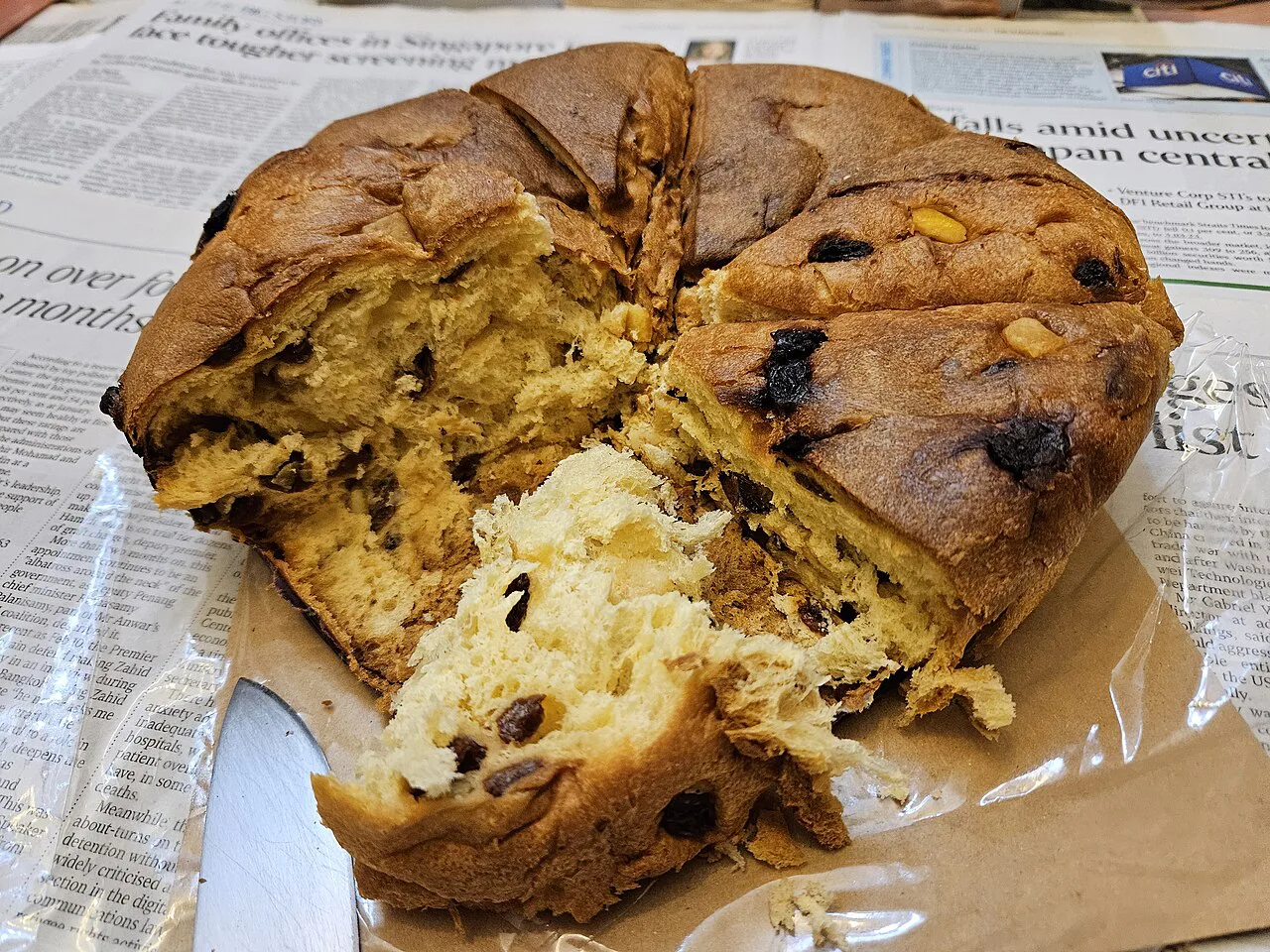
Panettone and pandoro are bought as large cakes and keep for a reasonable stretch, which is part of why they turn up on so many tables through the holidays without being baked at home. If you are travelling home with one, buy it near the end of the trip.
Which Christmas sweet to make first
If you are baking for the first time, start with struffoli: the dough is straightforward, the frying is quick and the honey coating hides a lot of rough edges. Make them close to the day you plan to eat them and coat them while the honey is warm, so the nuts and sprinkles stick.
If you want a centrepiece that can be made ahead and frozen, pitta 'mpigliata is the better project. Hold the honey and sprinkles until after thawing, and remember to remove the toothpicks before you cut it into wedges.
Explore more Italy food guides
Frequently Asked Questions
What is the cake traditionally eaten at Christmas in Italy?
Panettone is the Christmas cake most widely associated with Italy as a whole, and it appears on tables far beyond the region it comes from. Pandoro, a plainer star-shaped cake, is served alongside it. In the south, the Christmas sweets are more often fried honey dough such as struffoli, and in Calabria the coiled pitta 'mpigliata takes a place on the tray.
What are the 13 desserts served at Christmas?
The idea of thirteen Christmas desserts belongs to Provence in France rather than to Italy, and it is a different tradition from the Italian sweets described here. Italian Christmas tables vary by region: Campania has struffoli, Calabria has pitta 'mpigliata, and panettone and pandoro appear across the country. If you are looking for a set number of sweets on an Italian table, there is no single national list.
Are struffoli and cicerchiata the same thing?
They are the same idea under different regional names: small fried dough pieces coated in honey and finished with nuts and sprinkles. Campania calls them struffoli, Calabria uses cicirata or turdiddi, Umbria and Abruzzo say cicerchiata, and Sicily writes strufoli with one f. The name changes, the honey-coated fried dough does not.
Sources
Notes for your next meal in Italy
Optional updates to our food guides.
You might also like
Continue reading
More guides you'll find useful