Neapolitan Desserts: Sfogliatella, Pastiera and More
A practical guide to Neapolitan desserts: what sfogliatella riccia and frolla are, how pastiera is made, and which Naples classics to order and when.
On this page
Two desserts do most of the work in a Neapolitan pasticceria. Sfogliatella is the everyday pastry, a many-layered shell around a warm filling thickened with semolina and ricotta; pastiera is the Easter cake of sheep's milk ricotta, cooked wheat berries and orange blossom water. This guide explains what each one is, how it is built, and how to choose between the two shapes of sfogliatella at the counter.
Both are sweet but neither is heavy in the modern sense: the pastry relies on lard for flakiness, and the fillings lean on ricotta rather than cream. Knowing that changes what you should expect when you bite in, so the sections below go through the shell, the filling, the flavourings and the season for each.
What counts as a Neapolitan dessert
Naples is associated with a short, distinctive list rather than a broad repertoire, and two names carry most of the weight: sfogliatella and pastiera napoletana. Both are ricotta-based, though they differ in the milk used: pastiera is built on sheep's milk ricotta, which gives it a dense, faintly tangy body rather than a whipped sweetness, while the sfogliatella filling uses whole milk ricotta. A pasticceria counter of any ambition will have at least one of them.
If you only have time for one stop, treat sfogliatella as the breakfast pastry and pastiera as the cake you buy by the slice to eat later. The first is at its best within hours of baking and while still warm; the second is made to rest, and the recipe below calls for at least eight hours of cooling before it is cut.
Sfogliatella: the shell, the filling and the two shapes
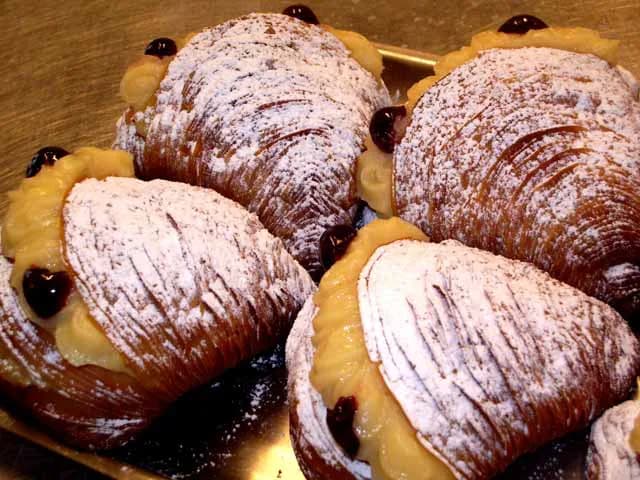
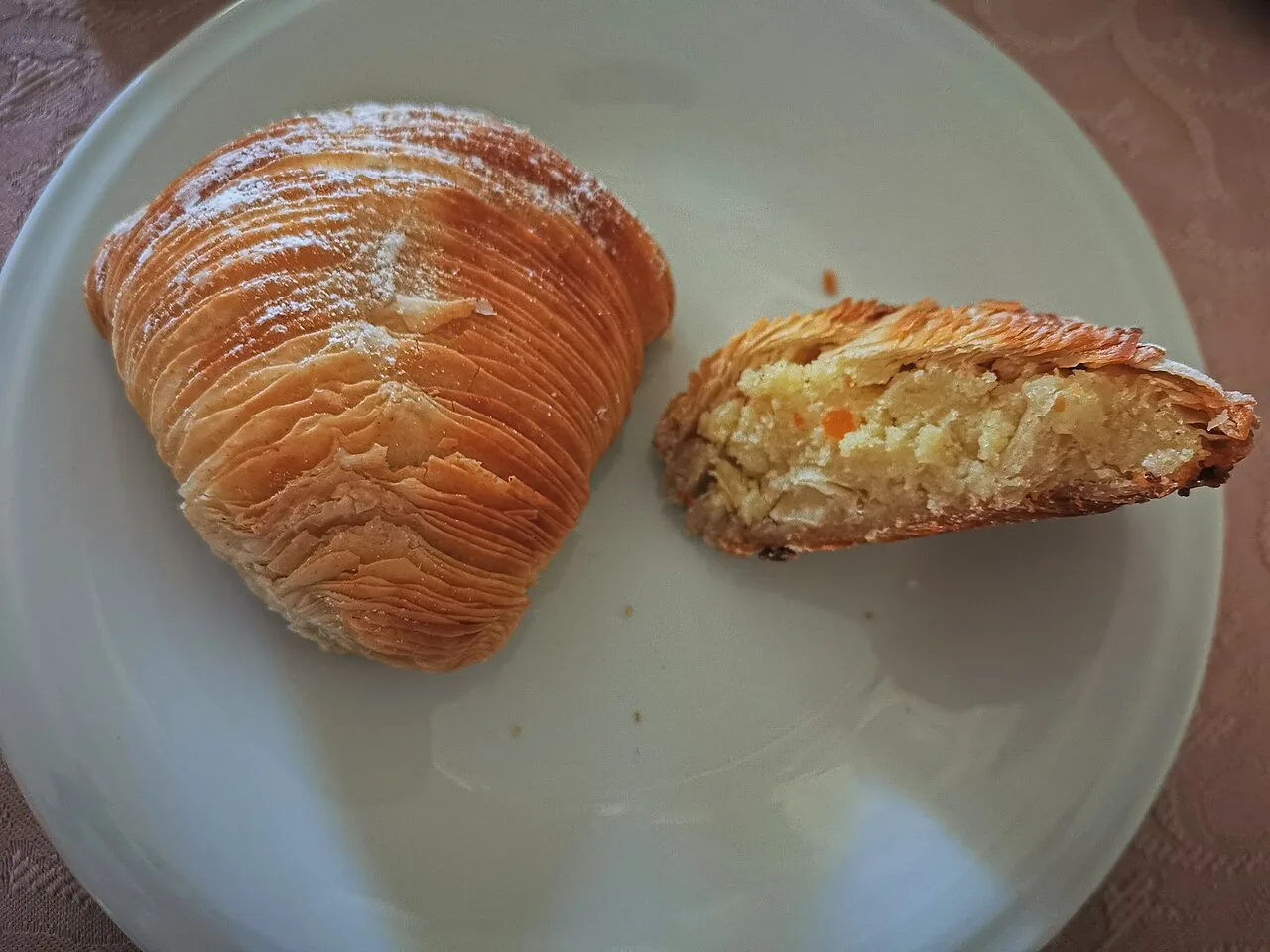
A sfogliatella is a clam-shaped pastry whose shell is made from dough rolled almost paper-thin, greased with lard, then rolled into a tight cylinder and sliced into discs. Those slices are pressed open and filled before baking, which is what produces the hundreds of crisp, crackling layers around the filling. The technique is closer to laminating pastry than to bread making, and the dough is deliberately dry and stiff rather than soft.
The filling is a thick mixture of semolina cooked with water, sugar, salt and cinnamon, then enriched with whole milk ricotta, egg yolks and vanilla, with orange zest and sometimes candied orange or citron folded through. It must be robust enough to hold its shape as the pastry puffs, which is why it is cooked on the hob first and chilled before it goes anywhere near the dough. Expect a warm, citrus-and-vanilla flavour rather than pure sugar.
The two shapes on the counter are riccia and frolla. Riccia is the layered, ridged version made from the rolled and greased dough; the frolla is the shortcut shell, a shortcrust case that behaves much more like a tartlet, which is where the Italian dessert term pasta frolla comes from. Sicilian desserts use the same shortcrust idea for their own ricotta-filled cases, so a taste for frolla travels well south.
The version often called a lobster tail in English-speaking bakeries uses a choux dough inside the laminated layers, which puffs up so the pastry can be filled after baking with sweetened whipped cream and ricotta. It is a different proposition from the classic sfogliatella, closer to a cream puff in construction, and worth knowing about so you are not surprised by the filling.
Riccia or frolla: which sfogliatella to order first
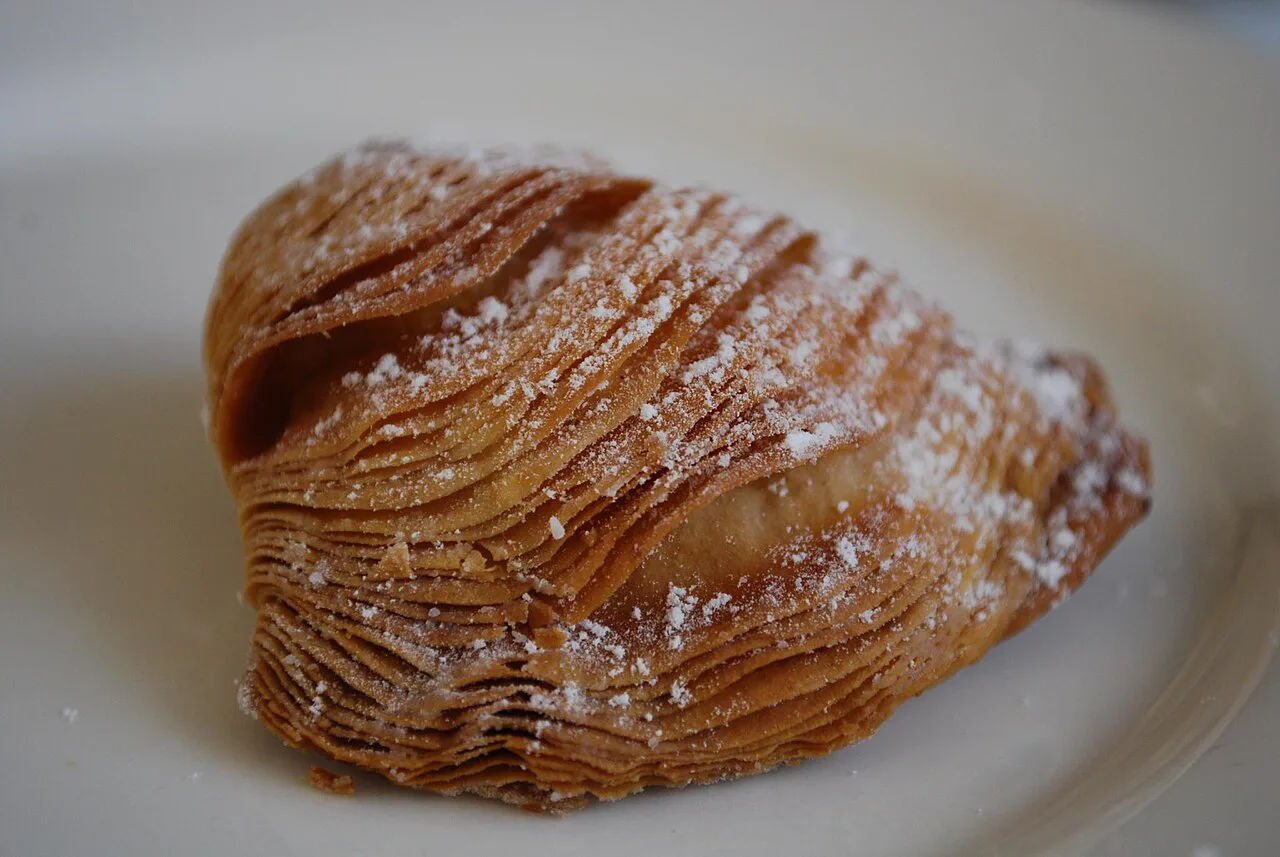
Order the riccia first. The whole point of the pastry is the shattering, multi-layered shell, and the riccia is the one that delivers it; the frolla is softer, simpler and quicker to eat, better as a second purchase. If you are buying a box to share, take one of each and compare them side by side.
The trade-off is texture over mess. The riccia sheds flakes everywhere and is at its peak warm, so eat it standing at the counter or walking away from the shop rather than saving it for later; a chilled riccia loses the contrast between crisp shell and warm filling that makes it worth seeking out. The frolla travels better if you want something for the train or the flight home.
How sfogliatella is made, and why it is best eaten warm
The labour sits almost entirely in the shell. The dough is passed repeatedly through a pasta machine until it is roughly half a millimetre thick, then unrolled, lightly greased with lard, stretched widthways and rolled into one very tight cylinder that is chilled before being sliced. A motorised pasta machine is a genuine help here, because the sheet becomes long and awkward to handle.
Each chilled slice is greased on both sides and pressed outward from the centre with your thumbs, spiral facing you, so it opens into a cone that can take the filling. That shaping step is why the pastries have their ridged, shell-like surface, and why a badly handled one collapses rather than holding its layers.
All of this explains the warm-serving habit. A pastry built from dozens of greased, paper-thin layers is at its crispest shortly after it leaves the oven, and the semolina-and-ricotta filling is at its most fragrant while still warm. A pasticceria with a busy morning turnover is your best bet for catching them in that state.
Pastiera: the Easter cake of ricotta, wheat berries and orange blossom
Pastiera napoletana is a shortcrust cake filled with cooked wheat berries, sheep's milk ricotta, sugar, eggs and candied citrus, perfumed with orange blossom extract. The pasta frolla case is made with flour, lard, sugar, salt and eggs, chilled before rolling out, and finished with strips of dough laid in a criss-cross diamond pattern across the top.
The wheat element has a name worth learning: grano cotto, meaning pre-cooked wheat berries, sold ready to use. If you are making pastiera yourself, the berries are simmered in milk with cinnamon, orange zest and vanilla until the liquid is absorbed, then folded into the ricotta base with stiffly beaten egg whites. Some of the cooked wheat can be puréed for a creamier set.
It is a slow cake. The assembled pastiera bakes for around an hour and a half at a low oven temperature until golden, then cools for at least eight hours in a dry place before slicing, which is why it is usually made a day ahead. Buy a slice from a shop that bakes in volume and you are tasting something that has had time to settle.
The flavours to recognise in pastiera: candied citrus, cinnamon, orange blossom water
Four flavourings define the cake, and once you know them you can taste each separately. Orange blossom water gives the floral note that people either love or find soapy; candied citron and candied orange add bittersweet chew; ground cinnamon warms the wheat; and lemon and orange zest sharpen the ricotta. The recipe uses roughly two tablespoons of orange blossom water and half a teaspoon of cinnamon for a cake serving ten.
If you are sensitive to perfume, pastiera is the dessert to approach cautiously, because the floral element is not a background hint. Sfogliatella, by contrast, stays in the citrus and vanilla register and is the safer first buy for anyone unsure about orange blossom.
When pastiera appears: Easter in Naples and the rest of the year
Pastiera is an Easter cake. No Neapolitan Easter meal is complete without it on the table, which sets the timing: this is the moment in the calendar when every pasticceria is making it in quantity and the shelves are full of it. If you are in Naples in spring, it is the dessert to buy. Italian Easter baking more widely leans on the same candied fruit and citrus, so the spring pasticceria window rewards a look around.
Outside Easter the picture is patchier, and what is on the counter depends on the shop rather than on any city-wide rule. Sfogliatella fills the gap: it is made all year and is the more useful pastry to know if your visit does not fall in spring. If pastiera is the reason for your stop, ask at the counter whether the shop has it in that day, since many bakeries in Naples make it chiefly for the Easter season.
How to order and eat these desserts in a Naples pasticceria
Order at the counter, name the shape rather than just the pastry, and say whether you want it to eat in or take away. Saying riccia or frolla saves pointing and gets you the one you actually want; asking for a sfogliatella alone may get you whichever the shop has most of. If you want pastiera, ask for a slice or a portion, since it is a cake rather than an individual pastry.
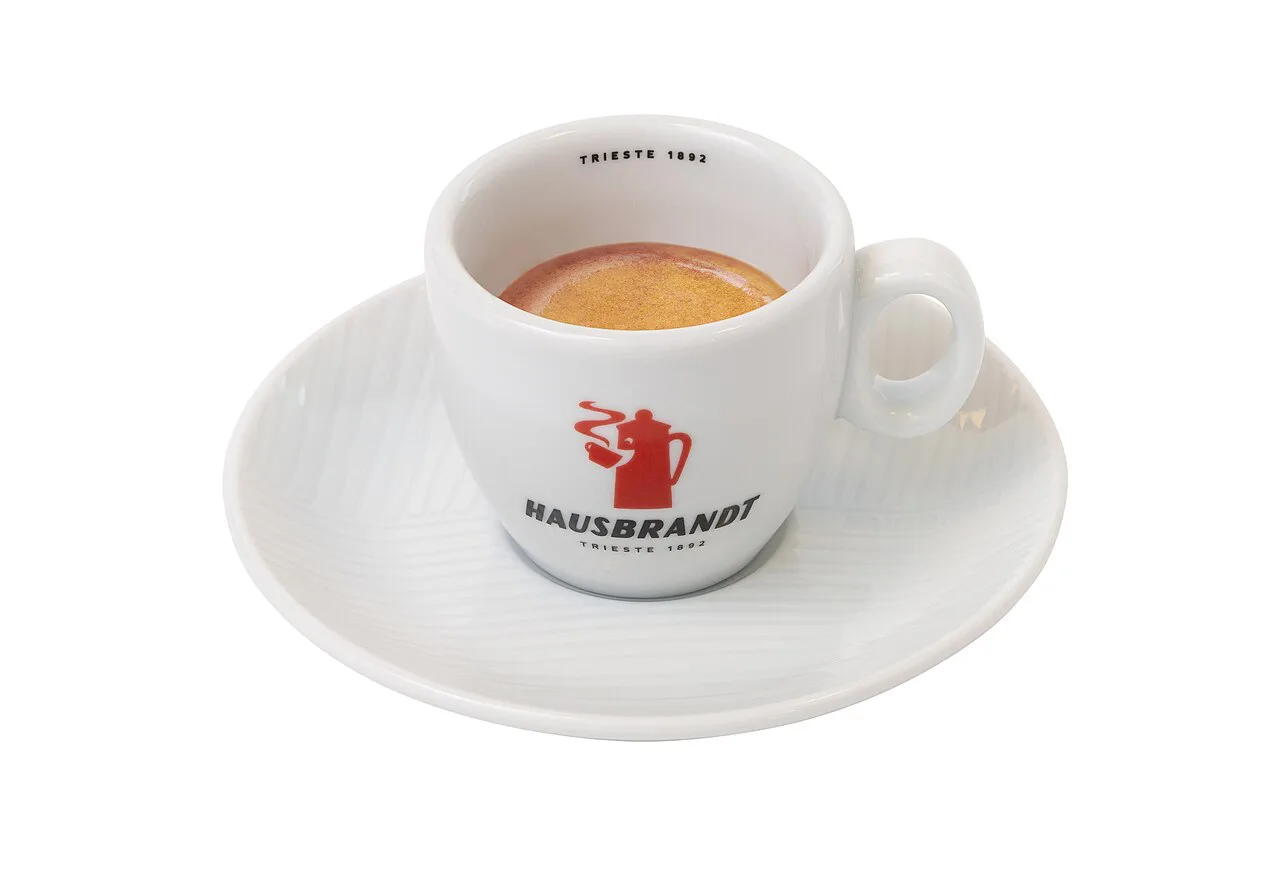
Eat the sfogliatella first and standing up, while it is still warm, then take a slice of pastiera away for later. A sfogliatella does not improve with time in a bag, whereas pastiera is designed around a long cooling period and holds together well once cut. Coffee is the natural partner for both, and a small strong one at the bar keeps the sweetness in check.
Naples dessert terms translated: sfogliatella, riccia, frolla, grano cotto, pastiera
The vocabulary is short but not obvious from the display. Sfogliatella means, roughly, a many-layered small pastry; riccia refers to the curly, ridged laminated shell; frolla is the shortcrust version; grano cotto is pre-cooked wheat berries; and pastiera is the name of the Easter ricotta and wheat cake itself. Learn these five and you can order with confidence anywhere in the city.
Pastry traditions built on ricotta and candied fruit run right through southern Italy. The almond pastes and ricotta cakes of Sicily are the closest relatives to what you taste in pastiera, and Sicilian desserts such as pasta reale show how far the same ingredients can be pushed.
Which dessert to order first
Order a sfogliatella riccia, warm, before anything else; it is the pastry that explains why Naples bothers with the technique at all. Add a sfogliatella frolla if you want the gentler shortcrust comparison, and buy pastiera by the slice in spring when the whole city is making it.
Keep the split in mind: the layered shell is a morning, standing-up pleasure, while the wheat and ricotta cake is a slow, cooled, sit-down affair that belongs to Easter. Buying one of each, at the right moment, is the whole point of the trip to the counter.
Explore more Italy food guides
Sources
Notes for your next meal in Italy
Optional updates to our food guides.
You might also like

Continue reading
More guides you'll find useful