Pasta-Making Classes in Italy: Which Course Fits Your Trip?
Compare pasta-making classes in Italy by time, format and price, from a three-hour class in Florence to a two-week professional course in Lecce.
On this page
For most visitors, the right pasta-making class in Italy is a three-hour hands-on session in Florence, priced from €110 per person, with wine and a full meal included. A week-long course in Padua or a two-week professional qualification in Florence or Lecce only makes sense if pasta is the reason for the trip, not an afternoon of it. This guide sorts the market by time commitment first, then compares what you actually make, group size, language and cost.
The three formats differ in more than length. A leisure class teaches you a dough and a couple of shapes to repeat at home; a week-long course drills technique across four lessons; professional training ends in a certificate. Prices range from around a hundred euros per person to several thousand for a certified course, so matching the format to your reason for booking matters more than chasing the cheapest option.
What a pasta-making class in Italy actually involves
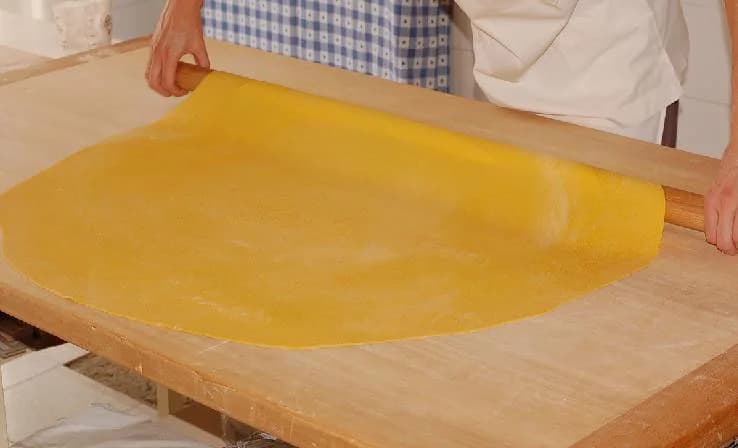
Almost every leisure class is hands-on: you mix and knead dough at your own station, roll and shape it, then sit down to eat what you made. Expect flour on your sleeves, a shared table at the end, and a glass of local wine alongside the meal in many Florence classes. The quality signals are simple: how many people per station, whether you shape pasta yourself or watch a demonstration, and whether the pasta is cooked and served or packed to take away.
Professional courses are a different proposition. The Master of Pasta and Sauces at Accademia Italiana Chef runs two weeks, Monday to Friday, 7.5 hours a day, in English, with a maximum of 20 students, and leads to a certificate as an expert in Italian pasta and sauces. It is built for people who want to work in a kitchen or pasta shop, not for a rainy afternoon in Tuscany.
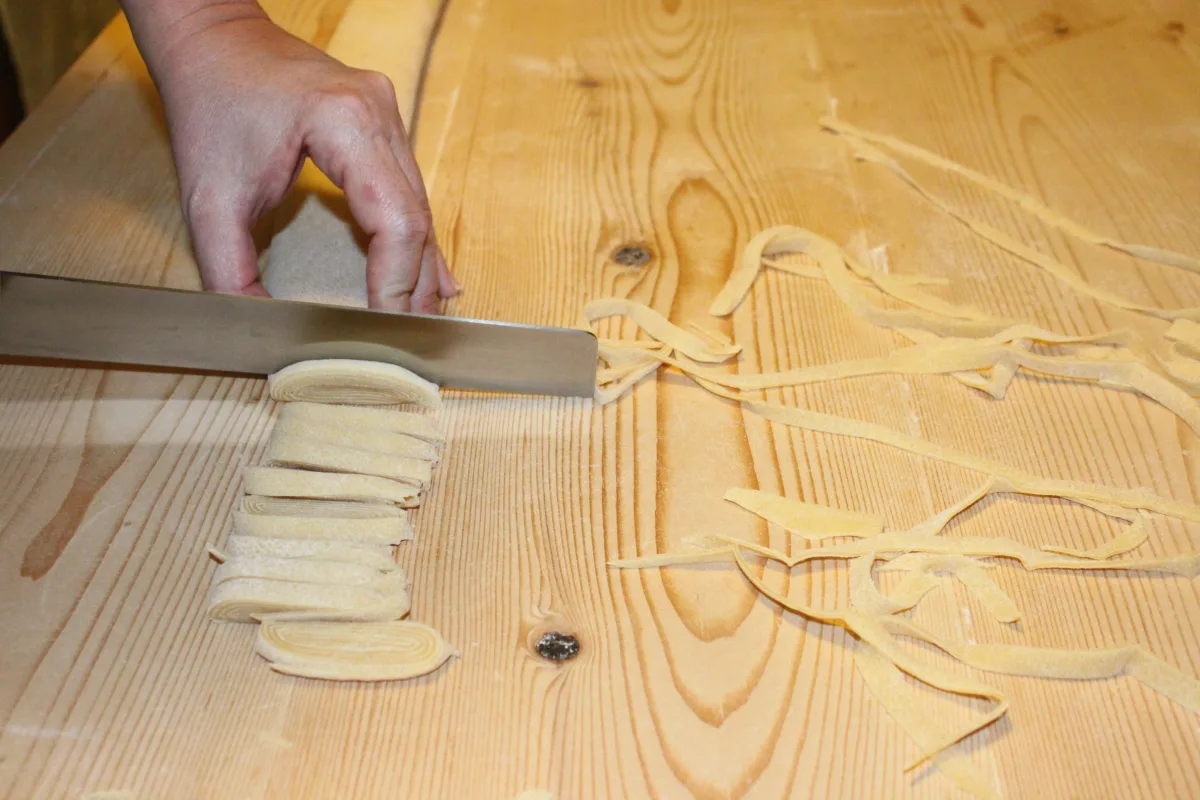
The three formats: a few hours, a week, or a professional qualification
Sort the options by the hours you can give them. A short class of three to four hours fits a normal holiday day and leaves the evening free; a week-long course of four four-hour lessons consumes most of a week; a two-week professional course of 74 training hours is a commitment that shapes the whole trip. Prices track that ladder closely, from a per-person rate in Florence to a per-group rate for a private class and a course fee for the certified master.
Do you need cooking experience to join a pasta-making class in Italy? No. The leisure classes in Florence are open to beginners, and the professional Master of Pasta and Sauces states that no experience is required, only the fee and the two weeks.
Are pasta-making classes in Italy taught in English? Yes, across the options here: the Florence classes, the Padua week-long course and the two-week Master in Florence or Lecce are all taught in English, so you can cook and follow the instruction without knowing Italian.
How many people are in a pasta-making class? Group sizes vary by format. The Florence three-hour class caps at twelve guests, the private class at six, the Padua week at four students, and the professional Master at twenty.
What a pasta-making class in Italy actually involves: Almost every leisure class is hands-on: you mix and knead dough at your own station, roll and shape it, then sit down to eat what you made.
The three formats: a few hours, a week, or a professional qualification: Sort the options by the hours you can give them.
Short classes in Florence: the three-hour pasta class and what it covers: The core Florence offering is a three-hour class capped at 12 guests, where you make fresh pasta from scratch, cook it and eat a full Italian meal with local wine included.
Decide first whether you want a souvenir skill, a deeper hobby, or a qualification. A first trip to Italy almost always points at the short class, particularly if you are already planning days around food in the best food cities in Italy. A long stay or a sabbatical opens up the Padua week; a career change is the only sensible reason to book the two-week master.
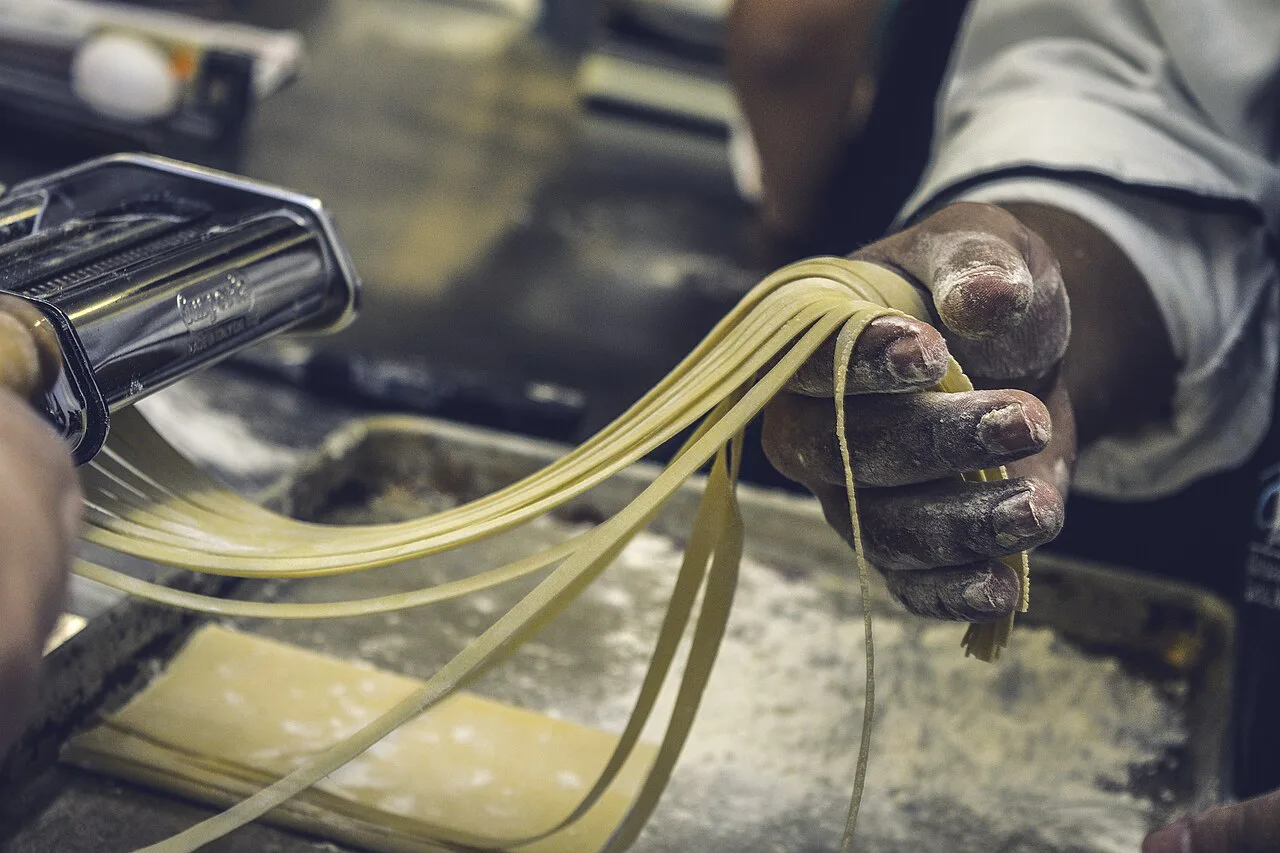
Short classes in Florence: the three-hour pasta class and what it covers
The core Florence offering is a three-hour class capped at 12 guests, where you make fresh pasta from scratch, cook it and eat a full Italian meal with local wine included. The shapes named are the everyday repertoire: tagliatelle, fettuccine and ravioli, made by hand rather than extruded. The class is taught by chefs the school describes as Michelin-trained; treat that as the school's own description rather than a restaurant rating.
At three hours, the depth is honest: you will learn one or two doughs, a rolling and cutting technique, and a filling for ravioli, not the whole grammar of Italian pasta. For a couple or a family on a city break, that is the right trade-off. If you want to leave able to make orecchiette, cavatelli and tortellini unaided, you need the longer formats.
Adding a market visit: the four-hour Florence class
The market version stretches the same class to four hours and starts with shopping at Sant'Ambrogio Market, then turns the ingredients into fresh pasta back in the kitchen. It is priced from €150 per person, against €110 for the class without the market. The extra hour and forty euros buy you a look at how Florentines actually buy vegetables, meat and produce, which is often the most memorable part for a food-focused traveller.
Choose the market class if you have a free morning and no fixed lunch; skip it if your day is tight or you have already wandered an Italian food market and would rather browse alone. The cooking itself is the same in both versions.
Private classes in Florence and when the group price makes sense
The private version of the Florence class runs three hours for your group only, capped at six people, with a three-course meal and Tuscan wine, priced from €900 per group. The arithmetic is straightforward: at six people that is roughly €150 each, close to the market class rate; at two people it is far more expensive per head. Private booking earns its price with dietary restrictions, small children, or a celebration where you want the kitchen to yourselves.
For a group of four to six who all want to cook together, the per-group price removes the awkwardness of sharing a table with strangers and lets the chef adapt the menu. Below four people, the standard class is better value and usually more sociable.
Week-long pasta courses in Padua: four hands-on lessons across five nights
In Padua, the Rolling Pin Cooking School runs a week-long pasta course made of four hands-on lessons of four hours each, taught in English, with a maximum of four students and five nights' accommodation included. The small cap is the real differentiator: with four people at the bench, the teacher corrects your dough as you work. A course without accommodation is available for anyone already staying nearby.
Padua also makes a practical base: it sits in the Veneto, within easy reach of Venice and Verona, so the course can anchor a longer northern trip. The school offers the course every week on demand, and places are limited by the four-student cap, so enquire early if you are building a trip around fixed dates.
Professional two-week training in Florence or Lecce
The Master of Pasta and Sauces costs 2,250 euro, runs two weeks Monday to Friday with weekends free, and takes place in either Florence or Lecce. Teaching is in English, the class is capped at 20, and the daily rhythm differs by city: Florence runs 9:30 to 17:00, Lecce 13:30 to 21:00, so your free mornings and evenings swap depending on where you enrol. No prior experience is required, only the fee and the fortnight.
Florence suits anyone who wants mornings in the city and easy transport, with the school a short walk from the tramway that links the centre and the airport. Lecce puts you in Puglia, near the coast and a deep southern culinary tradition, with classes in the afternoon and evening. The qualification is a Master's Certificate of Expert of Italian Pasta and Sauces, which is the point of choosing this over a holiday class.
What you make in each format: shapes and sauces
The Florence classes cover tagliatelle, fettuccine and ravioli, the fresh egg pasta of Tuscany, plus the sauces to dress them. The Padua week goes far wider across its four lessons: tagliatelle, potato gnocchi, spinach gnudi, Sardinian saffron malloreddus, spaghetti alla chitarra, semolina gnocchi in the Roman style, lasagne, passatelli, garganelli, corzetti, pappardelle, culurgiones, tortellini or agnolotti, Venetian bigoli and baked pasta. Sauces include ragù alla bolognese, carbonara, amatriciana, cacio e pepe, pesto, clam sauce and porcini. If breadth is your measure of value, this is where the week-long format earns its keep.
The professional course starts from the fundamentals: the difference between fresh and dry pasta, doughs, moulding and forming, then Italian sauces, bases, classics and variations, plus how to hold large batches for catering. That progression from technique to production is what separates a certified course from a leisure class, where you leave with two shapes and a good lunch.
Group size and language of instruction
Group size is the most reliable quality signal. Twelve guests in Florence is comfortable for a demonstration-and-do format; four in Padua means near-individual tuition; 20 in the professional course is a classroom, with the promise of practice on every item. All three teach in English, so language is not a barrier for UK or US visitors on any of these courses.
Ask before booking how many people share the class and whether the teaching is hands-on throughout or partly a demonstration. A large class can still work well if you each get time with the dough, and a small one can disappoint if you spend most of it watching. The numbers are published by each school and worth confirming when you enquire.
Where the classes are and how the day fits around them
Florence classes run in the historic centre, close enough to walk from central accommodation; the market version starts at Sant'Ambrogio, a short walk from the Duomo area. Padua's school sits a short distance from the city centre, with the Veneto's rail links making Verona and Venice feasible on free days. The professional course in Florence is by the tramway, and the Lecce school is a few steps from the centre, with afternoons and evenings occupied.
A three-hour class slots neatly between a morning of wandering and a late dinner, but skip lunch on class days because you eat your pasta at the end. The market class claims a morning, and the professional course claims your fortnight. If you want restaurant ideas for the other evenings, our Michelin Star Restaurants in Italy guide is a companion for where starred cooking fits into a food trip.
Costs compared across formats
On price per hour, the spread is wide. The Florence three-hour class starts at €110 per person, the market version at €150, the private class at €900 per group of up to six, and the full-day pasta-plus-Chianti option at €240 per person. The Padua week includes four lessons and five nights' accommodation, so compare its cost against a hotel bill plus classes rather than against a single afternoon; the school does not publish its fee, so ask on enquiry. The two-week Master costs 2,250 euro, which buys certification as well as teaching.
Add the extras: wine with dinner is included in the Florence classes, but travel to a school outside the centre, extra nights and meals away from the course are not. For a couple, a short class is the cheapest way to learn the basics; for a solo traveller set on depth, the Padua week spreads its cost across five nights of lodging you would pay for anyway.
Which format suits a first trip, a long stay and a career change
For a first trip, book a three-hour class in Florence: low cost, no experience needed, and the meal counts as lunch or dinner. For anyone staying a fortnight or more in the north, the Padua week offers the deepest learning per euro for a hobbyist, with shapes from Sardinia to the Veneto in one course. For a career change, the two-week Master is the only option here that ends in a recognised certificate.
Families with young children should lean towards the private Florence class, where the group cap of six keeps things calm and the menu can be adjusted. Couples who mainly want a memorable evening will find the standard class sociable and good value. If your interest in pasta is part of a wider interest in traditional ingredients, our Slow Food in Italy guide is a useful companion for what to look for on menus afterwards.
How to book and what to confirm before paying
Book direct with each school through its own site: the Florence classes have an online calendar and shop, the Padua course runs on demand and is booked by email, and the Master takes bookings for scheduled dates in Florence and Lecce. Confirm four things in writing: the class is hands-on, the maximum group number, the language, and what the price includes, whether that is wine, a meal, accommodation or equipment.
For the two-week Master, ask about visa support and accommodation, since the school offers help with both and neither is bundled into the course as a stated inclusion, which matters if you are travelling from outside the EU. For leisure classes, ask about dietary restrictions and cancellation terms before you pay, because the private and market formats have fixed costs that make late changes awkward.
Which pasta class should you book?
Book the three-hour Florence class if you have a single free afternoon and want to eat what you make; choose the market version only if a morning at Sant'Ambrogio appeals as much as the cooking. Choose the Padua week when the four-student cap and the breadth of shapes justify a week of your trip, and the private Florence class when your group is four to six and you want the kitchen to yourselves.
Reserve the two-week Master in Florence or Lecce at 2,250 euro only if you intend to work in a kitchen or pasta shop. Whatever you pick, match it to the hours you can give it, ask about hands-on time and group size, and the class will deliver what it promises.
Explore more Italy food guides
Frequently Asked Questions
Do you need cooking experience to join a pasta-making class in Italy?
No. The leisure classes in Florence are open to beginners, and the professional Master of Pasta and Sauces states that no experience is required, only the fee and the two weeks. The Padua week is designed for beginners through to advanced cooks.
Are pasta-making classes in Italy taught in English?
Yes, across the options here: the Florence classes, the Padua week-long course and the two-week Master in Florence or Lecce are all taught in English, so you can cook and follow the instruction without knowing Italian.
How many people are in a pasta-making class?
Group sizes vary by format. The Florence three-hour class caps at twelve guests, the private class at six, the Padua week at four students, and the professional Master at twenty. Ask when booking, because a small bench group changes how much tuition you get.
Sources
Notes for your next meal in Italy
Optional updates to our food guides.
You might also like

Continue reading
More guides you'll find useful