Sardinian Food: The Island Dishes to Know and Order
Sardinian food is its own thing: malloreddus, culurgiones, fregula, pane carasau, porceddu and bottarga explained, with the dishes to order and how they are served.
On this page
Sardinian food is the cooking of an island that sits as close to Tunis as to Rome, and it shows on the plate: pecorino on almost everything, bread baked to keep, pasta shaped by hand and pork cooked over fire. Expect a cuisine built from shepherds' stores and coastal catch rather than the tomato-and-butter register of much mainland cooking. This guide runs through the dishes worth knowing, what each one actually is, and how they arrive at the table.
The island's distance from the peninsula explains much of the difference. Phoenicians, Romans, Byzantines, Arabs and Spanish all settled Sardinia over two millennia, and the Nuragic civilization came before them, according to the island food guide published by Great Italian Chefs. That layering produced a kitchen that borrows from North Africa, Catalonia and the Italian mainland without quite belonging to any of them.
Why Sardinian cooking tastes unlike mainland Italian food
Sardinia is the second-largest island in the Mediterranean, and its food culture evolved largely on its own. Sheep farming is central: pecorino turns up in pasta fillings, on the table as a table cheese and grated over ragù, and shepherds remain a defining figure of the island's interior. Where mainland regions lean on cow's milk butter and beef, Sardinia leans on sheep's milk and pork.
The island also carries a language and a set of names that look nothing like standard Italian. Malloreddus, culurgiones and fregula are not variations on tagliatelle and gnocchi; they are distinct shapes with their own sauces and their own logic. Placed against the mainland's cucina povera, the thrifty cooking of the poor, Sardinia's kitchen reads as its own document rather than a dialect of the mainland one.
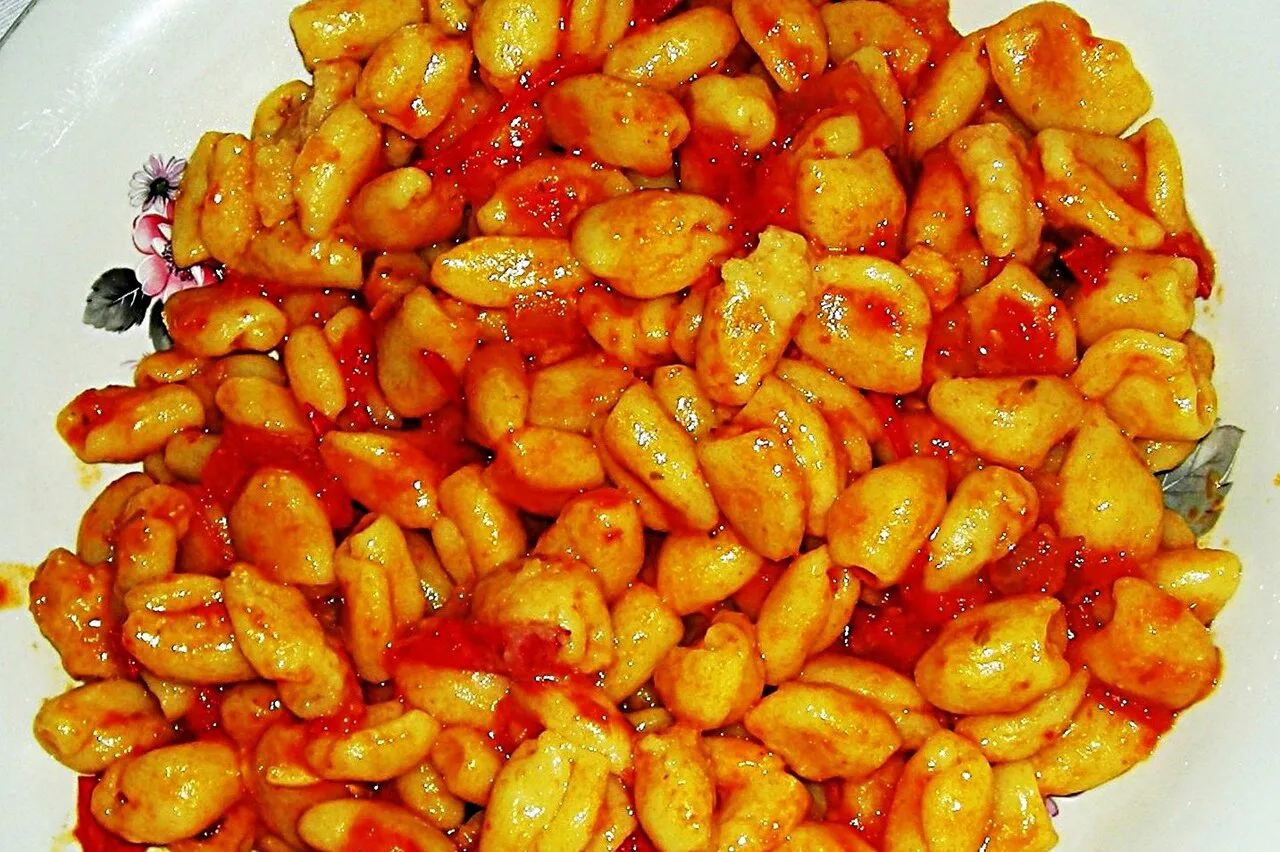
Malloreddus alla campidanese: ridged pasta with pork and fennel sausage
Malloreddus are small ridged pasta shells, often sold elsewhere as gnocchetti sardi even though they resemble cavatelli more than gnocchi. The name comes from malloru, Sardinian for bull, and the shape is said to echo a calf's belly. The ridges do real work: they hold a heavy sauce that a smooth pasta would shed.
Where is Sardinia? Sardinia is the second-largest island in the Mediterranean, lying to the south of Corsica and west of the Italian mainland. Its capital is Cagliari, in the south.
How is Sardinian food different from Italian food? It leans harder on pecorino, pork and bread than most mainland regions, and it carries Catalan, North African and Spanish influences rather than the mainland's standard tomato-and-butter repertoire. Many of the dishes are built for a long lunch: roasted meat, hand-shaped pasta, a cheese course and a honey-soaked pastry.
Do you need to book a table for porceddu? Sardinian menus sometimes list porceddu for one, which is a different, quicker dish from the whole roast served for a table. If you want the slow-roasted version, ask when you book, since preparations built around the fire need notice.
Order them alla campidanese and you get the sauce of the Campidano plain in the south-west: pork and fennel sausage, tomato, onion, saffron and pecorino sardo. The fennel seed is the tell, giving the ragù an aniseed edge that cuts through the fat. Elsewhere on the island the same pasta appears under other names, including ciggioni, cassuli and maccarones furriados, and with other sauces such as sheep ragù or melted cheese. To order the classic version in the south, this Cagliari guide to malloreddus shows where the dish fits on a menu.
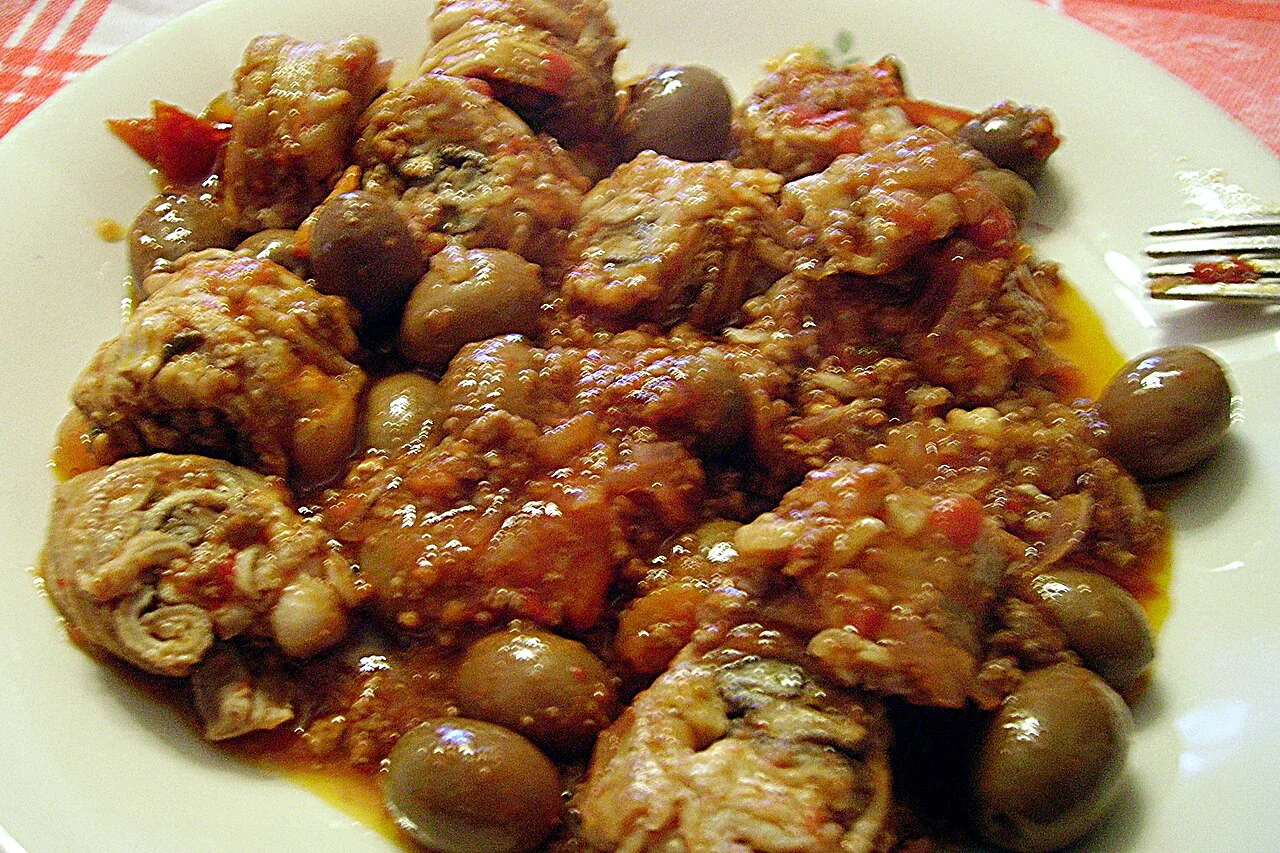
Culurgiones: potato, mint and pecorino ravioli from Ogliastra
Culurgiones come from Ogliastra on the eastern side of the island and are shaped like ears of wheat, sealed with a plaited crimp along the top. That spighitta shape takes steady hands, and it is the reason the pasta is so often held up as a test of a cook's technique. Inside is a soft filling of potato, mint and pecorino, usually finished with plain tomato sauce.
The combination is the point: the potato gives body, the pecorino gives salt and tang, and the mint lifts the whole thing so it never turns heavy. Fillings shift from town to town, and onion and garlic sometimes join the mix. At Carnevale a sweet fried version appears, stuffed with almonds, walnuts, ricotta, citrus peel and honey instead of potato and cheese.
Fregula: toasted semolina grains, and fregula con le arselle
Fregula is often mistaken for couscous and just as often misspelt as fregola. It is neither: the grains are made from semola, a coarse durum wheat grind, worked with salted water in a wide terracotta bowl called a scivedda until they reach roughly peppercorn size. They are then dried and toasted, which is where the nutty flavour comes from. The same durum wheat shapes pasta all over the south of the country, as the Regional Italian Food guide sets out.
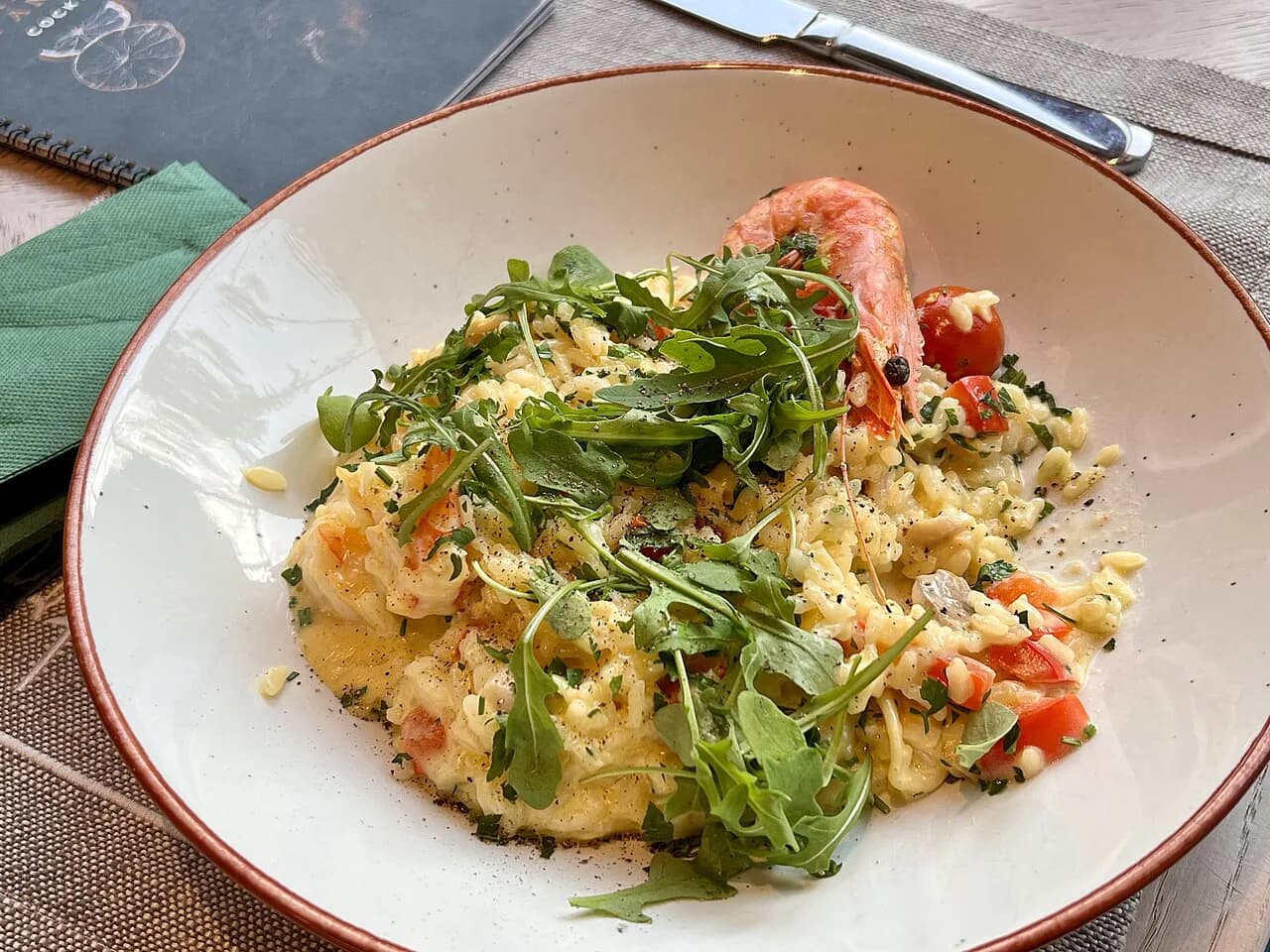
In Cagliari and along the southern coast, look for fregula con le arselle, the grains cooked with wedge clams so they soak up the shellfish broth. It eats like a cross between a pasta course and a soupy risotto, and it is one of the clearest expressions of the island's coast on a plate.
Pane carasau and the island's breads
Pane carasau is a twice-baked semolina flatbread thin enough that mainlanders call it carta da musica, sheet music, for its look and its crackle. It keeps for a long time, which is exactly why it became shepherd's food across the interior. At the table it is eaten dry as a snack, softened with a little water and dressed, or layered into a baked dish.
Sardinia's wheat has a long reputation: the Romans exported island grain across the empire, and the bread repertoire runs from plain rustic loaves to decorated shapes baked for occasions. If a bread basket arrives with something crisp and translucent, that is the one to try first.
Porceddu: roast suckling pig and where it fits in a meal
Porceddu is suckling pig roasted slowly over a wood fire until the skin turns glassy and the meat falls apart. It is the centrepiece of a long Sardinian lunch rather than a quick plate, and it usually lands after the pasta, with potatoes and bread alongside. The Nuragic civilization is credited with the dish, which puts it among the island's oldest preparations.
Order it when you have a table of people and time to sit, not when you are eating alone before a train. It is rich and salty, so a light red such as Cannonau works better than anything heavy. If you see it on a menu for one, treat that as a different, quicker dish.
Seadas: the fried pastry with cheese and honey
Seadas are round pastries filled with fresh cheese, fried until the pastry blisters, and served hot with honey poured over. The salt of the cheese against the honey is the whole trick, and they are best eaten straight away rather than boxed up. Look for them as the dolce at the end of a long lunch.
They belong to the same pastoral pantry as the pecorino and ricotta elsewhere on the menu, which is why they close a Sardinian meal so naturally. Sicily has its own dense fried-and-sweetened pastry tradition, so if the seadas appeal it is worth comparing them with the sweets described in the Sicilian food guide. If the honey is bitter rather than sweet, that is the local preference, not a fault.
Bottarga di muggine: grey mullet roe, served and bought
Bottarga is grey mullet or tuna roe that has been salted, dried and pressed into a firm amber block. It is the island's most concentrated taste of the sea: grated over pasta, or shaved into thin slices and dressed with oil as an antipasto. Sardinia is known above all for the mullet version, bottarga di muggine.
Most of the best bottarga stays on the island, so a food shop or market counter is a better buy than an airport display. Ask to taste before you commit, and look for a block that is firm rather than crumbly. It travels well if you keep it wrapped and cool.
Pecorino sardo and the other cheeses on the table
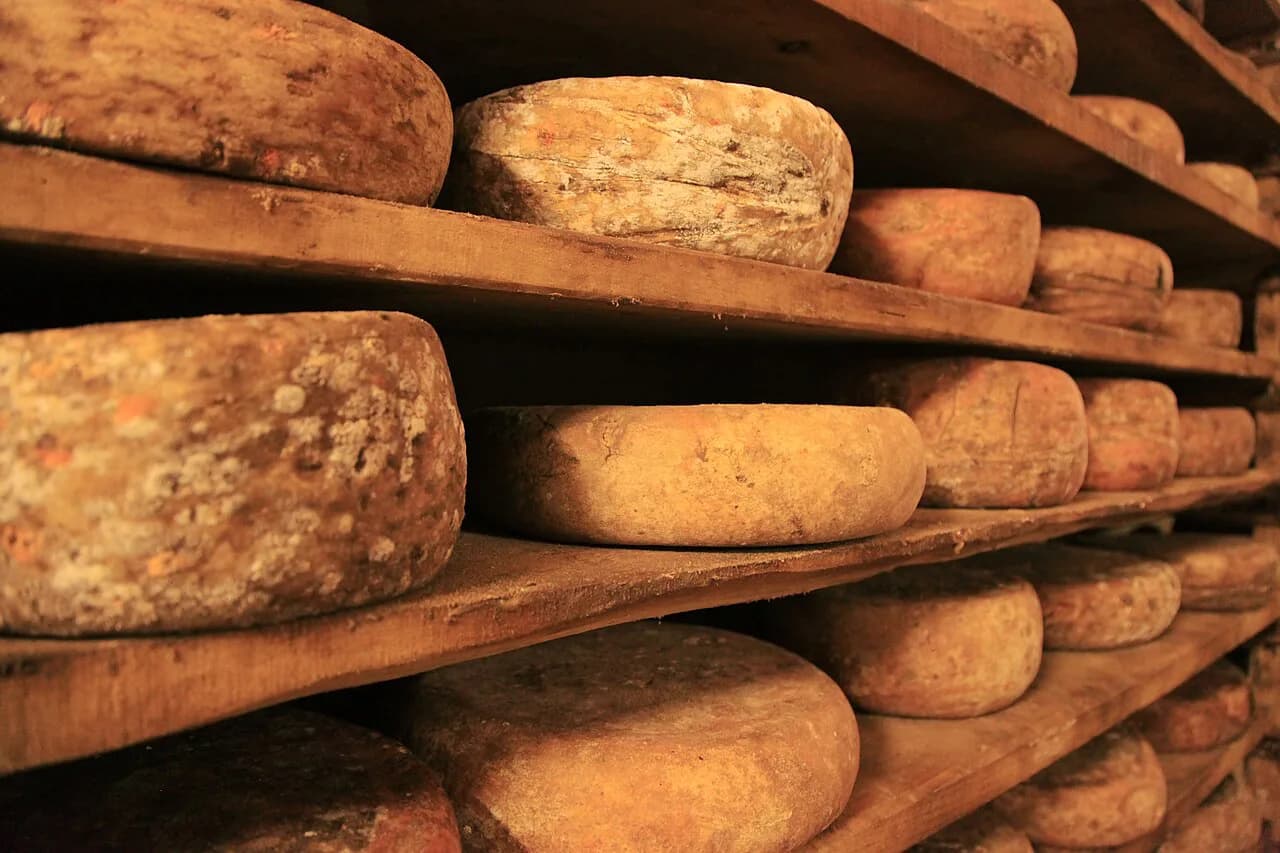
Pecorino sardo is the backbone cheese: sheep's milk, made across the island, appearing grated on pasta, melted into fillings and eaten on its own. The island's cheeses go well beyond that, from fresh ricotta used in sweets to the aged, sharply savoury grating cheeses. Casu marzu, the sheep's-milk cheese with live larvae, is genuinely a Sardinian speciality and also genuinely an acquired taste.
A cheese board is a good way to read the island in one go: younger pecorino for eating with bread, older for grating, and ricotta for the pastry course. Ask which are made nearby if you are in an inland town, since production is often very local.
Aragosta alla catalana and the Catalan thread in Alghero
Alghero on the north-west coast was a Catalan town, and the food still shows it: aragosta alla catalana, lobster dressed with tomato, onion and olive oil, reads as a Catalan dish rather than an Italian one. The Aragonese court is credited with bringing it to the island, which makes it a rare case of a named dish with a traceable political origin.
Order it as a cold antipasto or light main, with bread to mop the dressing. It is at its best in the warm months, when the tomato has flavour and the dish is meant to be cooling rather than rich. It is a good marker of how far from standard Italian cooking the island's coast can drift.
Sardinian pasta shapes beyond the three famous ones
Malloreddus, culurgiones and fregula get the attention, but the island's pasta repertoire is wider. Trofie alla carlofortina, from the far south-west, pairs the twisted pasta with a tomato and tuna sauce rooted in the tuna fishery trade. Look for names on the menu that do not appear on the mainland and order one of them.
Bread and pasta also overlap in Sardinian cooking, and a single lunch can cover both: pane carasau with cheese and salume first, then a pasta course, then the roast. Breakfast pastry is just as regional, with filindeu and lorigghetas among the specialities to know. If you are used to a Roman or Tuscan lunch, expect a longer, heavier structure.
Mazzafrisa and the island's pork
Mazza Frissa, also written mazzafrisa, is a traditional Sardinian pork preparation with a long rural history, eaten across the island and especially associated with the interior. It belongs to the same nose-to-tail logic as porceddu: nothing from the animal is wasted. It is a rich, savoury eat, better matched with bread and a glass of red than eaten on its own.
It is the kind of dish that tells you more about the island's kitchens than a polished restaurant plate would. If offal-style preparations are not your thing, ask what is in a dish before you order rather than assuming.
Orziadas, mustazzolu and the sweet side of the island
Sardinian sweets lean on almonds, honey and citrus peel, and many of them are fried or baked for a specific feast day rather than eaten all year. Mustazzolu is a hard almond pastry, often spiced and built to keep, so it travels well as a gift. Orziadas are the fried honey-and-almond pastries to look for alongside seadas on a dessert tray.
A pasticceria is the easiest place to try several at once, since the assistant will usually talk you through what is fresh. Order fewer than you think you need: the almond and honey register is dense, and a box of four goes further than a whole tray.
How a Sardinian meal is ordered and paced
A full Sardinian lunch runs through antipasti, a pasta course, a roast or fish main, then cheese and a sweet, with bread and wine alongside. That structure is long and generous, and the traditional version assumes you have the afternoon. If you are eating at lunchtime on a travel day, pick two of those courses rather than trying to fit in all four.
A few practical habits help. Share the roast and the seafood dishes, since portions are built for a table; order the house bread because it is genuinely part of the meal; and expect the bill to reflect a slower pace of service. For a cheaper, shorter version of the same food, an osteria at lunch is usually the answer.
Where Sardinian food sits in the wider Italian picture
Sardinia is one of the clearest examples of why Italy's cooking resists a single description. Its isolation produced something closer to the island's pastoral and coastal life than to any mainland school, which is why a reader who knows other regions will not be able to guess what is on the plate.
The mainland continues to absorb Sardinian ingredients: bottarga now appears widely in modern European kitchens, even though the best of it stays on the island. Cannonau, the island's red grape, is a natural partner for the roast, the cured pork and the hard cheese, and it is usually the easiest local choice to order.
Which two Sardinian dishes should you order first?
Start with malloreddus alla campidanese and culurgiones. Together they explain the island's logic in two plates: sausage and saffron on one side, potato, mint and pecorino on the other. If you get one meal only, order a roast with bread, and end with seadas and honey.
That short list is the answer: have the two pasta shapes, then add a third course from the coast, with bottarga or aragosta alla catalana for a lighter register. The island rewards a change of pace from the mainland rather than a search for its greatest hits.
Explore more Italy food guides
Frequently Asked Questions
Where is Sardinia?
Sardinia is the second-largest island in the Mediterranean, lying to the south of Corsica and west of the Italian mainland. Its capital is Cagliari, in the south. The island sits as close to Tunis as to Rome, which helps explain why its food culture has more in common with the western Mediterranean than with much of the mainland.
How is Sardinian food different from Italian food?
It leans harder on pecorino, pork and bread than most mainland regions, and it carries Catalan, North African and Spanish influences rather than the mainland's standard tomato-and-butter repertoire. Many of the dishes are built for a long lunch: roasted meat, hand-shaped pasta, a cheese course and a honey-soaked pastry. Its isolation from the mainland produced a distinct regional cuisine rather than a variant of the national one.
Do you need to book a table for porceddu?
Sardinian menus sometimes list porceddu for one, which is a different, quicker dish from the whole roast served for a table. If you want the slow-roasted version, ask when you book, since preparations built around the fire need notice. A lunchtime table gives you the unhurried pace the dish assumes.
What is the difference between fregula and couscous?
Fregula is a Sardinian pasta made from coarse durum semola, rolled by hand in a terracotta bowl and toasted, while couscous is steamed grain from a different culinary tradition. The toasting is what gives fregula its nutty flavour, and the correct island spelling is fregula, not fregola. Order it with clams, fregula con le arselle, to see the dish at its best.
Sources
Notes for your next meal in Italy
Optional updates to our food guides.
You might also like
Continue reading
More guides you'll find useful