Canederli: What They Are, What's In Them and How to Eat Them
Canederli are South Tyrol's bread dumplings, made from stale bread, milk, egg and speck or cheese. Here is what is in them and how they are served and eaten.
On this page
Canederli are savoury bread dumplings from Trentino-Alto Adige, the northern Italian region that runs up to the Austrian border, and they are a main course in their own right rather than a garnish for soup. Round, roughly the size of a small fist, they are made from stale bread soaked in milk and bound with egg, then flavoured with speck (smoked cured pork), cheese and herbs. This guide covers where they come from, what goes into them, the cheese and spinach versions, the two ways they reach the table and how to judge the mix when you make them yourself.
The name comes from the German Knödel, which the Trentino tourist board links to an old northern term for a lump or a knot, and that is exactly what the mixture becomes once the bread, milk and egg are worked together. Quantities and additions shift from valley to valley and household to household, so treat any single recipe as one version rather than the definitive one.
What canederli are and where they come from
Canederli are dumplings made from leftover bread, and they sit firmly in the cooking of Trentino-Alto Adige, the alpine region often called South Tyrol. The dish carries a double inheritance of Italian and German names: the Italian canederli and the German Knödel.
Their history is a history of not wasting food. In mountain houses bread was never discarded, and stale pieces were moistened, bound and reshaped into a filling dish with whatever was to hand, whether speck, cheese, spinach, leeks or wild herbs. The frame stayed the same while the additions changed with the larder.
Why canederli are made from stale bread
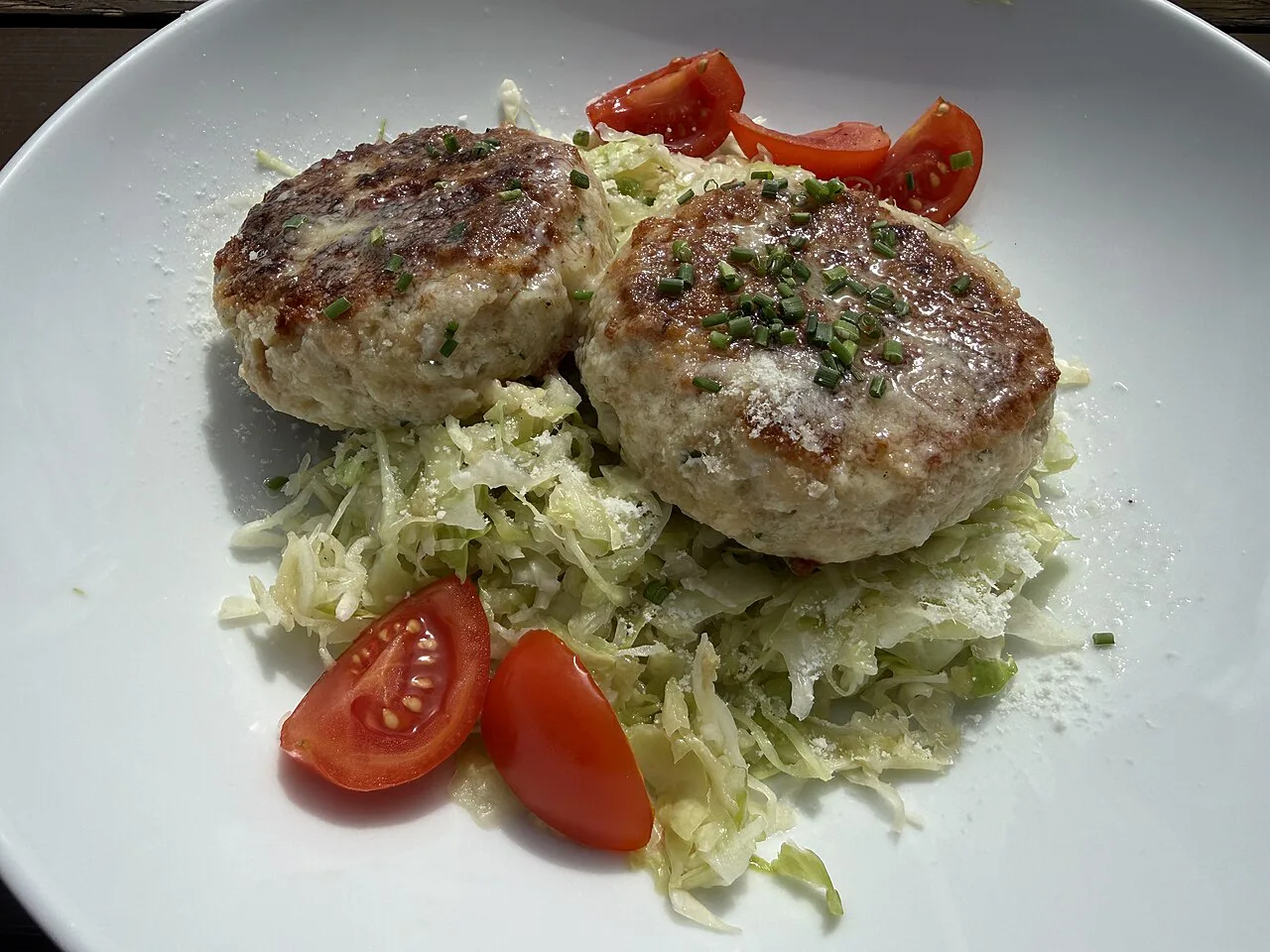
Stale bread is not a shortcut in canederli; it is the point. Dry bread absorbs milk without turning to paste, so the dumpling holds its shape and keeps a little bite after cooking, whereas fresh bread collapses into a soggy mass. The Trentino recipe calls for bread cut into roughly half-centimetre cubes, soaked in lightly warmed milk and left to rest for at least twenty to thirty minutes so every piece softens through.
The bread also decides how much liquid the mix will take. A very hard crust can be partly trimmed away, though the crust contributes to the final texture, so trimming is a judgement call rather than a rule. A loaf that is already dry will drink more milk than a soft one, which is why the recipe is guided by feel as much as by measured quantities.
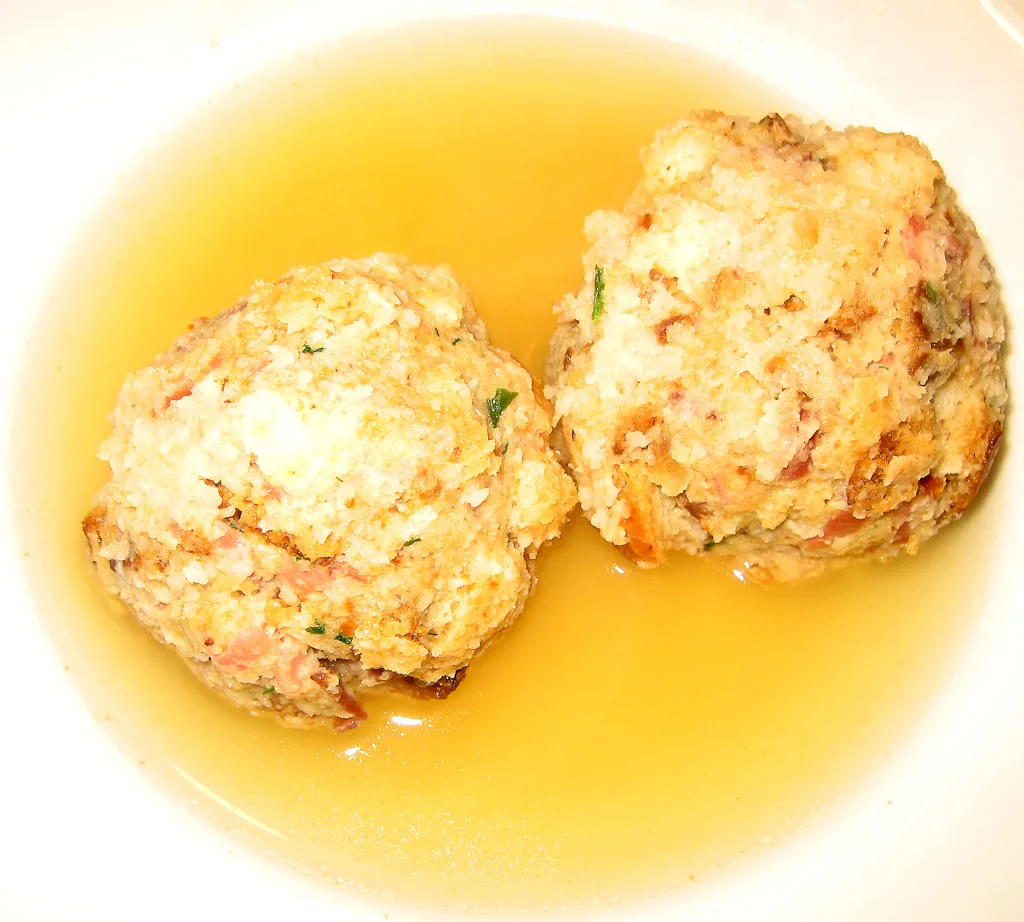
What goes into canederli: bread, milk, eggs, speck, cheese and herbs
The core is simple: stale bread, milk and whole eggs, with salt, pepper and chopped parsley or chives. The Trentino version adds a small lucanica sausage, a piece of speck, grated Trentingrana cheese and enough breadcrumbs to bring the mix together, moistened with meat or vegetable stock.
Other recipes keep it leaner, using pancetta, Emmenthal and a pinch of nutmeg, and finish the dumplings in beef stock with grated pecorino. Speck and onion are usually softened in butter before they join the bread, and the mixture is worked by hand once it has cooled a little. The eggs bind, the cheese adds savoury depth, the breadcrumbs tighten a mix that is too wet, and parsley or chives keep it from tasting flat.
A related Italian dumpling tradition comes from the opposite end of the country, where Sardinian culurgiones wrap a potato and mint filling in pasta and finish with Pecorino Sardo, a very different answer to the same question of how to make a filling parcel from simple staples.
The cheese and spinach versions
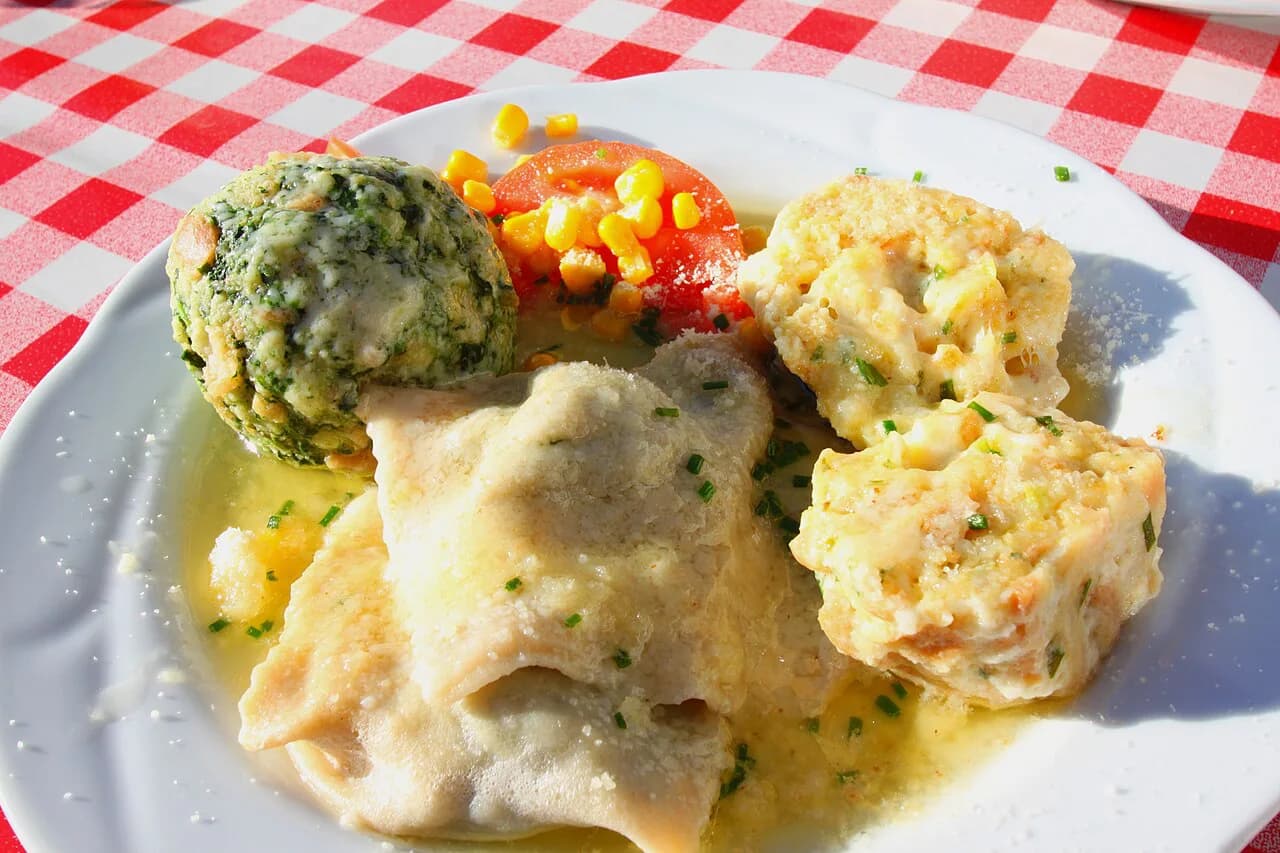
Canederli are not one dish. The Trentino recipe sets out a cheese version, where grated cheese is worked into the mix so the dumpling turns dense and savoury, and a spinach version, where cooked greens lighten the mixture and give it a vegetal edge. Both keep the bread base and the round shape but change the flavour entirely, and the spinach one is the lighter of the two on the plate.
The same source lists further variations built on leeks, mushrooms or buckwheat, which is a reminder that the dumpling is a technique as much as a recipe. In the vegetarian versions, vegetable broth replaces meat stock, which changes the character of the dish as much as the filling does.
How canederli are served: in broth or asciutti with butter and cheese
There are two classic ways to serve them. The first is in brodo, swimming in hot meat or vegetable broth, which makes a warming first course or a light lunch. The second is asciutti, meaning drained and dressed rather than soupy, finished with melted butter and grated cheese or a richer sauce. The Trentino recipe mentions gulasch as one of the richer accompaniments used in the region.
The choice changes the meal more than you might expect. In broth, the dumpling softens further and the liquid does much of the work, so a bowl of two or three is a starter. Drained and dressed with burro fuso (melted butter), they become a plate in their own right and a small portion goes a long way. Recipes also serve them simply with olive oil, Parmesan and parsley when there is no stock to hand.
How to eat canederli: a dish in its own right, not a side
Treat canederli as the main event. When they come asciutti, use a fork and a spoon together: the fork to break the dumpling and the spoon to catch the melted butter and cheese. When they come in broth, eat the dumpling with the spoon and finish the broth at the end rather than tipping it away, since it carries much of the flavour.
Portion size is where visitors misjudge them. A single large canederlo made from a good handful of bread mix is a substantial plate, so order two or three rather than assuming you need a full serving each, especially if a secondo is following.
What canederli taste like and how heavy they are
Expect soft, moist bread with a savoury edge from speck and cheese and a faint sweetness from the milk and onion. The texture sits somewhere between a dumpling and a stuffing, denser than a gnocco but lighter than a meatball, and it soaks up whatever it is served with. Parsley or chives keep the flavour fresh rather than heavy, and nutmeg in some versions adds a warm background note.
They are filling. Bread, milk, egg and cheese is a substantial combination, which is why they suit cold weather and why they often appear as a first course rather than alongside a large second plate. If you are eating a full Trentino menu, one or two in broth is a sensible start.
Making canederli at home: the texture test before you cook them
The decisive moment comes before the dumplings ever hit the water. The mix should be damp enough to hold together but not wet, soft but able to keep its shape, as the Trentino recipe puts it. If it clings to your hands and slumps, work in more breadcrumbs; if it crumbles and refuses to form a ball, add a splash more milk.
Resting matters as much as the ratio. The soaked bread needs its twenty to thirty minutes before the eggs, cheese and flavourings go in, and chilling the finished mix firms it enough to shape. Then form balls of even size, roll them lightly in flour, and simmer rather than boil hard so they do not break up. Recipes give boiling times of roughly ten to fifteen minutes, and the reliable test is to lift one out and cut it open: it should be heated through and evenly moist, with no dry pockets in the centre.
Why canederli appear on menus beyond Trentino-Alto Adige
Canederli are a technique as much as a fixed recipe, because the base is bread, milk and egg rather than a protected filling, so the idea travels easily even where you will not find the exact Trentino version. The dish fits neatly into a wider story about Italian dumplings and pasta of every kind, which the guide to Italian Pasta Shapes sets out alongside the stuffed and semolina shapes of the south.
The German name Knödel travels with them, which is why you may see the dish described as Tyrolean or alpine rather than strictly Italian. They sit comfortably next to filled pasta such as Agnolotti from Piedmont, another case of a region turning simple staples into a signature dish, and a plate of those makes an instructive comparison.
Should you order the canederli?
Yes, if you want the dish that best explains mountain cooking in Trentino-Alto Adige: bread stretched into a full plate with milk, egg, speck and cheese. Order them in broth if you want a lighter start to a long menu, or asciutti with butter and cheese if you want them to be the centre of the meal. The cheese and spinach versions are worth knowing about if you are avoiding pork or eating lighter.
If you are cooking at home, the recipe is forgiving as long as you respect two things: properly stale bread and a mix that is damp but not wet. Get those right and the rest is seasoning.
Explore more Italy food guides
Sources
Notes for your next meal in Italy
Optional updates to our food guides.
You might also like

Continue reading
More guides you'll find useful