Agnolotti: Fillings, Shapes and How to Eat Them
Agnolotti are small filled pasta parcels from Piedmont. Learn what goes inside, what plin means and how they differ from ravioli and tortellini.
On this page
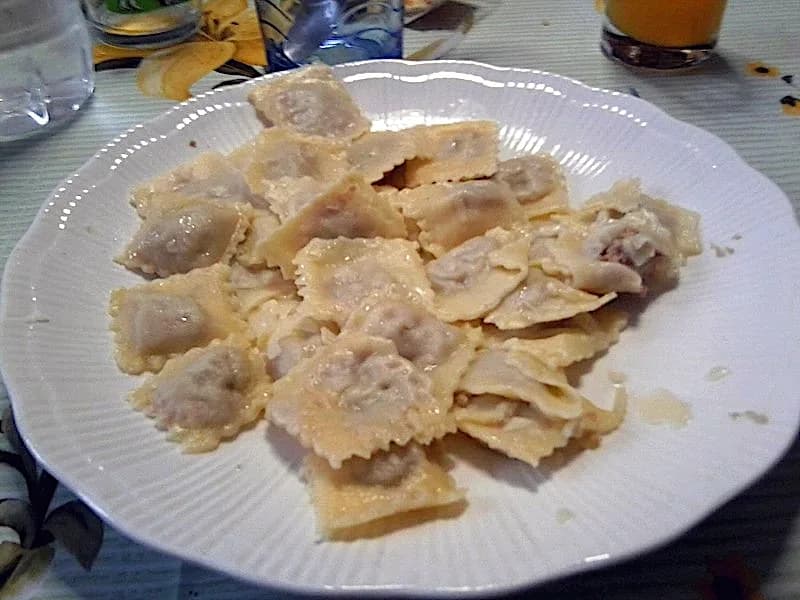
Agnolotti are small filled pasta parcels from Piedmont, normally around 3cm across, made by piping dots of filling along a sheet of dough, folding it over and pinching between each pocket to seal. They are easier to shape than ravioli or tortellini because the seal is a pinch rather than a careful press or twist. This guide covers the pinched plin version, the fillings that matter, how the shape differs from other filled pasta, and how the dish arrives at the table.
What agnolotti are
Agnolotti belong to Piedmont, the north-western region whose cooking is known for egg pasta, butter and truffles. They are a filled pasta, not a shaped one: a thin sheet of dough wraps a soft filling, and the cook pinches the dough between fillings to create separate parcels. Great British Chefs describes the standard size as around 3cm, with a miniature version known as agnolotti del plin.
The origin story most often repeated is that agnolotti were devised in Piedmont in the 14th century and named after the chef who created them, according to Great British Chefs. Treat that as a claim rather than documented history; what is clear is that the pasta is firmly tied to Piedmont rather than to Italy as a whole. Order them in Turin, Alba or Asti and you are eating the regional version, not a national one.
Pasta shapes vary by region across Italy, and each one tends to carry a particular filling and sauce with it. If you want the wider picture before you sit down to a menu, our guide to Italian pasta shapes sets agnolotti alongside the rest.
Agnolotti del plin: what plin means and how the shape is made
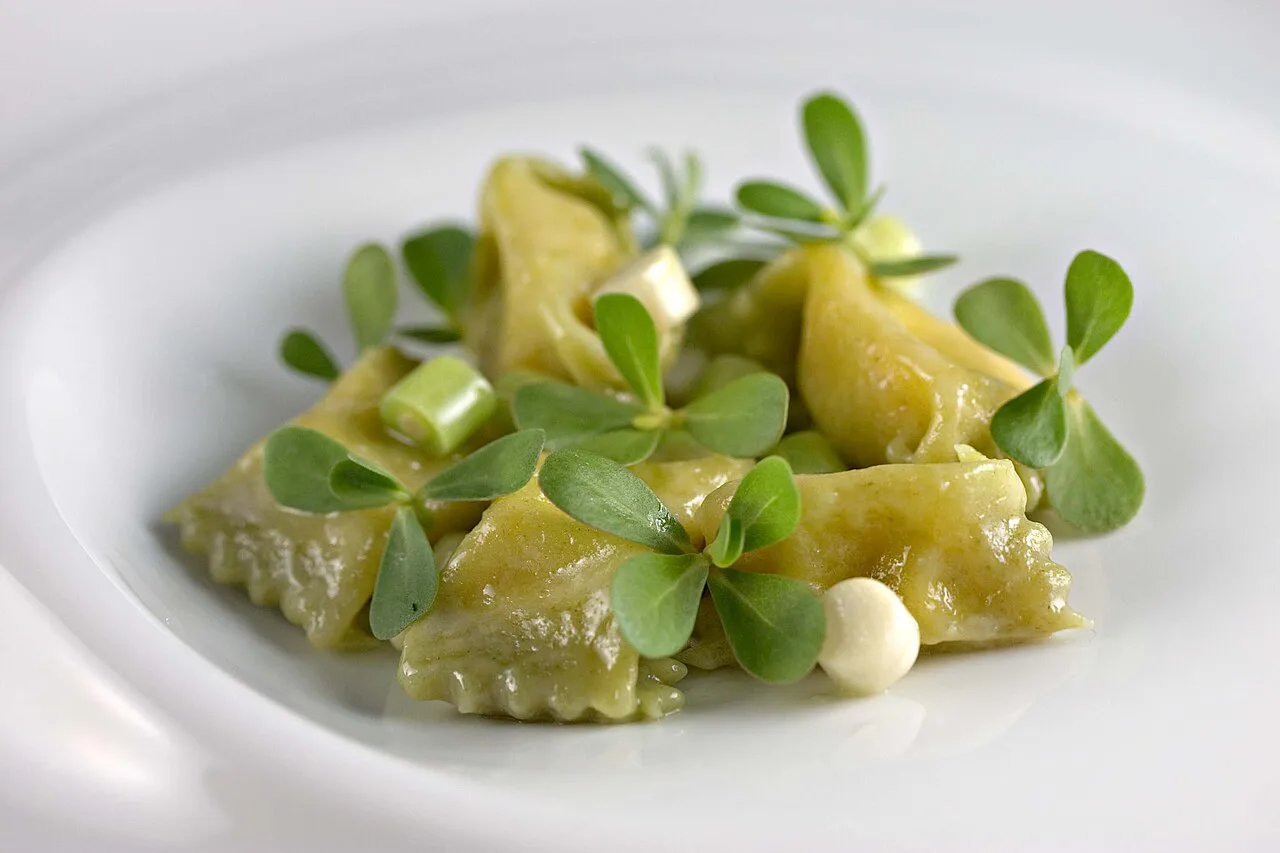
Plin means a pinch, and agnolotti del plin take their name from the way they are closed: the dough is pinched between each mound of filling, leaving a small ridge. The method Great British Chefs sets out is straightforward: roll the dough to about 2mm, pipe half-teaspoon dots at 3cm intervals, fold the sheet into a tube, pinch between the fillings, then cut the pockets apart with a pasta wheel or a sharp knife.
Are agnolotti and ravioli the same? No. Both are filled pasta, but agnolotti are sealed by pinching the dough between each mound of filling along a folded tube, while ravioli are separate parcels.
What does plin mean in Italian? Plin means a pinch. Agnolotti del plin are named for the way the dough is pinched between each filling to seal the parcel, which leaves a small ridge along the edge.
What are the traditional fillings for agnolotti? The classic version uses a farce of confit meat. Great British Chefs also lists potato with parmesan and black truffle as a traditional combination, and purées of Jerusalem artichoke or roasted pumpkin as further fillings.
The pinch is the point of the shape, and it is the technique Great British Chefs credits with making agnolotti easier to make than their relatives ravioli and tortellini. The finished agnolotto keeps a small ridge along the seam where the dough was pinched together.
The smaller the parcel, the more the pinch matters, because there is less dough to work with and the filling can escape if the seal is loose. A pasta wheel produces a fluted edge that helps here, which is why the technique pairs neatly with the plin format.
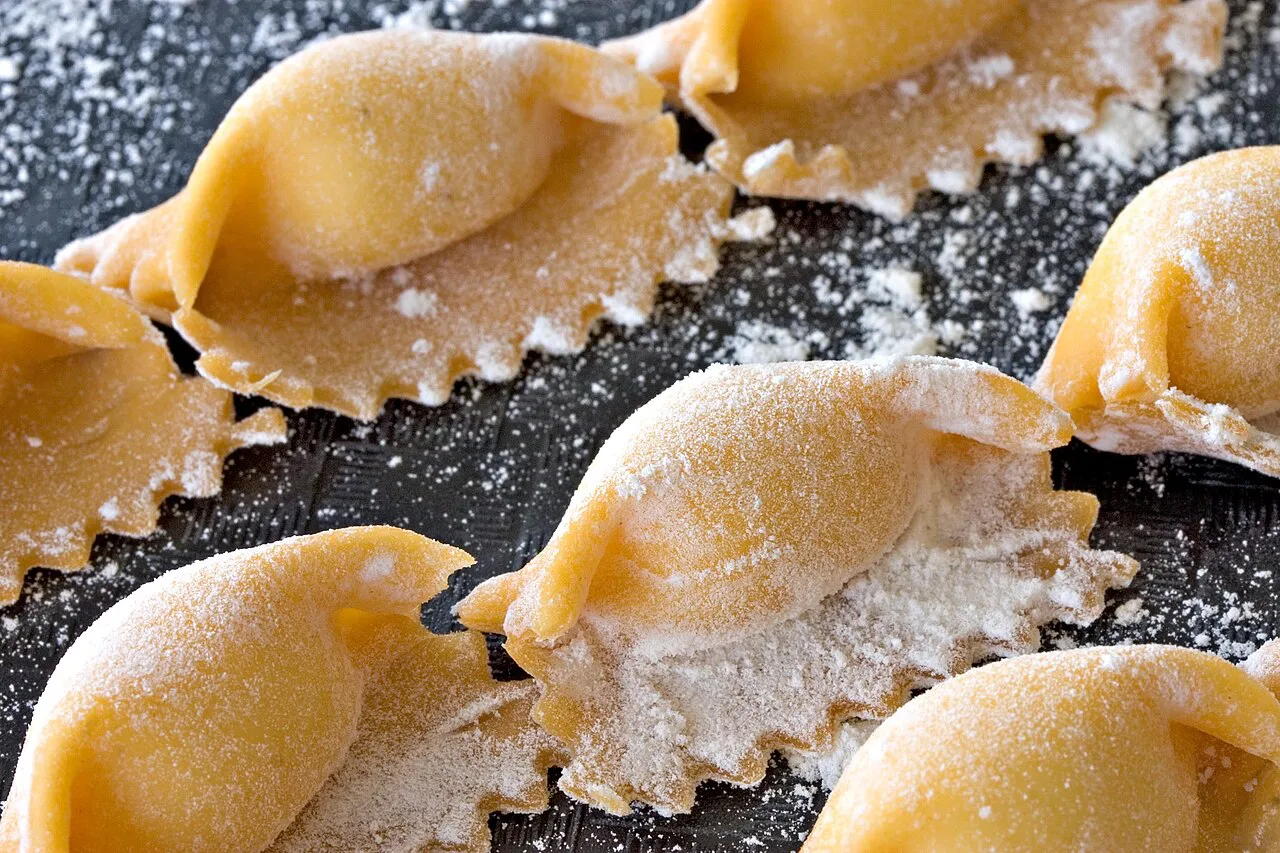
The traditional fillings, from confit meat to potato, parmesan and black truffle
The classic Piedmontese filling is a farce of confit or braised meat, which gives agnolotti their reputation as a rich, wintry dish. Great British Chefs also lists a potato, parmesan and black truffle filling as a traditional option, along with a purée of Jerusalem artichoke or roasted pumpkin for a sweeter, vegetable-led version.
Truffle is not decoration in Piedmont; the region's cooking is associated with luxury ingredients, and a potato-and-parmesan filling is a neutral base that lets the truffle do the work. If a menu lists agnolotti with tartufo, that is the pairing to expect.
Filling is where agnolotti most obviously part company with other filled pasta. The dough is a simple egg pasta, so the character of the dish comes almost entirely from what is inside and what is spooned over it. Choose by filling, not by shape, when you read a menu.
Agnolotti vs ravioli vs tortellini: size, filling and how each is made
The three shapes differ mainly on size and on how each is sealed rather than on the dough itself. Agnolotti are around 3cm and sealed by pinching the sheet between fillings; ravioli and tortellini are, in Great British Chefs' words, the fiddlier relatives, requiring more careful work to close each piece. That is the practical contrast: agnolotti reward speed, the others reward patience.
Size sets them apart too. Agnolotti sit around 3cm, while the miniature plin version runs smaller still; a plate of filled pasta on a Piedmont menu is squarely a primo rather than a main.
Elsewhere in Italy the same logic applies to completely different shapes: a regional pasta tends to carry a regional filling. Our guides to other filled pastas show how a named shape, a set filling and a local dressing travel together.
How agnolotti are cooked and served
Fresh agnolotti need very little time in the water. Great British Chefs gives 2–3 minutes in lightly salted boiling water, then draining and tossing in olive oil. The aim is to heat the parcel through without letting the dough go soft.
The dressing should be light enough to cling rather than pool. A heavy ragù would bury the filling; for how sauces are matched to shapes across the country, from ragù alla bolognese to plain butter, see our guide to Italian pasta shapes.
Expect a modest portion. Filled pasta is rich, and on an Italian menu agnolotti usually arrive as a primo, the first course, ahead of a meat or fish secondo. If you order them as your only course, add a contorno of vegetables or you may leave hungry.
Vegetarian agnolotti: ricotta and spinach as a meat-free filling
Ricotta and spinach is the standard vegetarian filling, and Great British Chefs names it as the popular meat-free choice. It works because the ricotta stays soft and the spinach adds a little bite, and it takes butter and sage better than a meat farce would.
The catch is that meat fillings dominate in Piedmont, so a vegetarian version may not appear on every menu. Ask directly, in Italian if you can: agnolotti di ricotta e spinaci.
Sardinian culurgiones are a useful comparison: a different filled pasta, sealed with a distinctive pleat and traditionally filled with potato and Pecorino Sardo, a sheep's milk cheese from the island. The filling does the regional labelling there just as it does with agnolotti in Piedmont.
How to order agnolotti in Italy: what to look for on a Piedmont menu
Look for agnolotti under the primi piatti heading, usually described by their filling: al ragù, di carne, di patate e tartufo, or di ricotta e spinaci. The words del plin signal the small pinched shape, so you know you are getting the pinched parcel rather than a generic one.
Piedmontese menus have their own vocabulary. Agnolotti sit among the region's signature pastas, and outside Piedmont you will still find them, though often on a seasonal or truffle menu rather than as an everyday dish.
Two practical notes: fresh filled pasta is usually served in smaller portions than dried, so do not assume a plate of agnolotti will fill you up; and if you want olive oil rather than a butter-based dressing, ask. Neither habit is universal, so the simplest approach is to order what the kitchen pairs with the dish.
Should you order the agnolotti or the tajarin?
Order the agnolotti if you want the region's signature filled pasta and are happy with a rich, butter-dressed primo. Note that Great British Chefs lists potato, parmesan and black truffle as one traditional filling, so if it is on the menu it is a good plate for understanding why Piedmont cooks the way it does.
Outside Piedmont, treat agnolotti as a marker of how seriously a kitchen takes its regional cooking: a menu that names the filling and the plin shape is usually more careful than one that lists them as generic stuffed pasta. Either way, they are a small plate with plenty of flavour, and worth a course of their own.
Explore more Italy food guides
Frequently Asked Questions
Are agnolotti and ravioli the same?
No. Both are filled pasta, but agnolotti are sealed by pinching the dough between each mound of filling along a folded tube, while ravioli are separate parcels. Great British Chefs describes agnolotti as easier to make than ravioli and tortellini, and gives the typical size as around 3cm.
What does plin mean in Italian?
Plin means a pinch. Agnolotti del plin are named for the way the dough is pinched between each filling to seal the parcel, which leaves a small ridge along the edge. The name describes the technique rather than the filling.
What are the traditional fillings for agnolotti?
The classic version uses a farce of confit meat. Great British Chefs also lists potato with parmesan and black truffle as a traditional combination, and purées of Jerusalem artichoke or roasted pumpkin as further fillings. Ricotta and spinach is the vegetarian option.
What is Piemontese pasta?
Piemontese cooking is the cooking of Piedmont, the north-western region around Turin, Alba and Asti. Agnolotti, the small pinched, filled parcels described here, are one of its signature pastas.
Sources
Notes for your next meal in Italy
Optional updates to our food guides.
You might also like

Continue reading
More guides you'll find useful