Amatriciana: What It Is, What's In It and How to Order It
Amatriciana is a Roman pasta of guanciale, tomato and pecorino from Amatrice. Learn what's in it, why it is only gently hot and how to order it in Rome.
On this page
Amatriciana is a tomato-based pasta sauce built on guanciale (cured pork cheek) and pecorino (a sharp, salty sheep's cheese), and it is named after the town of Amatrice in northern Lazio. It is one of Rome's core pasta dishes, sitting alongside carbonara, cacio e pepe and gricia on trattoria menus across the city. This guide breaks down what goes into it, which pasta shape turns up in the bowl, how hot it really is, and how it differs from the dishes it is most often confused with.
Order it and you get long strands of pasta, usually bucatini, coated in a glossy tomato sauce with strips of pork and a generous dusting of grated cheese. The dish is rustic rather than rich, and the heat is a background note rather than a challenge. Knowing the difference between amatriciana, gricia and arrabbiata before you sit down makes ordering in Rome much simpler, and our guide to Italian pasta shapes explains the long strands you are most likely to meet.
What amatriciana is: guanciale, tomato and pecorino tossed with bucatini
The core of the dish is three ingredients: guanciale, tomato and pecorino, tossed through hot pasta so the fat from the pork emulsifies into the sauce. That fat is what gives amatriciana its sheen and its savoury depth, and it is why the sauce clings rather than pools. Recipes vary at the edges, but the trio of pork, tomato and sheep's cheese is what defines the plate.
Home versions often drift from the trattoria standard. Cooks add onion or garlic for sweetness, use pancetta when guanciale is hard to find, or finish with Parmesan instead of pecorino; none of that is wrong, but it changes the dish. If you want the Roman version, look for guanciale, tomato and pecorino and not much else, and browse our guide to Italian pasta shapes to see how bucatini sits among the long strands.
Why the dish is called amatriciana: the link to Amatrice in Lazio
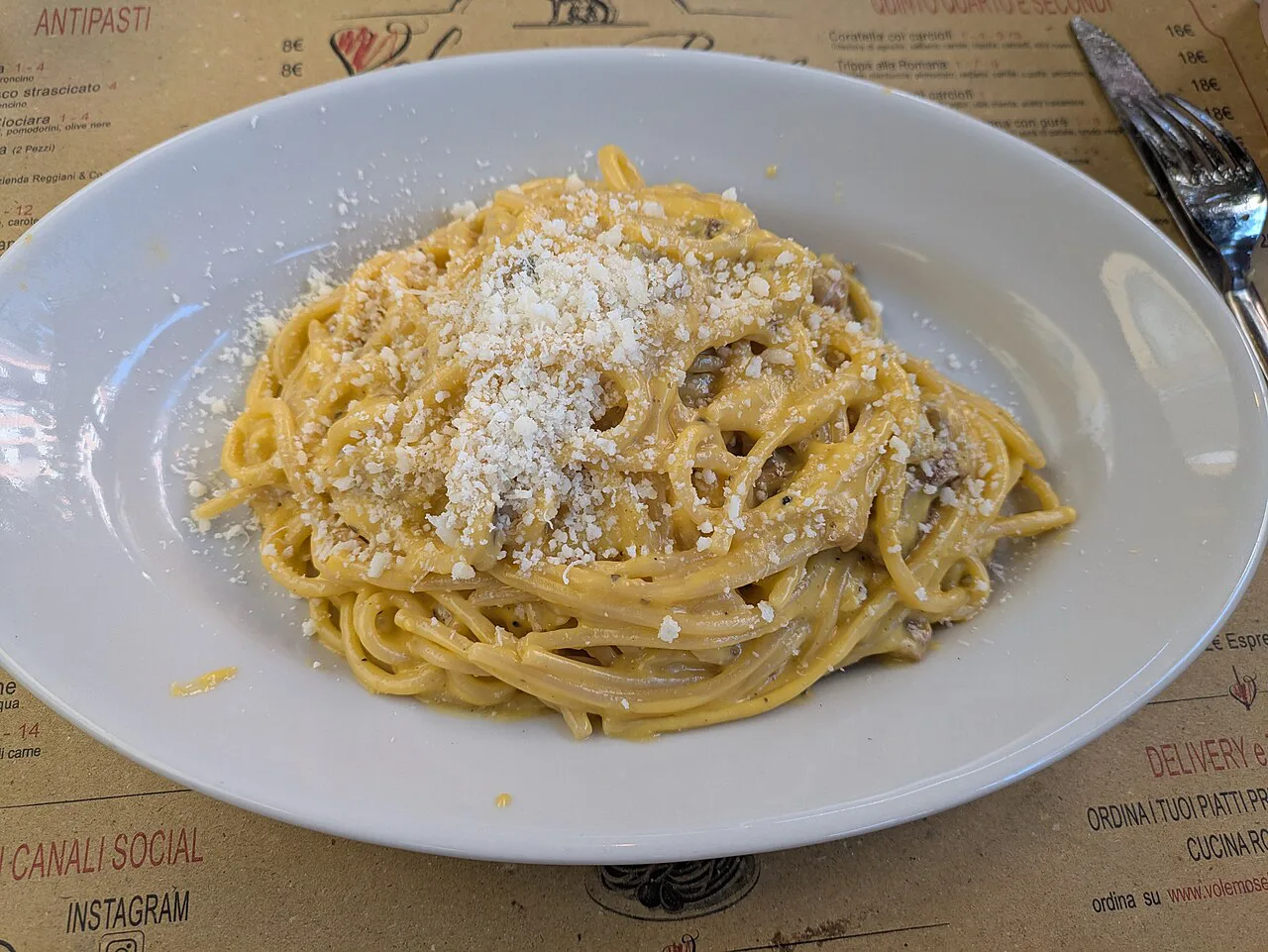
Amatriciana takes its name from Amatrice, a town in the province of Rieti in northern Lazio, in central Italy. The dish is traditionally credited to shepherds working the hills around the town, who carried durable ingredients with them into the mountains: pecorino, guanciale, dried pasta, wine and a curl of red chilli. That is a claim about the dish's origins rather than a documented recipe, and it is the version told most often in Rome and Abruzzo.
What is the difference between amatriciana and carbonara? Both start with guanciale, but amatriciana is a tomato sauce finished with pecorino, while carbonara is bound with egg and cheese and has no tomato. That is why amatriciana is red and glossy and carbonara is pale and creamy.
How do you pronounce amatriciana? Say ah-mah-tree-CHAH-nah, with the stress on the third syllable and a hard ch sound, as in the town name Amatrice. Ordering it as pasta all'amatriciana is the fuller form you will see on menus.
Can I make amatriciana without guanciale? Yes. Pancetta is the usual substitute, and thick-cut unsmoked bacon is the fallback when neither is available.
The dish travelled to Rome with cooks and trattoria owners from the Abruzzo side of the border, where it settled into the city's repertoire. Regional boundaries drawn in the 1920s split the area around Amatrice between Lazio and Abruzzo, which is part of why both regions claim a hand in the dish. In Rome it became a fixture of the city's pasta canon.
What goes into it: guanciale, ripe tomatoes, pecorino and a curl of chilli
Guanciale is the backbone: cured pork cheek, cut into strips or lardons and rendered slowly so the fat melts before the meat crisps. Tomatoes come next, and both canned and fresh versions are common; San Marzano or Roma tomatoes are the usual choice when cooking with fresh fruit, skinned and seeded first. The sauce simmers until it thickens, then the pork goes back in.
Pecorino finishes the dish, grated over the top and tossed through so it melts into the sauce. A small amount of crushed red chilli goes in early, with the pork or the onion, to give a background warmth. Salt needs care because both the guanciale and the pecorino are already salty.
Guanciale explained: cured pork cheek, and why pancetta is a practical substitute
Guanciale is made from seasoned pork cheek and cured for at least three months, which gives it a more intense flavour than pancetta, the salt-cured pork belly used in much Italian cooking. The difference matters in the pan: guanciale renders a richer, slightly sweeter fat, and that fat is the sauce. Pancetta will produce a good dish, but it is a substitute rather than the same thing.
Outside Italy, guanciale can be harder to source than pancetta, and thick-cut unsmoked bacon is the fallback many cooks reach for. If you are shopping in the UK or US, an Italian deli or salumeria is a better bet than a supermarket for the real thing. Treat the swap as a trade-off in flavour rather than a straight equivalence.
Bucatini or mezze penne: the pasta shapes used and how each holds the sauce
Bucatini is the classic pairing: a thick, long pasta with a hole down the middle, which holds its shape well when cooked al dente and winds around a fork. The trade-off is that it can flick sauce, so wear something you do not mind. Spaghetti and linguine are common stand-ins when bucatini is not to hand.
Short shapes are just as legitimate, and many Italian cooks prefer mezze penne rigate, whose ridges grip the sauce more effectively than a smooth strand. Rigatoni and penne work on the same principle. If you are cooking at home, choose a shape with some texture or a hollow centre rather than a thin, smooth one.
Is amatriciana spicy? How much chilli goes in
Amatriciana is gently hot, not fiery. The chilli is a background note, often just a pinch of crushed red pepper flakes added with the onion or the pork, and the tomato and cheese soften it further. If you want heat, ask for it or add more at the table rather than expecting the kitchen to deliver a kick.
The confusion usually comes from arrabbiata, which is a chilli-forward tomato sauce and can be genuinely hot. Amatriciana gets its warmth from the same kind of dried chilli but uses far less of it, and often none of the garlic that drives arrabbiata. If heat is what you are after, arrabbiata is the dish to order; if you want to see the shapes these sauces are paired with, the pasta shapes guide is the place to start.
Amatriciana in bianco: the white version also called alla gricia
Before tomatoes reached the recipe, the dish was made white, without tomato at all, and that version survives as pasta alla gricia. Gricia is guanciale, pecorino and pasta, with the fat and cheese emulsified into a glossy coating. It is the same family of flavours with the tomato removed, and it is a good order if you want something richer and less acidic.
Tomato was added over time and the combination took hold in Rome, which is why the red version is now the default amatriciana. Ordering gricia instead gives you a clear sense of what the pork and cheese are doing on their own. Many trattorias list both, so you can compare them across a meal.
Amatriciana versus arrabbiata and carbonara: what actually separates them
Amatriciana and arrabbiata are both tomato sauces, but amatriciana contains guanciale and arrabbiata does not; arrabbiata is built on garlic, tomato and chilli and is the hotter of the two. If you are choosing between them on a menu, pick amatriciana for the cured pork and the cheese, and arrabbiata for heat and a lighter, garlicky profile.
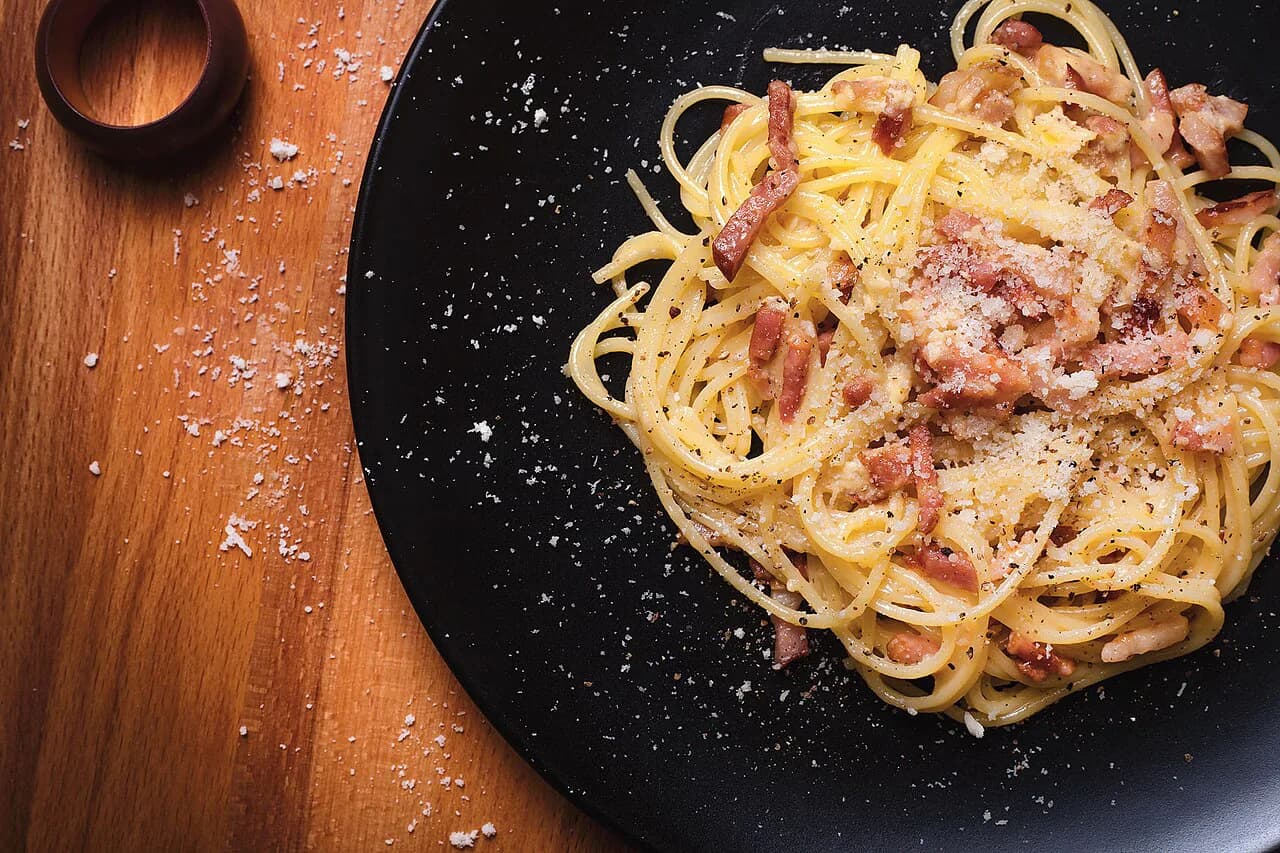
Carbonara is the other frequent confusion. It uses guanciale as well, but the sauce is egg and cheese rather than tomato, so the result is creamy and pale rather than red. Amatriciana and carbonara share a cured-pork base and then diverge completely. Tasting both on the same trip is the clearest way to see the difference.
How to order it in Rome and what to expect on the plate
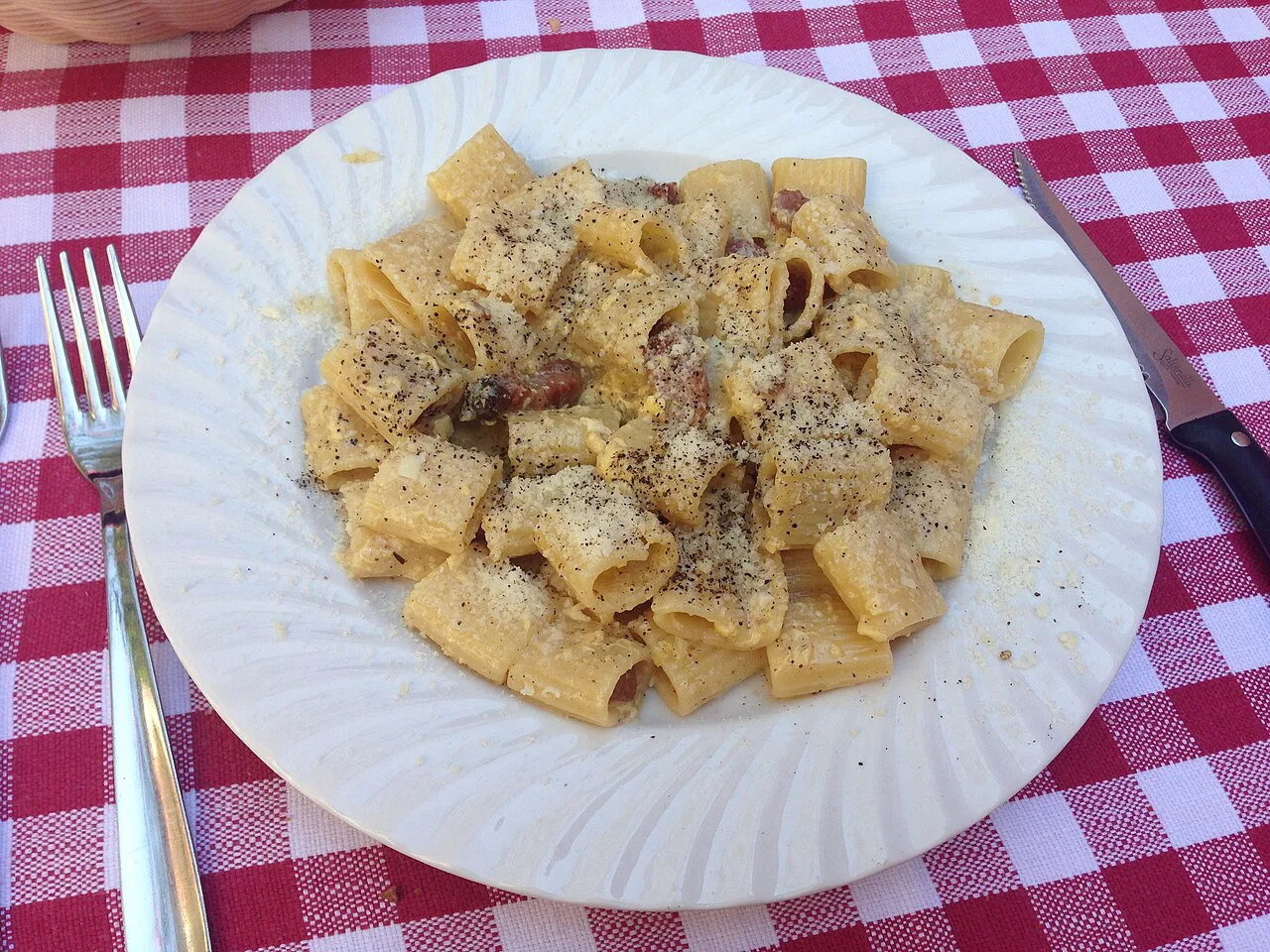
On a Roman menu, amatriciana usually appears among the primi, the pasta course, and arrives as a generous bowl rather than a small starter. Expect bucatini or a short ridged pasta, a red sauce with visible strips of pork, and grated pecorino on top. It is a substantial plate, so it works well as the main event of a lunch rather than a course before a large second.
Ask whether the kitchen uses guanciale or pancetta if the distinction matters to you, and if the menu lists gricia as well, consider ordering one of each to compare. Portions and recipes vary by trattoria, and there is no single authorised version.
Making it at home: the order of steps that keeps the sauce glossy
Start the pasta water first, because the sauce comes together in the time it takes to boil. Render the guanciale slowly in a dry pan until the fat runs and the strips brown, then lift them out and use the fat to soften onion and chilli if you are using them. Add the tomatoes and simmer until the sauce thickens, then return the pork to the pan.
Drain the pasta al dente, keeping a little of the cooking water, and toss it in the pan with the sauce and the grated pecorino. The starch in the water helps the fat and cheese bind into a glossy coating rather than splitting. Serve immediately, with more cheese and chilli at the table.
Amatriciana, gricia or arrabbiata: which to order
Order amatriciana when you want tomato, cured pork and sheep's cheese in one plate, and gricia when you want the same base without the tomato. Choose arrabbiata if heat is the point, and carbonara if you would rather have egg than tomato. On a first trip to Rome, ordering amatriciana and one of its neighbours across two meals is the quickest way to learn the differences.
At home, buy guanciale from a deli if you can and treat pancetta as the practical fallback, use bucatini or a ridged short pasta, and keep the chilli modest. Filled shapes such as agnolotti and cappellacci show how far the pasta repertoire stretches once the basics are familiar.
Explore more Italy food guides
Frequently Asked Questions
What is the difference between amatriciana and carbonara?
Both start with guanciale, but amatriciana is a tomato sauce finished with pecorino, while carbonara is bound with egg and cheese and has no tomato. That is why amatriciana is red and glossy and carbonara is pale and creamy.
How do you pronounce amatriciana?
Say ah-mah-tree-CHAH-nah, with the stress on the third syllable and a hard ch sound, as in the town name Amatrice. Ordering it as pasta all'amatriciana is the fuller form you will see on menus.
Can I make amatriciana without guanciale?
Yes. Pancetta is the usual substitute, and thick-cut unsmoked bacon is the fallback when neither is available. The dish will still work, but the fat is less sweet and the flavour less intense than with cured pork cheek.
Sources
Notes for your next meal in Italy
Optional updates to our food guides.
You might also like
Continue reading
More guides you'll find useful