Culurgiones: Sardinia's Potato and Mint Pasta Explained
Culurgiones are Sardinia's potato, pecorino and mint stuffed pasta from Ogliastra. Learn what they are, how the wheat-ear shape works, and how to serve them.
On this page
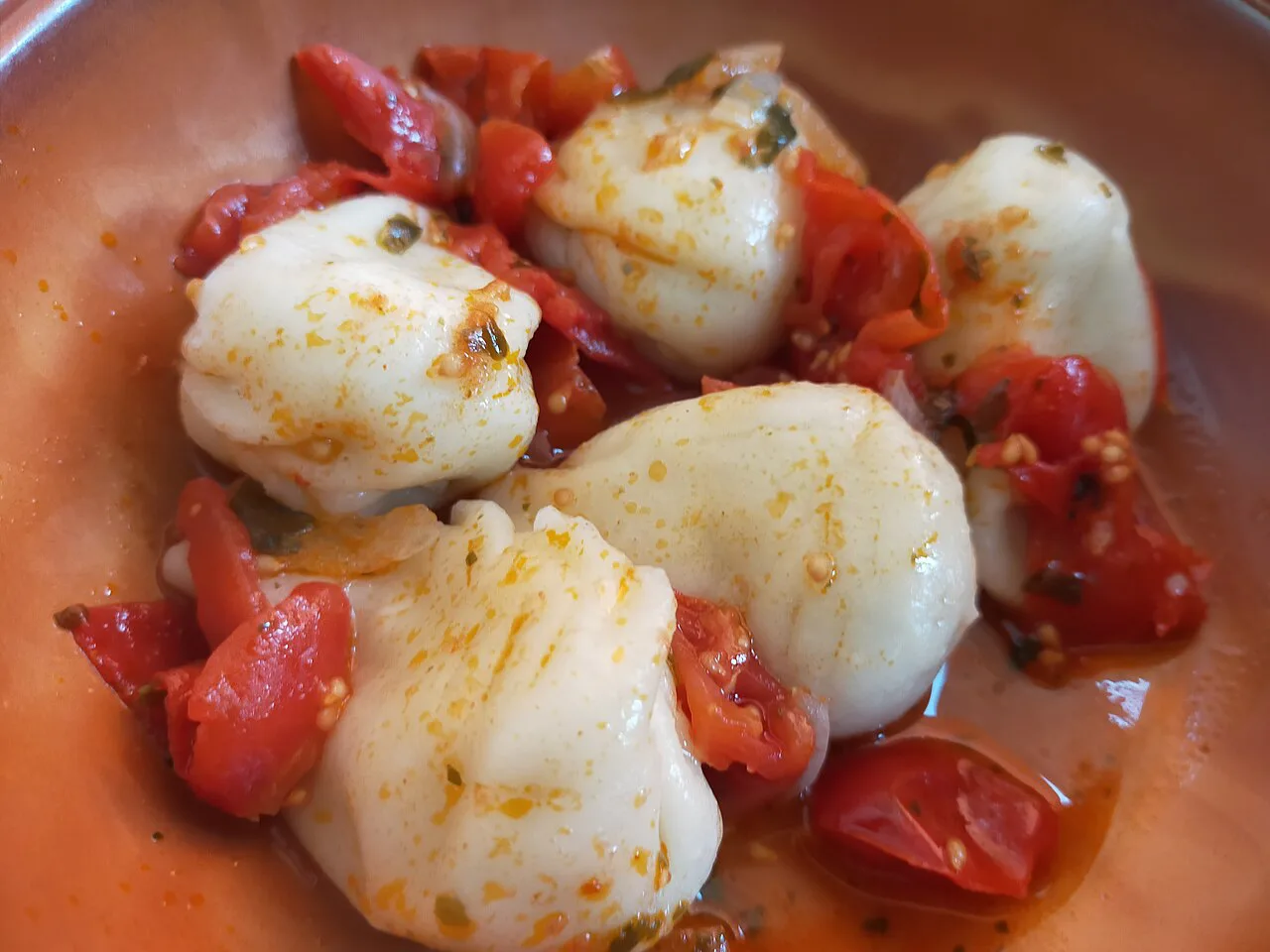
Culurgiones are a stuffed pasta from the Ogliastra, the mountainous area on Sardinia's eastern side, filled with mashed potato, pecorino and fresh mint and shaped to look like an ear of wheat. On a Sardinian menu they turn up as a first course, usually under a plain tomato sauce. This guide covers what goes into the filling, how the closure is made, which cheese and potatoes are used, and the two ways the dish is most often served.
The name is worth knowing in both forms: culurgiones is the plural you will see on menus, while a single piece is a culurgione. The sources also print culurgionis, so do not be thrown if a menu in Sardinia spells it that way.
What culurgiones are
Think of culurgiones as Sardinia's answer to ravioli or dumplings, but with a distinctive crimped seam running along the top. The pasta is a simple dough of flour and water, and the filling is a soft potato mixture rather than a meat or ricotta one. They sit within the wider family of stuffed shapes in the Italian pasta shapes catalogue, but the potato-and-mint combination is specifically Sardinian.
The Ogliastra is inland and mountainous rather than coastal, which explains the filling: potatoes and sheep's cheese keep well in a hill economy, and mint grows readily. That is also why culurgiones read as a hearty primo rather than a delicate one.
The filling: potato, pecorino Sardo and mint
The core of the filling is mashed floury potato, grated pecorino Sardo, finely chopped fresh mint, olive oil and a little garlic, seasoned with salt and pepper. The potato is cooked, peeled and mashed while still hot, then combined with the cheese and mint and left to cool and firm up before it goes into the dough. A garlic clove is often infused in the olive oil rather than chopped in raw, which keeps the garlic in the background.
What are culurgiones stuffed with? Mashed potato, grated pecorino Sardo, fresh mint, olive oil and a little garlic, seasoned with salt and pepper. The filling is cooled and firmed before it goes into the dough, which is what lets it hold its shape during the wheat-ear fold.
How is culurgiones pronounced? Roughly koo-loo-RJOH-neh, with a soft g as in the English word jam. The plural is culurgiones and the singular is culurgione; you may also see the spelling culurgionis.
What sauce goes with culurgiones? The traditional pairing is a plain tomato sauce made with olive oil, garlic and passata, served underneath the pasta rather than stirred through it. A butter or olive oil sauce infused with sage is the other common finish in Sardinia.
Pecorino Sardo is the Sardinian sheep's milk pecorino, and the version used here is semi-aged, so it is milder and creamier than the sharp Pecorino Romano most British and American cooks know. That difference matters: a hard, salty Romano would dominate the potato and mint instead of rounding them out.
Potato choice is not cosmetic. Floury maincrop potatoes mash smoothly, while red-skinned varieties are picked for their lower water content, which keeps the filling from turning wet and leaking through the seam. The pasta dough itself is made from semolina flour, durum wheat, mixed with water and sometimes a little olive oil and salt.
How the wheat-ear shape works
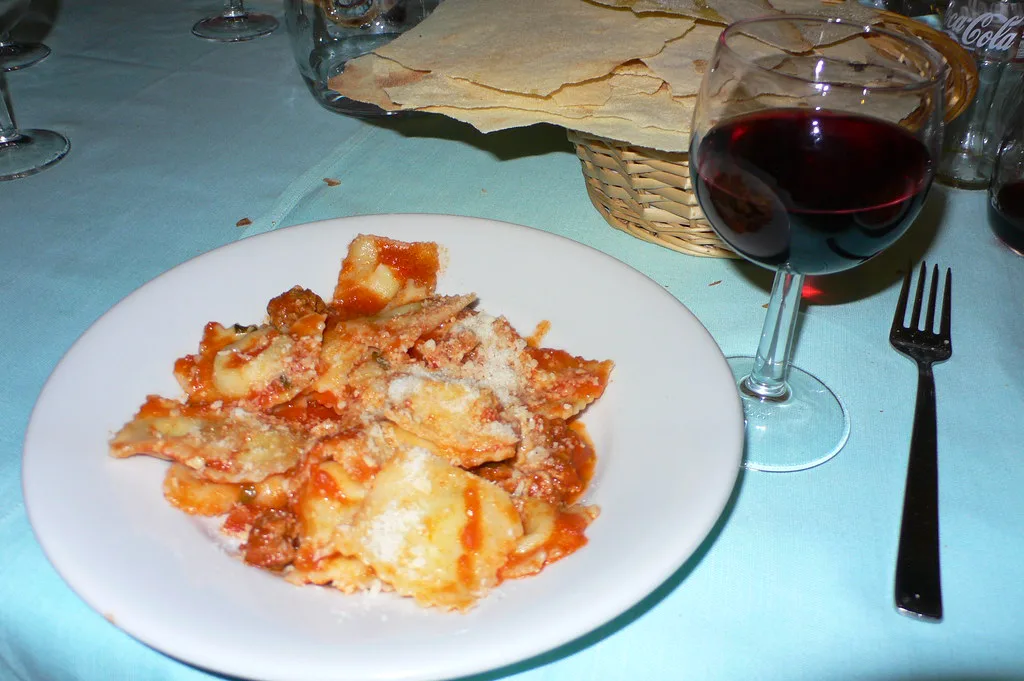
The pointed, braided top is the part that takes practice. After a round of dough is cut, a heaped teaspoon of filling goes in the centre, and the cook pinches the dough alternately from left and right towards the middle, working up to a sealed tip. The result should resemble a wheat spike, with the folds meeting like a plait.
If the braid defeats you, close the pasta as you would a dumpling, pressing the edges firmly so no filling escapes. The taste is the same; only the silhouette changes.
The size of the dough circles
The practical shape of the work is a small circle of dough around 8cm across, rolled to roughly 1mm thick, with a heaped teaspoon of filling in the middle. That ratio of thin pasta to generous filling is what gives culurgiones their soft, pillow-like bite rather than a stodgy one. An 8cm cutter is the usual tool; a glass or a knife and steady hand works too.
Keep the rest of the dough covered while you shape each piece, or it will dry at the edges and crack when folded. Dough that feels crumbly needs a splash more water; dough that feels tacky needs a dusting of flour. Either way, knead until smooth and let it rest under a cover before rolling.
Which potato to use
Floury potatoes are the default for the filling because they mash without lumps and absorb the cheese and oil evenly. Red-skinned potatoes are favoured for having less water inside, so the mixture stays firm enough to hold its shape during the fold. If you cannot find red ones, white potatoes still work; just make sure they are properly drained and dried before mashing.
Do not peel the potatoes before boiling, and mash them while hot so the cheese melts into them. Dry, warm potato takes up the pecorino and mint far better than cold potato.
The cheese: pecorino Sardo and why it matters
Pecorino Sardo is a sheep's milk cheese made in Sardinia, and the semi-aged form is the one used for culurgiones. It is milder and less salty than Pecorino Romano, the aged Lazio cheese usually grated over Roman pasta such as amatriciana.
Buy it in a piece and grate it yourself rather than reaching for pre-grated cheese, which is drier and coarser. A little also goes on top of the finished plate, grated fresh over the sauce.
How culurgiones are served
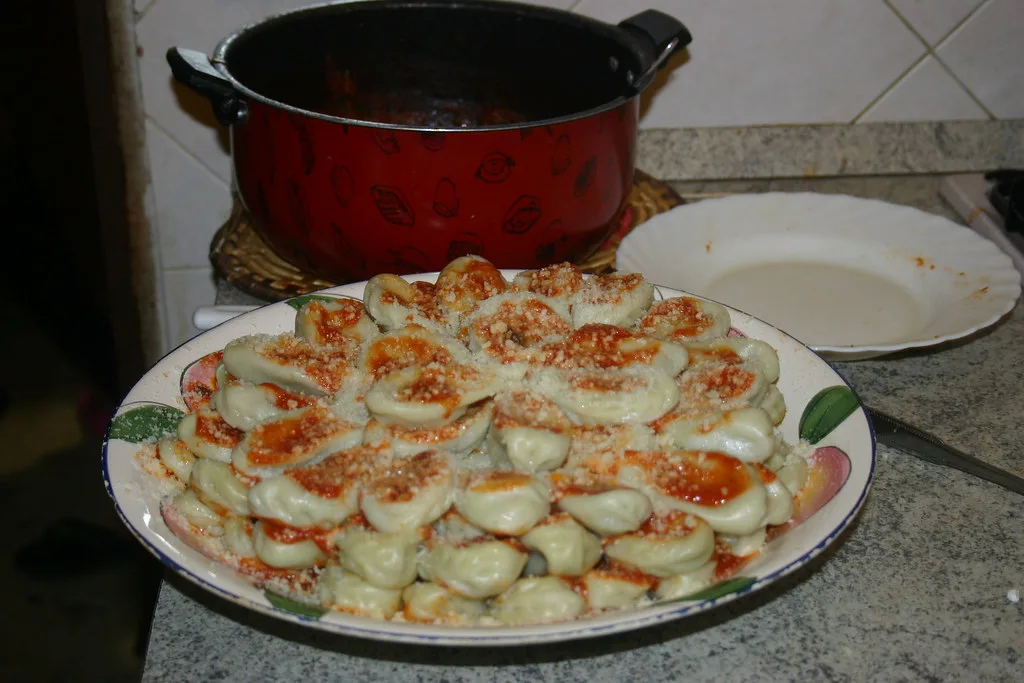
The classic pairing is a plain tomato sauce, slowly cooked with olive oil and garlic and thinned with a little water, spooned underneath the pasta rather than over it. A butter or olive oil sauce infused with sage leaves is the other common finish, and you can meet both in Sardinia. Choose the tomato version if you want the potato and mint to come through in a savoury, sweet-sour contrast; choose the sage butter if you want the cheese to lead.
There is a third, less common treatment: fried and dipped in a pecorino cream, which turns the same filled pasta into something closer to a bar snack than a primo. That is worth trying if you meet it, but it is not the standard plate.
The boil, the sauce and the finish
Culurgiones cook quickly in salted boiling water, around five minutes, and are lifted out with a slotted spoon rather than tipped into a colander so the seams hold. Put a few spoons of tomato sauce on the plate first, sit the pasta on top, then finish with grated pecorino and basil leaves. Sauce underneath, not stirred through, is what keeps the filled pasta from breaking up.
The sauce itself is simple: olive oil, garlic, passata and a little water, covered and cooked until it thickens and tastes sweet rather than sharp. It should be loose enough to pool on the plate, not thick like a ragù alla bolognese.
How to say it and read it on a menu
Culurgiones is pronounced roughly koo-loo-RJOH-neh, with a soft g as in 'jam'. The singular culurgione is what you will see if a menu prices a single portion, and culurgionis is a variant spelling also used for the dish.
Where to eat culurgiones
Look for culurgiones on menus across Sardinia, and especially in the Ogliastra on the eastern side of the island, where the dish originates. They are not a mainland staple, which is part of why they are worth ordering when you are there. If they appear alongside fregola, the toasted semolina pasta from the same island, you are in the right part of the menu.
On a menu, treat culurgiones as a first course and plan a second course afterwards if you are hungry, rather than expecting a single plate of filled pasta to carry the whole meal.
Culurgiones or another filled pasta?
Choose culurgiones when you want a mild, herby, cheese-led filling and a tomato sauce that lets the potato speak; skip them if you are after a meat ragù or a butter-rich northern style. In Sardinia, order them in the Ogliastra or wherever they appear as a primo, and pay attention to the crimped wheat ear on the plate: it is the mark of the hand-folded version.
Explore more Italy food guides
Frequently Asked Questions
What are culurgiones stuffed with?
Mashed potato, grated pecorino Sardo, fresh mint, olive oil and a little garlic, seasoned with salt and pepper. The filling is cooled and firmed before it goes into the dough, which is what lets it hold its shape during the wheat-ear fold.
How is culurgiones pronounced?
Roughly koo-loo-RJOH-neh, with a soft g as in the English word jam. The plural is culurgiones and the singular is culurgione; you may also see the spelling culurgionis.
What sauce goes with culurgiones?
The traditional pairing is a plain tomato sauce made with olive oil, garlic and passata, served underneath the pasta rather than stirred through it. A butter or olive oil sauce infused with sage is the other common finish in Sardinia.
Are culurgiones the same as ravioli?
No. Both are stuffed pasta, but culurgiones use a potato, pecorino and mint filling and are sealed into a pointed wheat-ear shape, while ravioli typically use ricotta or meat fillings and a simpler square or crescent closure.
Sources
Notes for your next meal in Italy
Optional updates to our food guides.
You might also like

Continue reading
More guides you'll find useful