What Is Amaro? Italy's Bittersweet Digestivo Explained
Amaro is a bittersweet Italian liqueur infused with herbs, roots and citrus peel. Learn how it tastes, the main styles and how to drink it after a meal in Italy.
On this page
Amaro is a bittersweet Italian liqueur, not one specific drink: the word simply means bitter, and the category covers hundreds of bottlings that range from syrupy and citrusy to fiercely herbal. Order it at the end of a meal and you are asking for the digestivo, the after-dinner glass Italians reach for instead of pudding. This guide covers what goes into it, how the main styles differ, how it is served, and which labels are worth recognising.
It is worth separating amaro from the aperitivo drinks many visitors meet first. Campari and Aperol are bitter, but they belong to the pre-dinner end of the evening, whereas amaro is traditionally a digestive poured neat and chilled once the plates are cleared.
What amaro is made from
Amari are made by macerating a botanicals recipe in neutral spirit, brandy or wine, then filtering the infusion, sweetening it and ageing it in cask or bottle, sometimes for years. Because the recipes are usually secret, labels tend to be vague about exactly what is inside.
The botanical list is long and varies enormously by producer, but gentian is the ingredient that turns up most often, alongside things like wormwood, angelica, cinchona, liquorice, cinnamon, anise, fennel and citrus peel. That combination is why the colour is typically a deep tawny brown and the flavour is closer to a herb garden than to fruit.
The category began as a monastic or pharmacy tonic sold as a health product in the 1800s, which explains the lingering idea that a glass helps digestion. Skip the health claims and treat it as a flavoured drink taken in small measures.
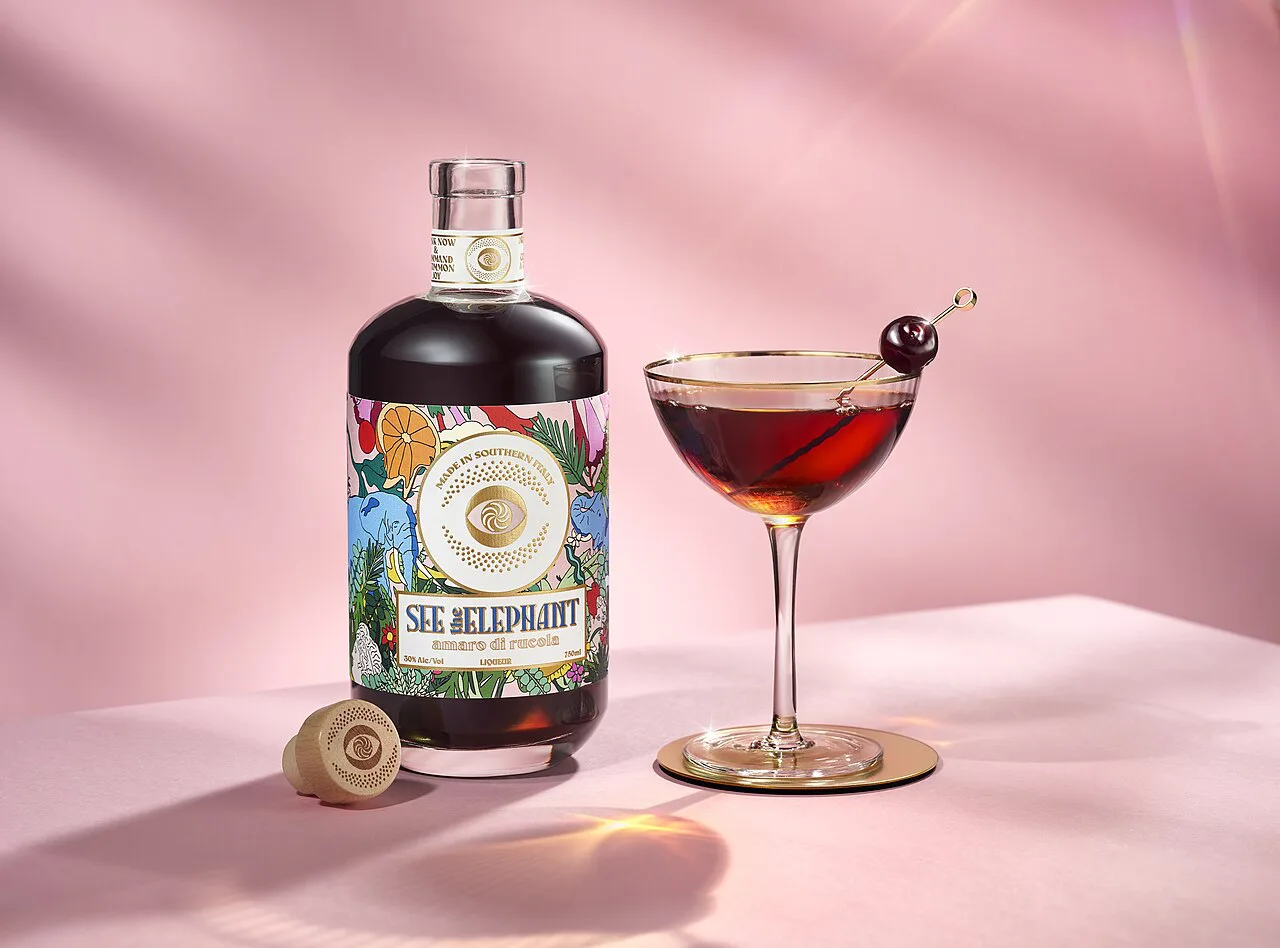
How amaro tastes
Strength and bitterness vary wildly: a bottling can sit as low as 16% alcohol by volume or climb past 40%, and sweetness swings just as far. Some amari lead with citrus and liquorice, others with spice, and the bitterest taste medicinal and resinous rather than sweet.
Why do Italians drink amaro? It is traditionally taken after a meal as a digestive, served chilled and neat in a small glass. The custom grew out of monastic and pharmacy tonics sold as health products in the 1800s, and the habit of a bitter glass at the end of dinner carried on.
Is amaro very alcoholic? It varies a lot, from around 16% alcohol by volume up to more than 40% depending on the bottling, and the serve is usually a small measure rather than a large one. Labels state the strength of the bottle you are buying or being poured.
Can I drink amaro before dinner? Yes, it is sometimes diluted with tonic water and served over ice as an aperitif. That makes a longer, softer drink than the neat after-dinner serve, and it is a good way to try a bitter style without committing to a full-strength glass.
As a rough taste map, start with the sweeter, spicier styles if you are new to bitterness, then move towards fernet once you know you enjoy a bracing finish. Fernet is the fiercely bitter end of the family, so ordering it as a first amaro is the equivalent of diving into the deep end.
Serving temperature changes the impression too. Chilled and neat, the sweetness recedes and the herbs sharpen; over ice with tonic, the same bottle reads lighter and more refreshing.
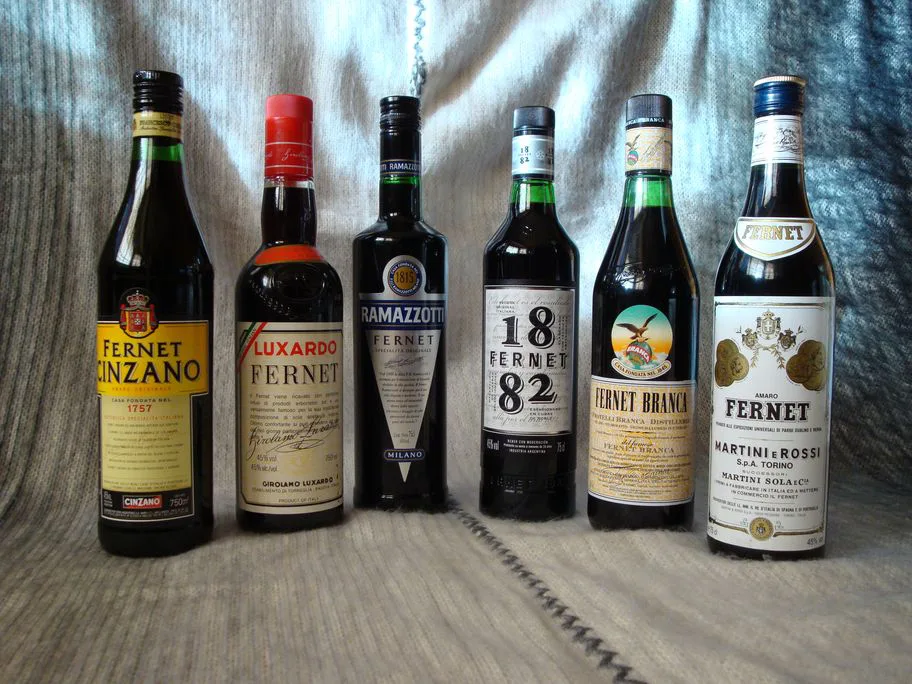
Fernet, rabarbaro and carciofo: the styles you will meet
Fernet is a particularly bitter style of amaro, and it is the one to order when you want the herbal, almost medicinal edge rather than a sweet finish. Rabarbaro is made with rhubarb, giving a tart, earthy slant, while carciofo is made with artichoke and tends to be gentler and more vegetal.
These are styles rather than brands, so the same word on two different labels will not taste identical. If a bartender offers you a taste before pouring a full measure, take it: a small sip tells you more about the bitterness level than any description.
How amaro is served in Italy
The traditional serve is chilled and neat as a digestive, sometimes with a slice or twist of citrus, in a small glass after the meal. It can also be diluted with tonic water and served over ice as an aperitif, which makes a long, low-alcohol drink before dinner.
Amaro also turns up in cocktails, where a small amount adds depth to a lighter mixed drink. That is a useful route in if you find a neat glass too intense: ask for a drink built with amaro rather than a straight pour.
If you enjoy the bitter profile at the pre-dinner end of the evening, the Italian aperitivo ritual of a bitter drink with snacks is the place to start. The same palate for gentian and citrus peel runs through a good spritz, whether you order the classic Aperol Spritz or a Campari version; for the snacks themselves, see our guide to Italian Aperitivo Snacks.
Amaro, amaretto and Campari: what it is not
Amaretto is a sweet almond-flavoured liqueur with none of the bitter herbal backbone, so ordering it by mistake on the strength of a similar-sounding name is the commonest mix-up. Campari-style aperitivo bitters, by contrast, are bitter but belong to the before-dinner slot, and Averna, Fernet Branca, Campari, Aperol and Cynar all sit in the wider amaro family as recognisable names.
The German herbal liqueur Jägermeister also falls under the same broad category of bitter herbal liqueurs, even though it is not Italian. Amaro is not a protected-origin product, so bottles are made outside Italy too, including by craft distillers abroad.
If you like the sound of the wider field of Italian drinks beyond the bitter herbs, there is plenty to explore: Italian liqueurs cover the sweet, the creamy and the nutty, and grappa is the grape-based spirit that often appears on the same after-dinner list.
Names to recognise on a menu or shop shelf
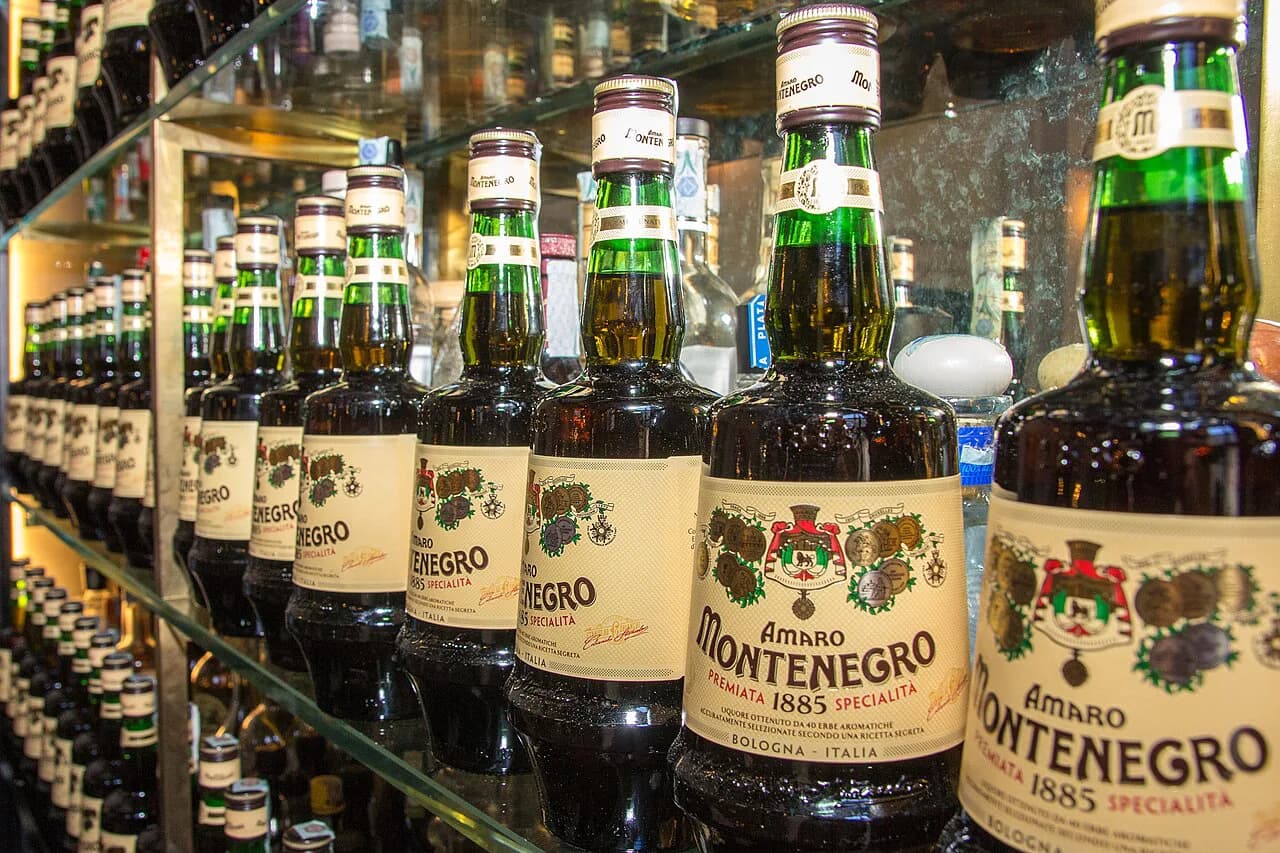
Averna, Montenegro, Ramazzotti, Lucano and Nardini are the labels you will see most often in bars and shops, with Fernet Branca heading up the very bitter camp. Learning three or four of these names means you can order with confidence from an unfamiliar list, or pick up a bottle to take home.
If you want a starting point, a sweeter bottling such as Montenegro or Ramazzotti is gentler, while Averna sits in the middle and Fernet Branca is for those who already know they like bitterness. Serving advice on the label usually says neat, on ice or with soda.
Ordering a house amaro after dinner
Many restaurants and bars make their own signature amaro, often described as following an old family recipe, so the house version may be the most interesting glass on the list. Ask what it is made from and whether it is sweet or bitter; staff can usually tell you which way it leans.
Expect a small measure rather than a full pour, and Don't be surprised if it arrives already chilled or with a piece of citrus. If you are sharing a table, one round of different amari is a good way to compare styles without committing to a large glass of any single one.
House recipes are closely guarded, so nobody will hand over the full botanical list, and the flavour can change from year to year. Treat that as part of the appeal rather than a problem to solve.
Which amaro should you order first?
If you are new to the category, order a sweeter, spicier bottling such as Montenegro or Ramazzotti chilled and neat after dinner, then work towards Averna and finally Fernet Branca as your taste for bitterness grows. A house amaro is the more adventurous choice when you want something you cannot buy at home.
Keep the glass small, drink it slowly and treat it as a finish to the meal rather than a session. That is how it is meant to be drunk, and it lets you actually taste the herbs rather than just the sugar.
Explore more Italy food guides
Frequently Asked Questions
Why do Italians drink amaro?
It is traditionally taken after a meal as a digestive, served chilled and neat in a small glass. The custom grew out of monastic and pharmacy tonics sold as health products in the 1800s, and the habit of a bitter glass at the end of dinner carried on.
Is amaro very alcoholic?
It varies a lot, from around 16% alcohol by volume up to more than 40% depending on the bottling, and the serve is usually a small measure rather than a large one. Labels state the strength of the bottle you are buying or being poured.
Can I drink amaro before dinner?
Yes, it is sometimes diluted with tonic water and served over ice as an aperitif. That makes a longer, softer drink than the neat after-dinner serve, and it is a good way to try a bitter style without committing to a full-strength glass.
Sources
Notes for your next meal in Italy
Optional updates to our food guides.
You might also like

Continue reading
More guides you'll find useful