Italian Grappa: How It's Made and How to Drink It
Grappa is an Italian grape-marc spirit distilled from the skins, seeds and stems left after winemaking. Here is how it is made and how to order it.
On this page
Grappa is an Italian spirit distilled from grape marc — the skins, seeds and stems left behind after grapes are pressed for wine. It is not a grape brandy in the Cognac sense: the raw material is the solid residue of winemaking rather than fermented juice. This guide covers how grappa is made, the difference between clear and wood-aged bottles, the single-variety styles worth knowing and how to order it at the end of a meal.
You will most often meet grappa as a small after-dinner pour, served neat in a tulip-shaped glass, or "corrected" into espresso as a caffè corretto. It also appears in cocktails, though the traditional Italian setting is the close of a long lunch. Treat it like a digestivo rather than a drink to work through in quantity.
What grappa is: a spirit made from winemaking leftovers
Grappa is a pomace brandy: the pomace is the solid mass of grape skins, seeds and stalks that remains once the juice has been run off for wine. Distillers ferment that marc and then distil it to capture the alcohol and aromas still held in the solids. The result is a clear or wood-darkened spirit with a grapey, sometimes grassy or floral character that is quite unlike a neutral vodka or a barrel-aged brandy.
Italians often serve grappa at the end of a meal in the belief that it helps digestion, which places it alongside the bittersweet amaro as a digestivo, an after-dinner drink taken in small measure. That is a tradition rather than a medical claim, and it is worth treating as such: the point is the pause and the conversation. A small measure is plenty; nobody needs a tumbler of it.
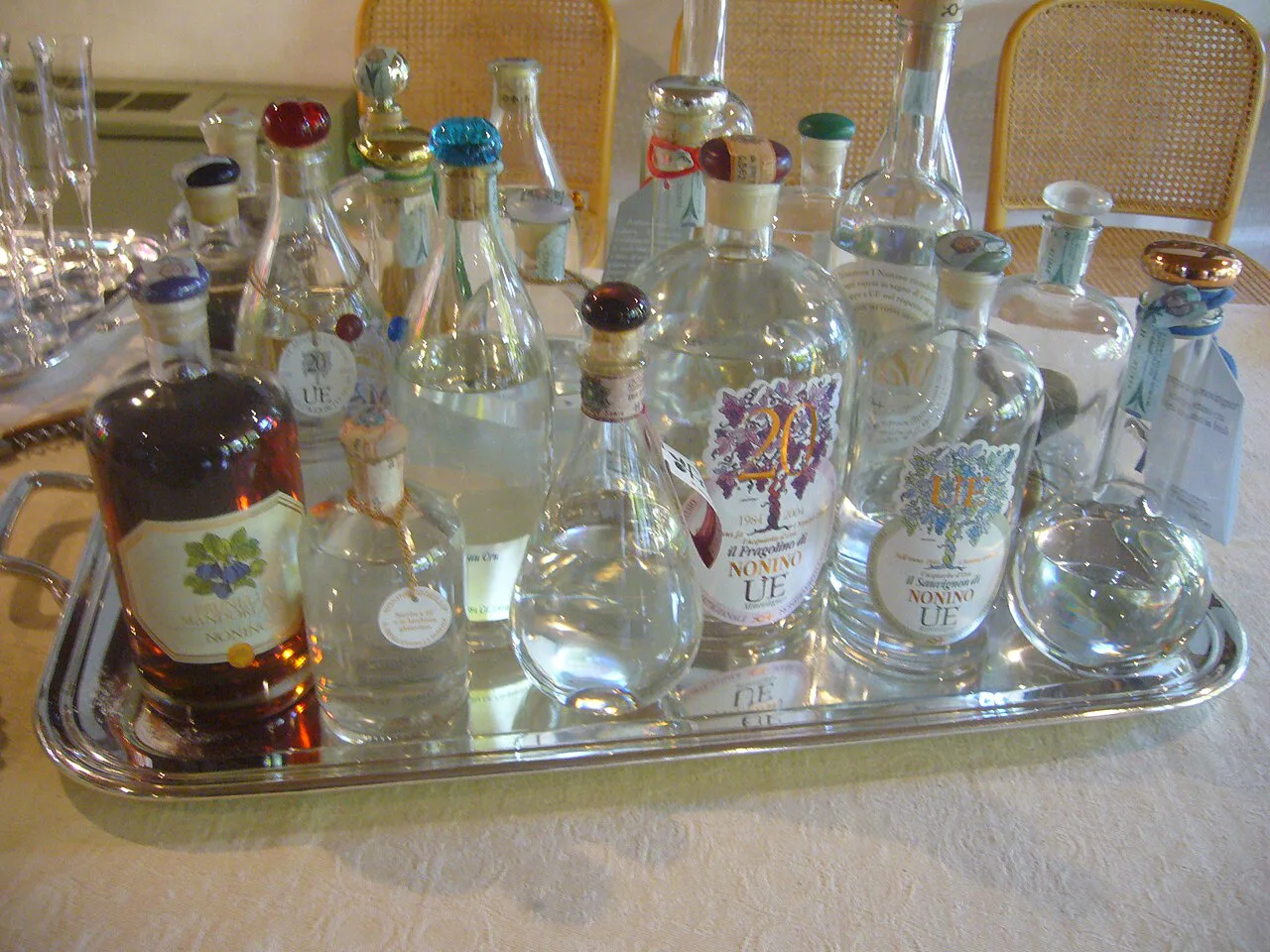
The origins of grappa: medieval northern Italy
The origins of grappa are usually traced to medieval northern Italy, in the regions of Veneto, Trentino, Piedmont and Friuli. The earliest distillation of pomace looks like a practical response to waste: farmers and winemakers fermented and distilled the leftovers rather than discard them. Treat the exact date as uncertain — written accounts place marc distillation somewhere between the fourteenth and fifteenth centuries, and possibly earlier.
What is the Italian liquor distilled from winemaking leftovers? Grappa. It is distilled from grape marc, the skins, seeds and stalks left after grapes are pressed for wine, and it carries a protected geographical indication requiring Italian grapes and Italian production.
What percent of alcohol is grappa? Grappa is a strong spirit, but the exact strength varies by producer and style, so the figure to trust is the one printed on the bottle you are considering. Check the label.
How do you make grappa? The marc is fermented, then distilled in a pot still or a continuous column still. The distiller then decides whether to bottle it unaged as grappa bianca or age it in wood, and whether to work from a single grape variety or a blend.
For centuries grappa was a rough, fiery drink of the less wealthy, while the nobility drank the wine. It moved onto a wider stage during the First World War, when it was issued to soldiers at the front, and only after the Second World War did softer, more elegant styles emerge, helped by longer ageing in wood.
How grappa is made, from fermented pomace to the still
The process starts in the winery. Once the grapes are pressed, the marc is kept, fermented and then distilled while it is still fresh enough to carry aroma. A still separates the volatile parts — alcohol, water and aromatic compounds — from the solid residue; whether the distiller then ages, filters or bottles straight away determines the style in the glass.
The base matters as much as the method. Classic grappas have been made from the marc of Moscato, Barbera and Nebbiolo, and producers now work with a wider range of varieties. A single-variety grappa, made from one grape's marc rather than a blend, is generally the more expressive bottle.
Pot still versus continuous still: what the difference does to the bottle
Two distillation methods dominate. The traditional pot still uses a copper vessel that gives the distiller careful control, including the ability to make cuts and separate out undesirable parts of the pomace. The continuous, or column, still feeds pomace in steadily; it is more efficient and produces far larger volumes, but the flavour is noticeably less nuanced.
Practical consequence: if you want complexity and a sense of place, look for small-batch producers using pot stills, often named on the label. If you want a clean bottle to correct a coffee, an industrial continuous-still grappa does that job perfectly well.
Grappa bianca and grappa invecchiata: young and clear versus aged
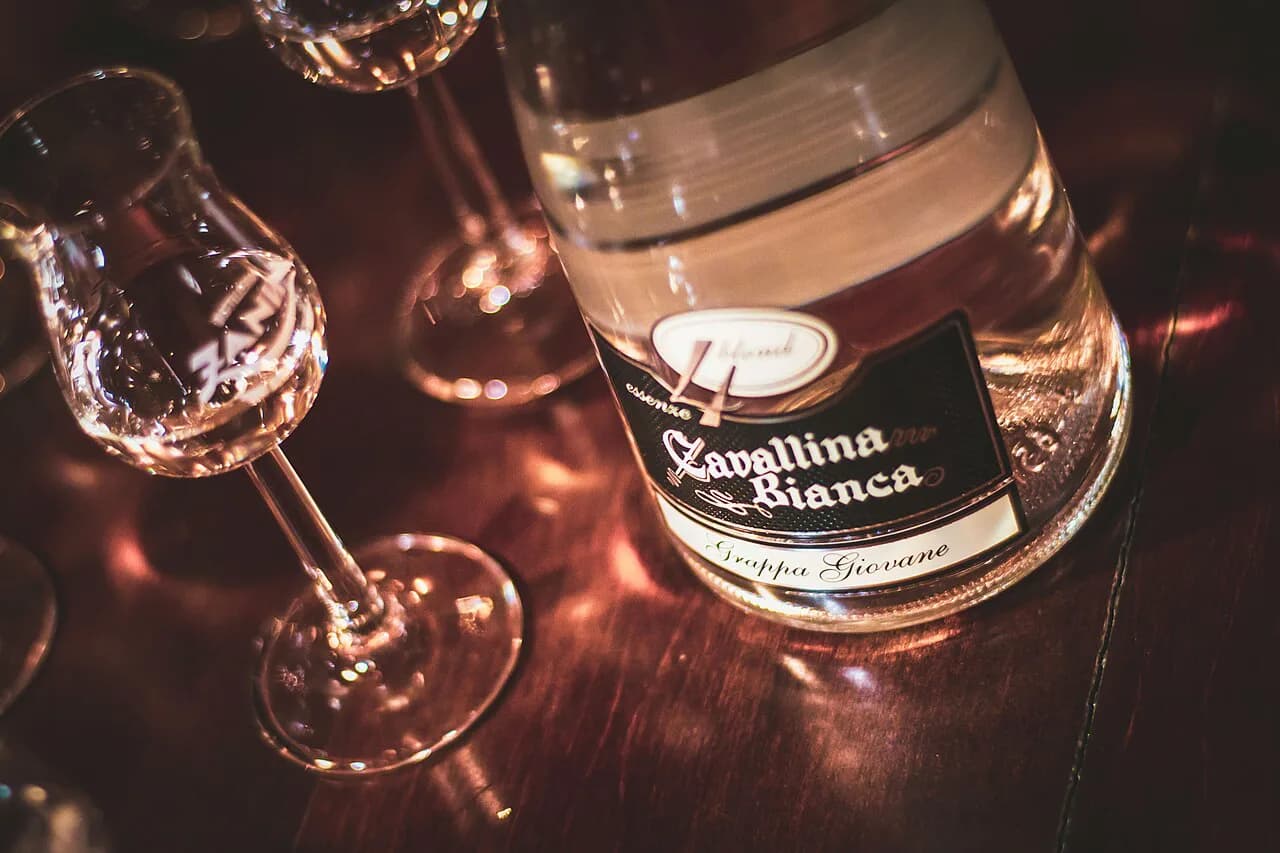
Grappa bianca is unaged, bottled straight after distillation. It is clear, lighter in flavour and shows the grape more directly. Grappa invecchiata has spent months to years in wood, which adds depth, colour and complexity; the type of cask — oak, cherry or acacia — also shapes the final flavour and hue.
Choose bianca when you want something crisp after a light meal, and invecchiata when the food has been rich or when you are drinking it slowly at the end of the evening. Neither is better; they suit different moments, and wood-aged bottles are the ones to ask about by name when a menu offers a choice.
Single-variety grappa: Brunello, Barolo, Amarone and Prosecco
Single-variety grappas tie the spirit to a famous wine. Grappa di Brunello comes from Sangiovese marc and has a smooth, rounded character; Grappa di Barolo comes from Nebbiolo da Barolo marc and is drier, with the vanilla notes that wood ageing typically brings. Grappa di Amarone is intense and amber-coloured, and Grappa di Prosecco is the softer, fruitier choice.
The names are useful shorthand on a menu: they tell you which wine's leftovers went into the bottle, and therefore roughly what to expect in aroma and weight. They are not a guarantee of quality on their own, so check the producer's name alongside the grape.
The PGI label and what it guarantees
In the European Union, grappa is a protected geographical indication. That means the product must be made in Italy using Italian grapes, and producers must follow rules on distillation and alcohol content. The label therefore answers a simple question: is this genuinely Italian grappa made to the traditional standard, or a grape spirit from somewhere else?
Look for the PGI wording on the back label, along with the producer and the grape variety. It is not a quality ranking — a PGI grappa can still be industrial — but it is the baseline check when you buy a bottle to take home.
How to drink grappa: a small pour in a tulip glass
Grappa is best served at room temperature, which lets its aromas open up; younger or more aromatic examples can take a slight chill. A tulip-shaped glass concentrates the scent, and a small measure is the right size. Sip it slowly, as you would a good eau-de-vie, rather than knocking it back.
In a restaurant, ordering is simple: ask for a grappa, and specify bianca or invecchiata if you have a preference. It usually arrives after coffee or alongside it, and the waiter may offer a choice of producer. If you are the designated driver or simply do not want more alcohol, a coffee is a perfectly ordinary alternative.
Caffè corretto: grappa in espresso
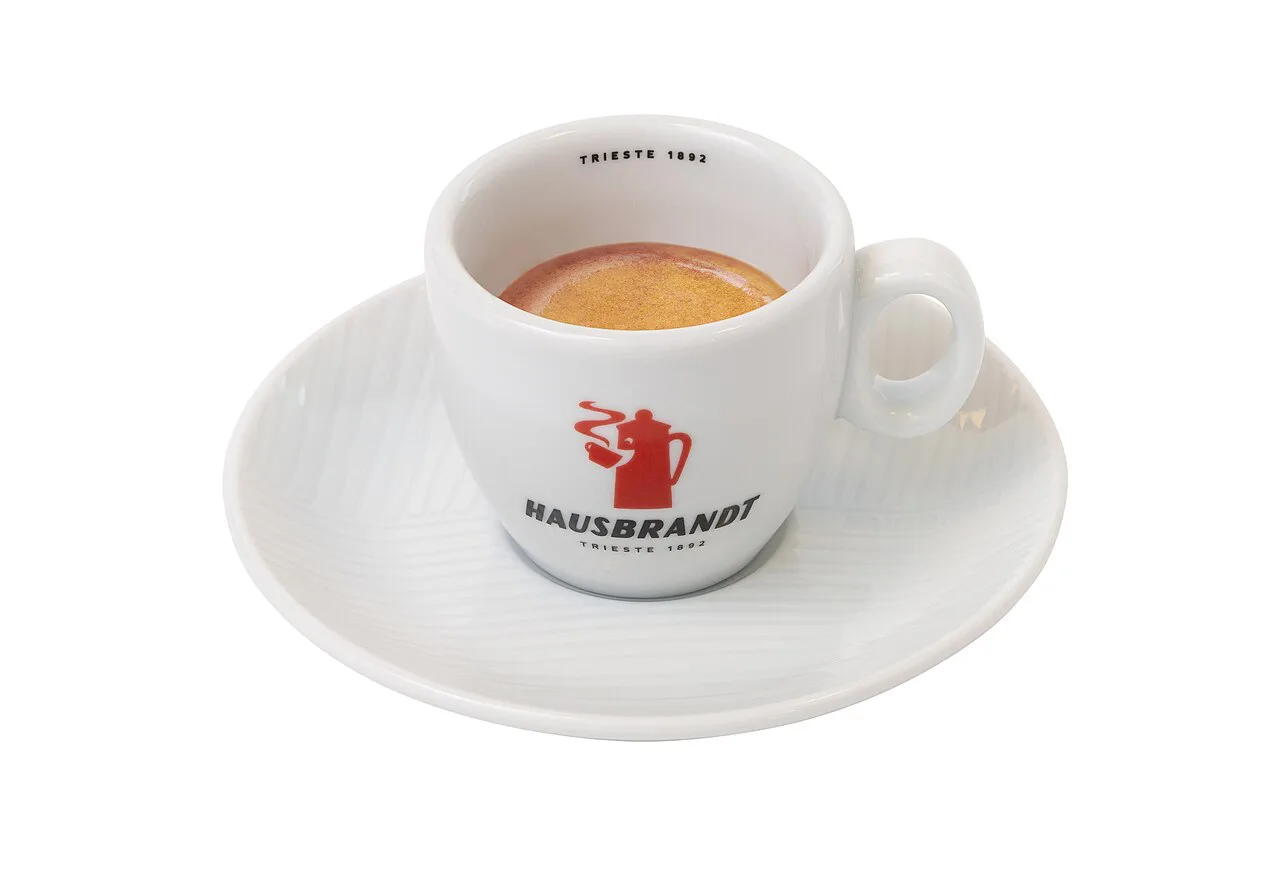
Caffè corretto means "corrected coffee", and a grappa corretto is exactly that: a shot of grappa added to an espresso. It is a real ordering move in Italy rather than a novelty, and a very small quantity is enough to perfume the coffee. Order it when the meal is finished and you want one last thing rather than another full drink.
Try it with grappa bianca, whose clean flavour does not overwhelm the coffee. At the bar, remember the Italian convention of paying at the till first and taking the receipt to the counter when you order a coffee at the counter.
Grappa in cooking and with chocolate
Grappa is not only a glass at the end of the meal. It turns up in both sweet and savoury cooking, and the classic pairing is with chocolate: a small glass alongside a dark chocolate dessert or a praline is a genuinely good match. Barolo grappa pralines are one expression of that idea.
If you cook with it, remember that the alcohol cooks off but the grapey, slightly fiery character remains, so a tablespoon is often plenty in a sauce or a dessert. A few drops stirred into a chocolate filling is the simplest place to start.
Buying a bottle: what to look for on the label
Read the back label before you spend. Check for the PGI wording and Italian production, look for a named producer rather than a supermarket own-brand, and see whether the bottle states a single grape variety. That last detail is usually the clearest signal of intent, and the craft producers most often recommended include Nonino, Poli and Berta.
On the shelf, grappa bianca is the safer first purchase if you are unsure; invecchiata is the more complex bottle if you already know you like spirit aged in wood. Prices vary widely by producer and age, so compare labels in the shop to check current prices and see how single-variety and small-batch bottlings are labelled before you choose.
How grappa fits into a meal, and drinking it moderately
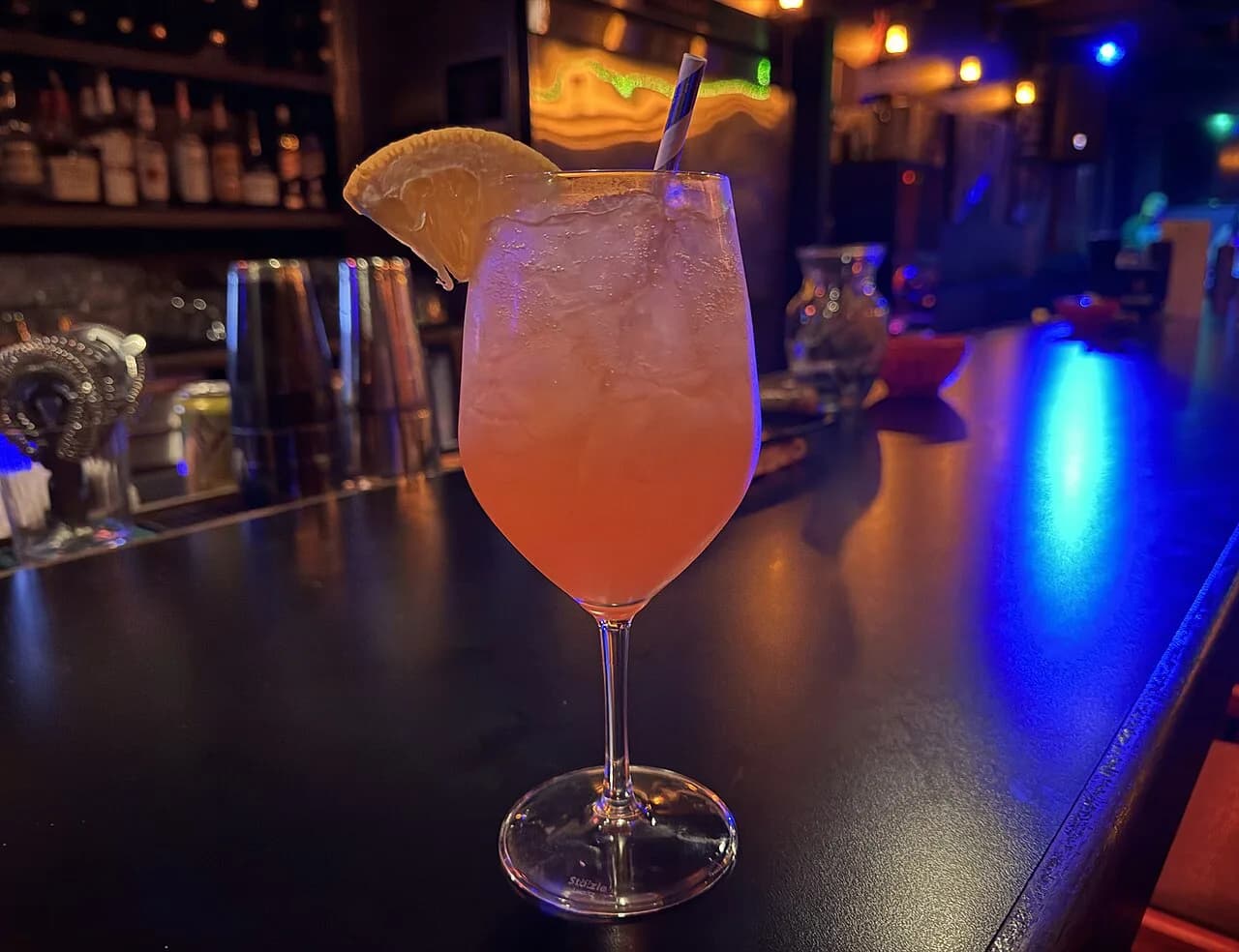
The classic rhythm is aperitivo before, wine with, grappa after. A Negroni or an Aperol Spritz to start belongs to the Italian Aperitivo tradition, and if you have had one with a plate of Italian Aperitivo Snacks before wine through the meal, a single small grappa is the sensible close. It is a digestivo, not a second drinking session, and the pleasure lies in the small pour taken slowly.
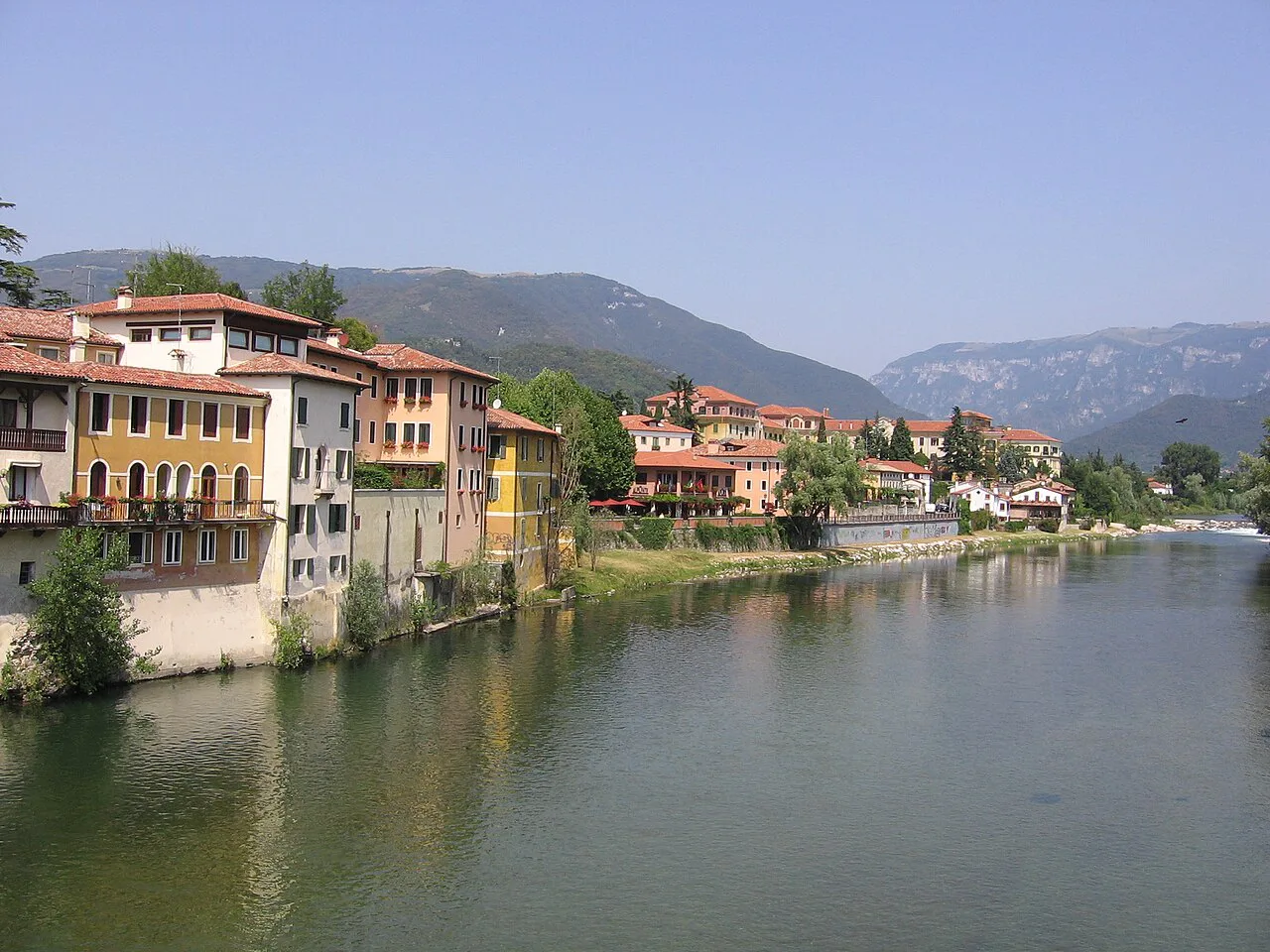
In the north, the grappa belt runs through Veneto, Trentino, Friuli and Piedmont, and the Veneto town of Bassano del Grappa hosts grappa expos and is home to one of the oldest known distilleries. If you are in the area you can build a visit around the spirit, but it is not essential to enjoying a bottle at home.
Which grappa should you order first?
Start with a grappa bianca from a named producer: it is the clearest introduction to what grape marc tastes like, and it works either neat or corrected into an espresso. Move to a single-variety invecchiata, such as a Brunello or Barolo grappa, once you know you enjoy the spirit and want the wood-aged complexity.
At the table, keep the pour small, take it with coffee or chocolate, and treat it as the full stop to the meal rather than an extra round. That is how grappa is meant to be drunk in Italy.
Explore more Italy food guides
Frequently Asked Questions
What is the Italian liquor distilled from winemaking leftovers?
Grappa. It is distilled from grape marc, the skins, seeds and stalks left after grapes are pressed for wine, and it carries a protected geographical indication requiring Italian grapes and Italian production.
What percent of alcohol is grappa?
Grappa is a strong spirit, but the exact strength varies by producer and style, so the figure to trust is the one printed on the bottle you are considering. Check the label.
How do you make grappa?
The marc is fermented, then distilled in a pot still or a continuous column still. The distiller then decides whether to bottle it unaged as grappa bianca or age it in wood, and whether to work from a single grape variety or a blend.
What is grappa used for?
It is drunk as a small after-dinner digestivo, neat or in a caffè corretto, and it also appears in cocktails and in cooking, most happily with chocolate.
Sources
Notes for your next meal in Italy
Optional updates to our food guides.
You might also like
Continue reading
More guides you'll find useful