Italian Aperitivo Snacks: What to Eat With Your Spritz
A practical guide to Italian aperitivo snacks, from taralli and crostini to polpette and arancini, plus how the drink-and-nibbles format actually works.
On this page
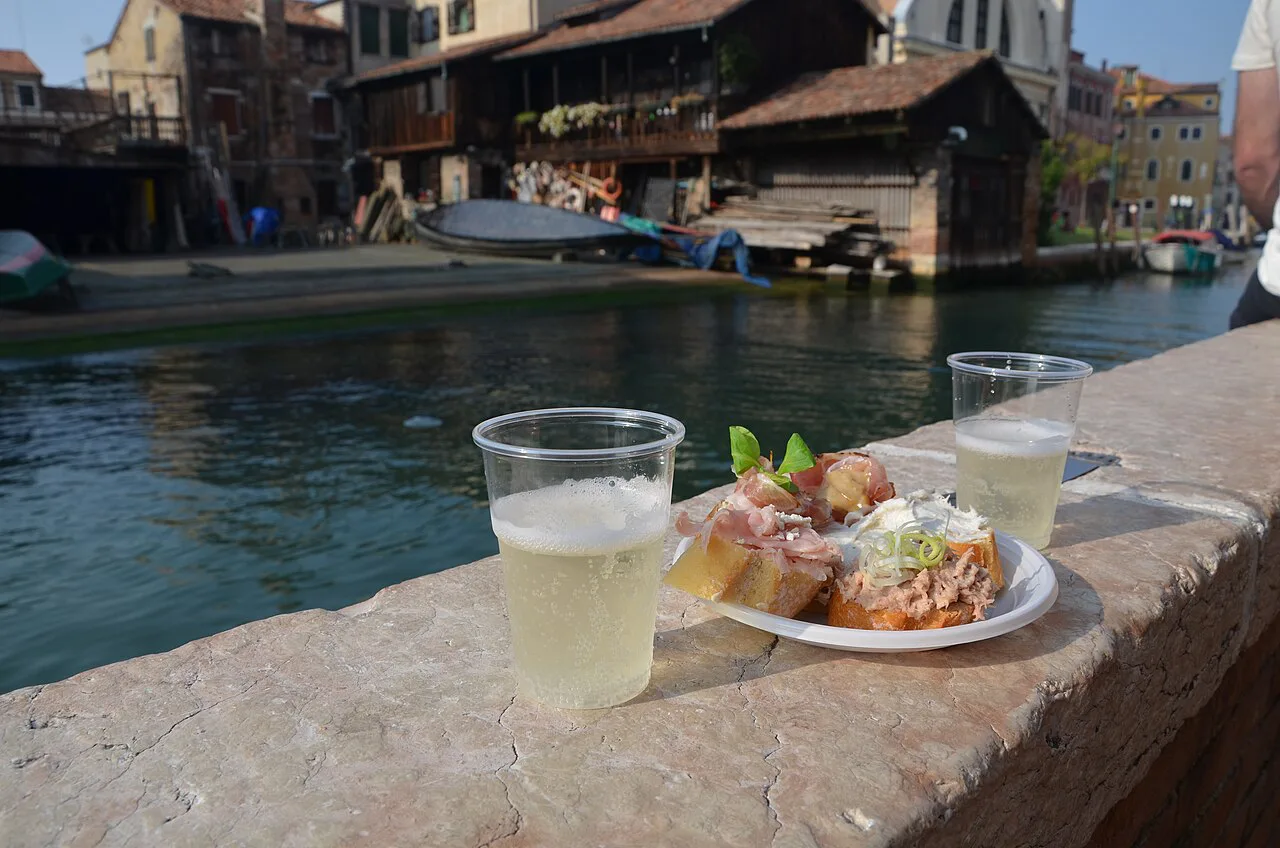
Italian aperitivo snacks are the small savoury bites served with a pre-dinner drink, and the drink is the thing you pay for. Order a spritz, a vermouth or a glass of prosecco in the early evening and the bar brings out something to eat alongside it: a bowl of taralli, a tray of crostini, or a full buffet. This guide sets out what the snacks are, which ones to recognise on a menu, and how the format changes between a quiet counter and a crowded apericena.
What aperitivo snacks are and why they come with the drink
Aperitivo is Italy's pre-dinner ritual: a drink taken between roughly six and eight in the evening, with food put out to soften the alcohol and open the appetite. The snacks are deliberately light and salty, designed to be eaten standing up or with one hand, so nothing that needs cutting or a knife and fork belongs on the table. That is why the classic spread runs to olives, crisps, peanuts, small breads and fried bites rather than anything substantial.
The format shifts with the bar. A neighbourhood café may simply put a bowl of taralli and a dish of peanuts on the counter, while a busier place lays out a table of crostini, focaccia, pizza slices and pasta salads that you help yourself to. Depending on the house, the drink price may include the food, or the bar may charge a fixed rate for a drink plus the buffet, and you pay separately for each extra drink you order.
Aperitivo is not the same as happy hour, even though the two overlap. Happy hour usually means a discount on drinks, often on weekdays only, with little or no food; aperitivo runs every day of the week and the food is part of the deal rather than an afterthought. If you want the snacks, aim for aperitivo; if you want a cheaper round, happy hour is the other thing.
What counts as an aperitivo drink
The drink should be lively and modest in strength rather than heavy. The most common choices are prosecco, a spritz made with Aperol or Campari, an Americano of Campari, vermouth and soda, and a Negroni of Campari, vermouth and gin. Vermouth itself is the historical anchor of the ritual, and the Turin origin story of aperitivo is usually told through its invention.
What are some popular Italian finger foods? The common aperitivo finger foods are taralli and tarallini, crostini, tramezzini, polpette, arancini, linguette, torinesi, and boards of cured meats and cheese. They are all designed to be eaten standing up with one hand, which is why you rarely see anything that needs cutting.
What is an aperitivo drink? It is a low-strength, bittersweet drink taken before dinner, such as prosecco, an Aperol or Campari spritz, an Americano, or a Negroni. Vermouth is the historical base of the ritual, and the drink should not be strong or sweet enough to spoil your appetite.
At what time do Italians have aperitivo? Aperitivo usually runs from about six to eight in the evening, ahead of a dinner that starts between half seven and half eight, later in the south. Bars put out snacks during that window, and the food tends to be freshest at the start of it.
Aperol Spritz is the drink most visitors associate with the word, but it is one option among several rather than a synonym for aperitivo. The Aperol Spritz is built on the aperitivo principle of a low-strength, bittersweet drink served with something salty, and the Aperol company's own food pairing notes list crostini, linguette, polpette, arancini, tarallini, tramezzini, torinesi and charcuterie as spritz snacks.
If you want something without alcohol, ask for a soft drink or a virgin version from the bar's list; the food offer still applies. For a longer, more bitter finish after the meal, the digestivo side of the bar is a separate study, covered in the guide to Italian liqueurs.
Taralli: the ring-shaped snack from Puglia
Taralli are small ring-shaped biscuits from Puglia, made from flour, olive oil and white wine, boiled briefly and then baked until crisp. They are unleavened and keep well, which is why they turn up in bars far beyond their home region; in Rome they are a standard companion to an aperitivo drink. The texture is dry and crisp rather than soft, closer to a savoury cracker than a breadstick.
On a bar counter or in a shop you will see them flavoured in a few standard ways: classico (plain), al pepe (black pepper), al finocchio (fennel seed) and al peperoncino (chilli). The fennel version is the one to try first if you like a savoury aniseed note, and the chilli ones are the ones that disappear fastest with a cold drink. Taralli are also the smaller, drier, easier-to-eat sort of cracker that works well when you are drinking standing up.
Crostini and tramezzini: small bread-based bites
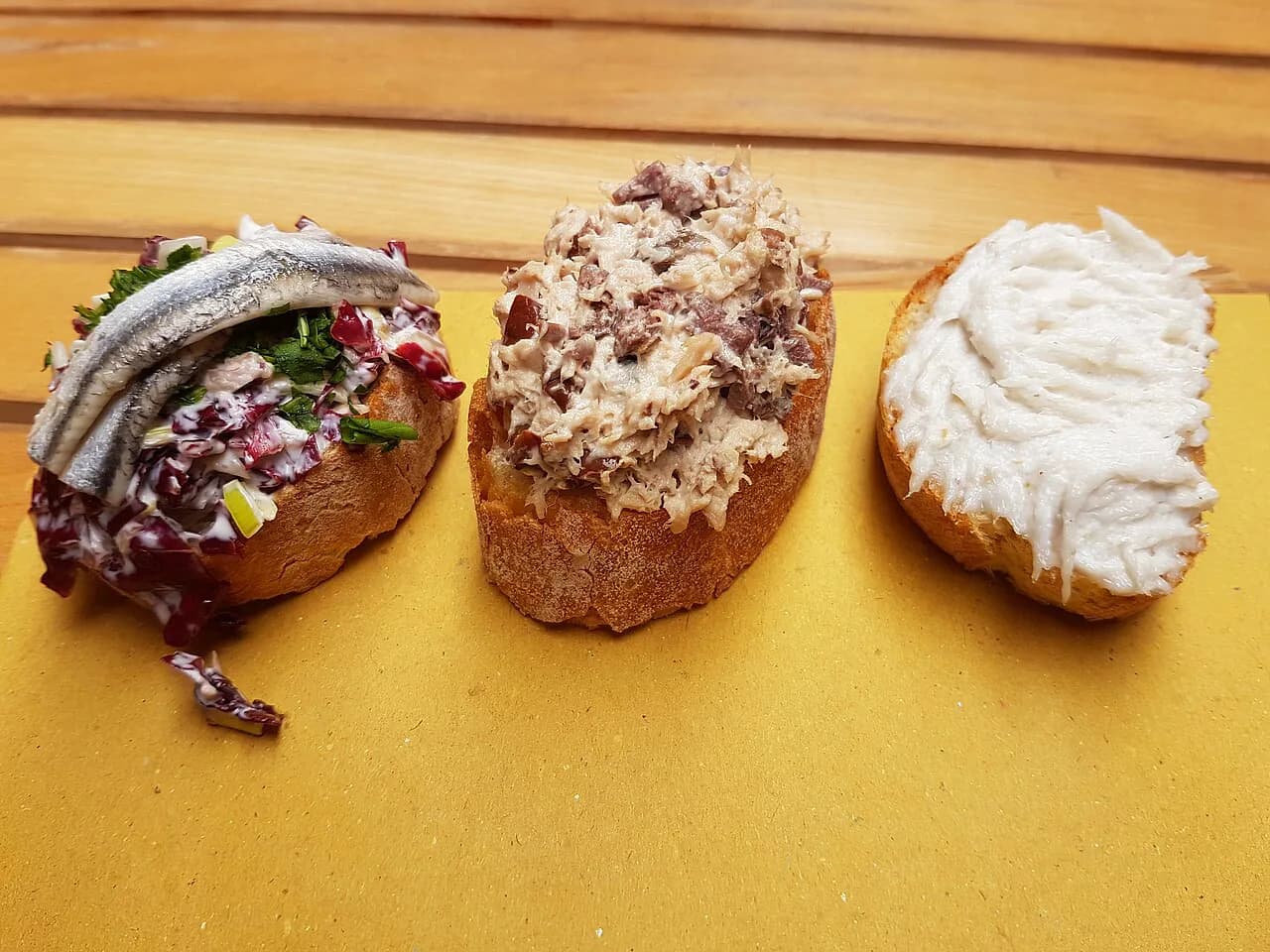
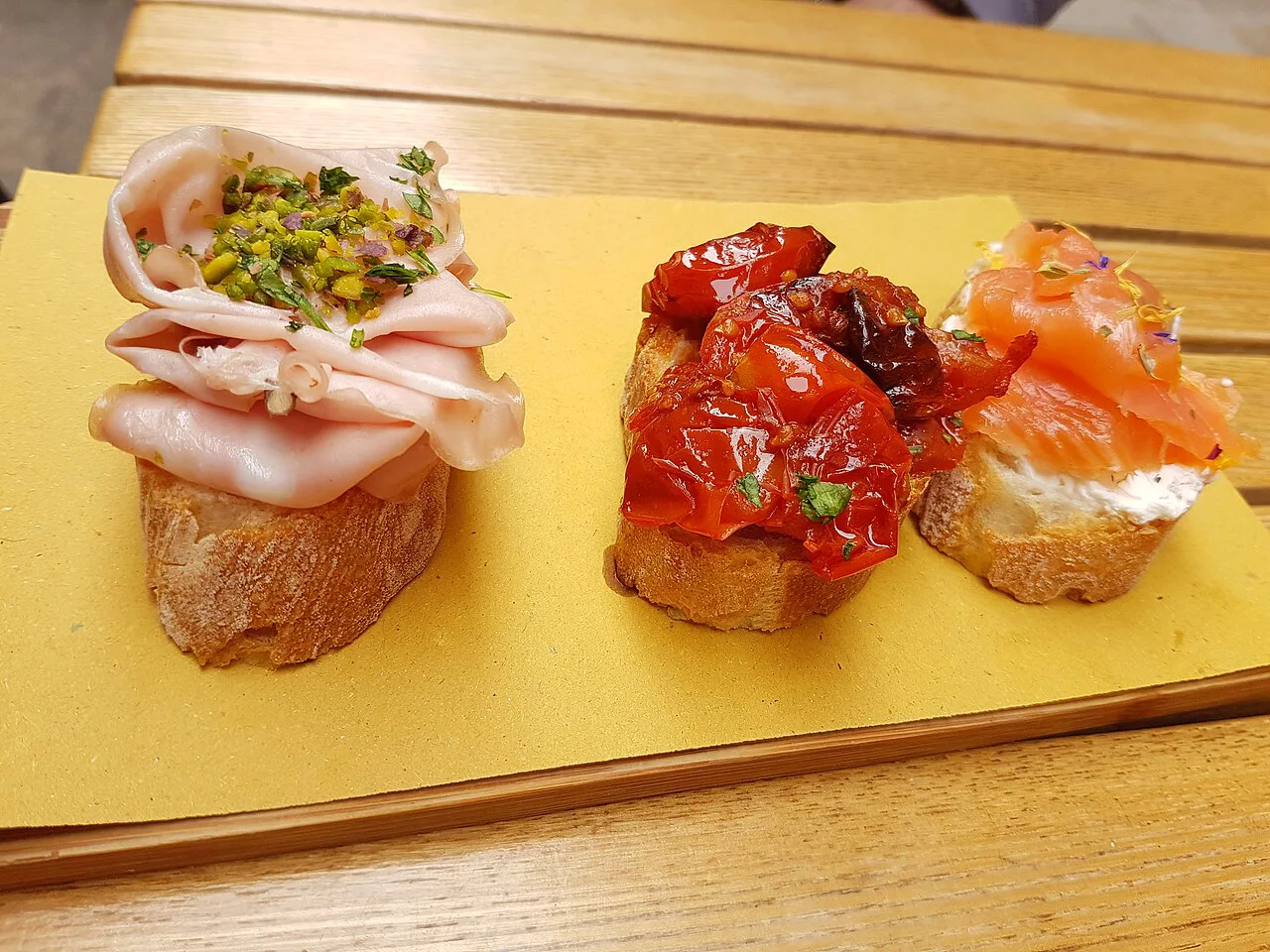
Crostini are small slices of toasted bread with a topping, and they are the most common bread-based snack on an aperitivo table. The topping can be anything from tomato and olive oil to a savoury paste, so the name tells you the format rather than the flavour. Take one or two at a time, because they dry out quickly and a fresh tray usually replaces the empty one.
Tramezzini are soft, crustless white-bread sandwiches, usually cut into triangles and filled with a light savoury mixture. They are a practical thing to order if you want something more filling than a biscuit without committing to a sit-down meal. The bread is squishy by design, so they are eaten in two bites rather than held elegantly.
Polpette and arancini: the fried, filling options
Polpette are small meatballs, served hot and usually without sauce on an aperitivo spread so they can be picked up with a cocktail stick. Arancini are breadcrumbed and fried rice balls, with a filling that varies by bar. Both are the heaviest things on the table, and both are the reason an aperitivo can quietly turn into a meal.
Eat them soon after they appear, while the crust is still crisp; a tray of arancini left out at room temperature is a different snack entirely. If you are pacing yourself before dinner, take one of each and let the rest of the table take the overflow.
Linguette and torinesi: Piedmont's contribution
Linguette are thin, tongue-shaped biscuits and torinesi are small aperitivo bites named after Turin. Turin is the city tied to the origin story of the pre-dinner drink, and both of these are light enough to eat alongside a drink without spoiling dinner, which is the whole point of the format.
Charcuterie and cheese on the aperitivo table
A larger aperitivo spread may include a board of cured meats and cheeses, which is where the format starts to feel like a meal. Salami and prosciutto sit alongside pieces of pecorino or grana, and the salt and fat are what make a second drink make sense. Take a modest amount: the board is there to carry the drink, not to replace dinner.
If a spread like this leads you towards the region's cured meats more broadly, that is a food subject in its own right rather than a bar-snack one. At the table, the practical move is to note what you like and ask the name of it, since a bar will happily tell you which salume it is serving.
Apericena: when the snacks become dinner
When the spread gets big enough that people skip dinner and eat the buffet instead, it is called apericena, from cena, meaning dinner. The buffet might run to pasta salads, pizza, focaccia, crostini and more, and you help yourself, sometimes going back for seconds. In this format the food is covered by a fixed rate on the first drink, with further drinks charged separately.
Treat apericena as a full evening rather than a prelude. If you have a restaurant booked at nine, a full buffet at six will ruin it; if you do not, the buffet is a cheap and sociable way to eat. The food quality tracks the bar, so look at what is actually on the table before committing.
How aperitivo works at the table or counter
At a café in the city, watch the room before choosing between the counter and a table. The bar counter is where locals stop for a quick drink, and the table is where you sit if you want to linger. Order your drink first; whether you pay at the end or at the till beforehand varies by bar, so follow what the people ahead of you do.
Whether the food is a buffet or brought to you depends on the bar, so check the table before assuming the tray is part of the aperitivo. If the buffet is empty and the bar is quiet, ask what comes with the drink rather than taking the crisps that are meant for sale. A polite question about which snacks are part of the aperitivo saves confusion for everyone.
Two practical habits pay off: arrive early, when a buffet has just been set out, and keep your plate to one round unless the bar is clearly refilling. If you want to go further into the drink side of the ritual, the guide to the spritz in Italy covers the build and the variations.
Which snacks to order first
Start with taralli, because they are the snack you are least likely to find at home and the most likely to be on the counter. Add a crostino or a tramezzino if you want bread, then decide whether the polpette and arancini are worth staying for or whether a proper dinner is still the plan.
The format is the point: the drink is what you order, and the food is what the bar gives back. Choose the bar by what is on its table, sit or stand according to how much you want to pay, and let the aperitivo last an hour rather than the whole evening. For the wider ritual, from the Turin vermouth origin to the difference from happy hour, see the guide to the Italian Aperitivo.
Explore more Italy food guides
Frequently Asked Questions
What are some popular Italian finger foods?
The common aperitivo finger foods are taralli and tarallini, crostini, tramezzini, polpette, arancini, linguette, torinesi, and boards of cured meats and cheese. They are all designed to be eaten standing up with one hand, which is why you rarely see anything that needs cutting.
What is an aperitivo drink?
It is a low-strength, bittersweet drink taken before dinner, such as prosecco, an Aperol or Campari spritz, an Americano, or a Negroni. Vermouth is the historical base of the ritual, and the drink should not be strong or sweet enough to spoil your appetite.
At what time do Italians have aperitivo?
Aperitivo usually runs from about six to eight in the evening, ahead of a dinner that starts between half seven and half eight, later in the south. Bars put out snacks during that window, and the food tends to be freshest at the start of it.
Is aperitivo the same as Aperol?
No. Aperitivo is the broader ritual of a pre-dinner drink with snacks, and Aperol Spritz is one of the drinks served within it. You can have aperitivo with prosecco, vermouth, Campari or a non-alcoholic drink instead.
Sources
Notes for your next meal in Italy
Optional updates to our food guides.
You might also like

Continue reading
More guides you'll find useful