Italian Olive Oil: How to Choose a Bottle, Region by Region
Italian olive oil is graded by acidity and flavour, not by brand. Learn what extra virgin means, how regions differ and which bottles to buy in the UK.
On this page
The best Italian olive oil for your kitchen is the one whose grade you understand and whose flavour matches the dish, not the most expensive bottle on the shelf. Extra virgin is the top grade, defined by acidity below 0.8%, and within that band the useful choices are about fruitiness, bitterness and pungency rather than brand prestige. This guide explains the grades, what origin and certification labels actually promise, how the main Italian regions differ in character, and how to spend your money sensibly on a finishing oil and a cooking oil.
Buying olive oil in the UK mostly means supermarket own-label bottles alongside Italian brands such as Colavita and Barbera that reach the deli shelf through importers, and specialist merchants that stock single-estate oils such as Frantoio Muraglia's Apulian Peranzana. Knowing what the label is allowed to claim, and what it is not, is the difference between paying for flavour and paying for packaging.
What counts as Italian olive oil: extra virgin versus the other grades
Extra virgin olive oil is the lowest-acidity grade, pressed from olives without refining, with acidity under 0.8%. Below it sit virgin olive oil at 0.8% to 2%, refined olive oil at 2% to 3.3%, and lampante virgin oil above 3.3%, which is not sold for direct consumption. The word vergine on an Italian label is the grade marker; extravergine is the one worth seeking.
A bottle labelled simply olive oil, without extra virgin, is usually a blend of refined and virgin oil with a milder, more neutral taste. That makes it serviceable for roasting and frying but pointless as a finishing oil, where you want the fresh, peppery character of the unrefined grade. Italian olive oil is not a protected name in the way a DOP cheese is, so the word Italian on the front tells you less than the origin wording on the back, and the same label-reading habit pays off across the Italian cheese counter.
What extra virgin means: acidity below 0.8% and what fruitiness, bitterness and pungency tell you
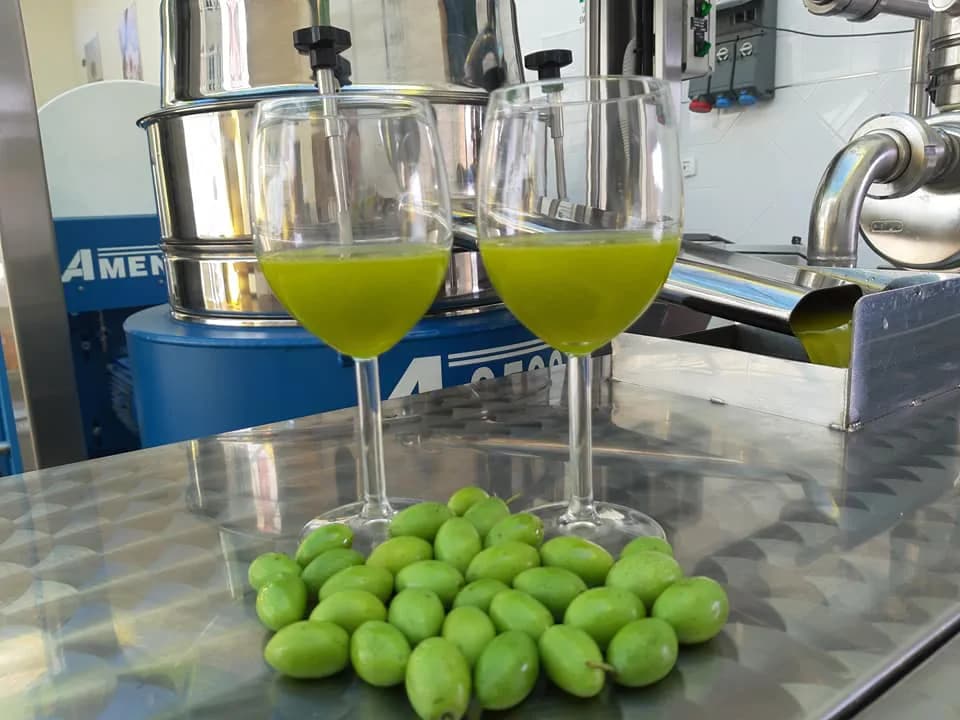
Good extra virgin oil tastes of fruit, and often of cut grass or green almond, with a bitter note and a peppery catch at the back of the throat. That tingling pungency is a sign of fresh polyphenols rather than a fault, and it fades as a bottle ages. A bland oil with no bitterness at all is more likely to be old or refined than delicately made.
What counts as Italian olive oil: extra virgin versus the other grades: Extra virgin olive oil is the lowest-acidity grade, pressed from olives without refining, with acidity under 0.8%.
What extra virgin means: acidity below 0.8% and what fruitiness, bitterness and pungency tell you: Good extra virgin oil tastes of fruit, and often of cut grass or green almond, with a bitter note and a peppery catch at the back of the throat.
Reading the label: origin and PDO or PGI certification marks: The Protected Designation of Origin and Protected Geographical Indication marks guarantee where the olives were grown and how the oil was made, not that you will prefer the taste.
The useful number on a label is acidity, not a decorative score. Very good extra virgin oils often sit well under the 0.8% legal ceiling, with typical figures in the 0.1% to 0.4% range, though the reading matters less than a recent harvest and a sealed, dark bottle. If a bottle carries no harvest information at all, treat it as generic rather than premium; shops such as Piccantino and Oliolio list harvest and acidity details on many product pages, so compare those listings before buying.
Reading the label: origin and PDO or PGI certification marks
The Protected Designation of Origin and Protected Geographical Indication marks guarantee where the olives were grown and how the oil was made, not that you will prefer the taste. PDO is the stricter of the two on origin and method, and both are origin and method guarantees rather than a quality ranking. A certified oil from a region you like the character of is a sound buy; a certificate on a bottle past its best is not.
Look for the harvest date, the olive varieties and the region, ideally a named area such as Puglia or Tuscany rather than a country name on its own. Multi-origin blends are legal and can be good value for cooking, but they cannot be sold as a PDO oil. If the front label leans on Italianate design and the back reveals a blend from several countries, believe the back.
Tuscany, Puglia and Liguria: how the regions differ in character
Tuscany, Puglia and Liguria are the three Italian regions most associated with olive oil, and they produce noticeably different styles. Tuscan oils tend toward greener, more herbal and more bitter profiles, Apulian oils are often fuller and fruitier, and Ligurian oil, made in small quantities on terraced slopes, has a delicate, sweeter reputation. Treat these as tendencies rather than rules, because variety and harvest date shift the result more than region alone.
Puglia's Peranzana is a local olive variety grown in Italy's heel, and bottles carrying the name are usually pressed from 100% Peranzana olives with a fine, elegant fruitiness. However distinctive the name, Peranzana is a variety, not a grade, so the acidity and harvest still decide whether the bottle is worth its price.
Sicilian oil: bolder fruit from a different set of olives
Sicily produces oil from its own set of varieties, and the Barbera brand built around Sicilian olives is known for bold, full-flavoured oils made with traditional methods. Expect deeper fruit and a firmer structure than a Ligurian oil, which makes Sicilian bottles a good match for grilled vegetables, legumes and roast fish rather than for a delicate salad.
Treat Sicilian oil as a broad category rather than a single style, because the island's altitude and variety mix vary widely. The practical test is the same as anywhere: smell before you commit if the shop allows it, and buy the smaller bottle if you are trying a producer for the first time. On a cheese board, a bolder oil sits well with aged Italian cheese, while a mild one flatters fresher styles.
Flavour profiles and what each style suits in the kitchen
Mild, sweet, floral oils are the ones for delicate fish, mozzarella di bufala and dressings where you do not want the oil to dominate. Medium-fruity oils with a herbal scent, such as a Peranzana, handle pasta, pulses and light vegetable dishes. Intensely fruity oils with tomatoes, walnuts and apple notes are built for raw and grilled meat, where the oil needs to hold its own.
A single bottle is a compromise. The workable pairing is a cheaper, milder extra virgin for everyday cooking and a smaller, more pungent bottle kept for finishing. If you buy only one, choose medium fruity: it is the least likely to clash with anything and still tastes of olives.
In the kitchen: finishing raw versus cooking, and why the pairing matters
Use your best oil raw. A drizzle over warm pulses, soup or grilled bread is where a peppery extra virgin shows its character, and heat flattens exactly the volatile aromas you paid for. Keep a plainer extra virgin or a bottle labelled for cooking for roasting, grilling and baking, where a neutral taste is an advantage rather than a flaw.
On the plate, oil behaves like a seasoning and should be added at the end as often as at the start. It lifts mild ingredients such as burrata and fresh pecorino, and it can soften the saltiness of cured meats and aged cheese. A finishing oil is also a sensible way to stretch an expensive bottle across weeks.
Buying in the UK: what supermarket and deli shelves actually offer
Supermarkets in the UK concentrate on large-format extra virgin in clear or dark glass and tins, often multi-origin blends at modest cost, which is fine for cooking. Delis and specialist importers go the other way, stocking single-estate and regional bottles in smaller sizes, including Italian names such as Frantoio Muraglia, Colavita and Barbera. Buying a 250ml bottle to test a producer is cheaper than committing to a litre you may not like.
Specialist importers also sell oils by olive variety, harvest year and style, which is where the meaningful differences live. Expect a broad, changeable range rather than a fixed list: one importer's olive oil pages run to dozens of bottles, from smoked Spanish oils to Apulian Peranzana in painted clay bottles and Italian lemon-infused oil. Use the variety and acidity to choose, not the label's typography.
Storing a bottle so it stays fresh (temperature, light and container)
Light, heat and air are the three things that spoil olive oil, so store bottles in a dark cupboard away from the hob rather than on a sunny windowsill. Keep the cap tight and use the bottle within a few months of opening, because the pungency you notice on day one declines steadily. Dark glass or a tin shields the oil; a decorative clear bottle is for the table, not the shelf.
Decanting into a small bottle for daily use means opening the main one less often, which slows oxidation. If you buy a large tin for cooking, that is the one to keep sealed between uses. There is no need to refrigerate ordinary extra virgin, and cold temperatures will cloud it without improving it.
Brands you will see on UK shelves: Frantoio Muraglia, Colavita and Barbera
Frantoio Muraglia is an Apulian producer best known for Peranzana oil in handmade, hand-painted clay bottles, an attractive gift format that adds cost to the oil inside. The same producer's oil is sold in more ordinary bottles for everyday use, so decide whether you are buying the ceramic or the contents. An oil in a painted bottle is a good present and a poor default for daily cooking.
Colavita sells a wide spread of extra virgin and infused oils and is widely available, which makes it a convenient cooking oil, though one tasting describes its flavour as lacking, so buy small if you plan to finish dishes with it. Barbera, working with Sicilian olives, is the more characterful choice of the two. None of these is automatically better than an own-label bottle from a recent harvest.
Which bottle should you actually buy?
Buy two if your budget allows: a mid-priced extra virgin for the pan and a smaller, pungent, recently harvested bottle for finishing. Start with the region whose character you like, read the variety and acidity rather than the artwork, and try 250ml before committing. That approach beats chasing a single best bottle, which no label can promise you.
If you are building an Italian pantry, oil is one part of it, and the same label-reading habit carries over to protected cheeses such as Parmigiano Reggiano and other Italian cheese, where a named origin and a dairy that uses raw cows' milk tell you far more than the wrapper design. Buy small, buy recent, and taste before you stock up.
Explore more Italy food guides
Sources
Notes for your next meal in Italy
Optional updates to our food guides.
You might also like


Continue reading
More guides you'll find useful