Burrata Cheese: What It Is and How to Eat It
Burrata is a pouch of stretched mozzarella filled with soft curds and fresh cream. Here is what it is made from, why the centre runs, and how to serve and eat it.
On this page
Burrata is a ball of stretched mozzarella wrapped around a filling of unspun curds and fresh cream, so the centre runs out as soon as you cut into it. It is eaten young and soft, as an antipasto rather than a cooking cheese, and it rewards a plain dressing of olive oil, tomatoes and good bread over anything complicated. This guide covers what burrata is made from, why the centre spills, and how to serve and share it — or buy it to take home.
What burrata is: a pouch of stretched mozzarella filled with curds and cream
Think of burrata as a small bag rather than a solid ball. The outer shell is pulled mozzarella, and inside sit soft, unspun curds mixed with fresh cream, which is why the cheese slumps and spills when the shell is broken. The name comes from burro, Italian for butter, a fair hint at the richness of what sits in the middle.
That structure makes burrata a cheese to eat with a spoon and a plate, not one to melt over a pizza or fold into a sauce, where the cream would simply disappear. Treat it as a self-contained course: split it open at the table, let the centre pool, and use bread to mop up what escapes. If you want a cooking cheese, look at the wider world of Italian cheese instead, where firmer styles such as Parmigiano Reggiano and Grana Padano are built for grating and melting.
A fresh cheese to eat young, not a cooking cheese
Burrata is a cheese born to be eaten within hours of making, and the further it travels the more the texture tightens. The freshness point is not a marketing line: burrata past its best turns firm and loses the loose, oozing centre that defines it, so treat it as a cheese of the day rather than of the warehouse.
What burrata is: a pouch of stretched mozzarella filled with curds and cream: Think of burrata as a small bag rather than a solid ball.
A fresh cheese to eat young, not a cooking cheese: Burrata is a cheese born to be eaten within hours of making, and the further it travels the more the texture tightens.
What burrata is made from and why the centre runs when you cut it: The recipe is short: milk, rennet and salt to make the curd, some of which is stretched in hot water into the outer sheet, the rest kept soft and loose for the filling, plus fresh cream.
In practice this means a burrata eaten in Italy tastes noticeably different from one that has crossed borders, and that is the strongest argument for ordering it while you are there.
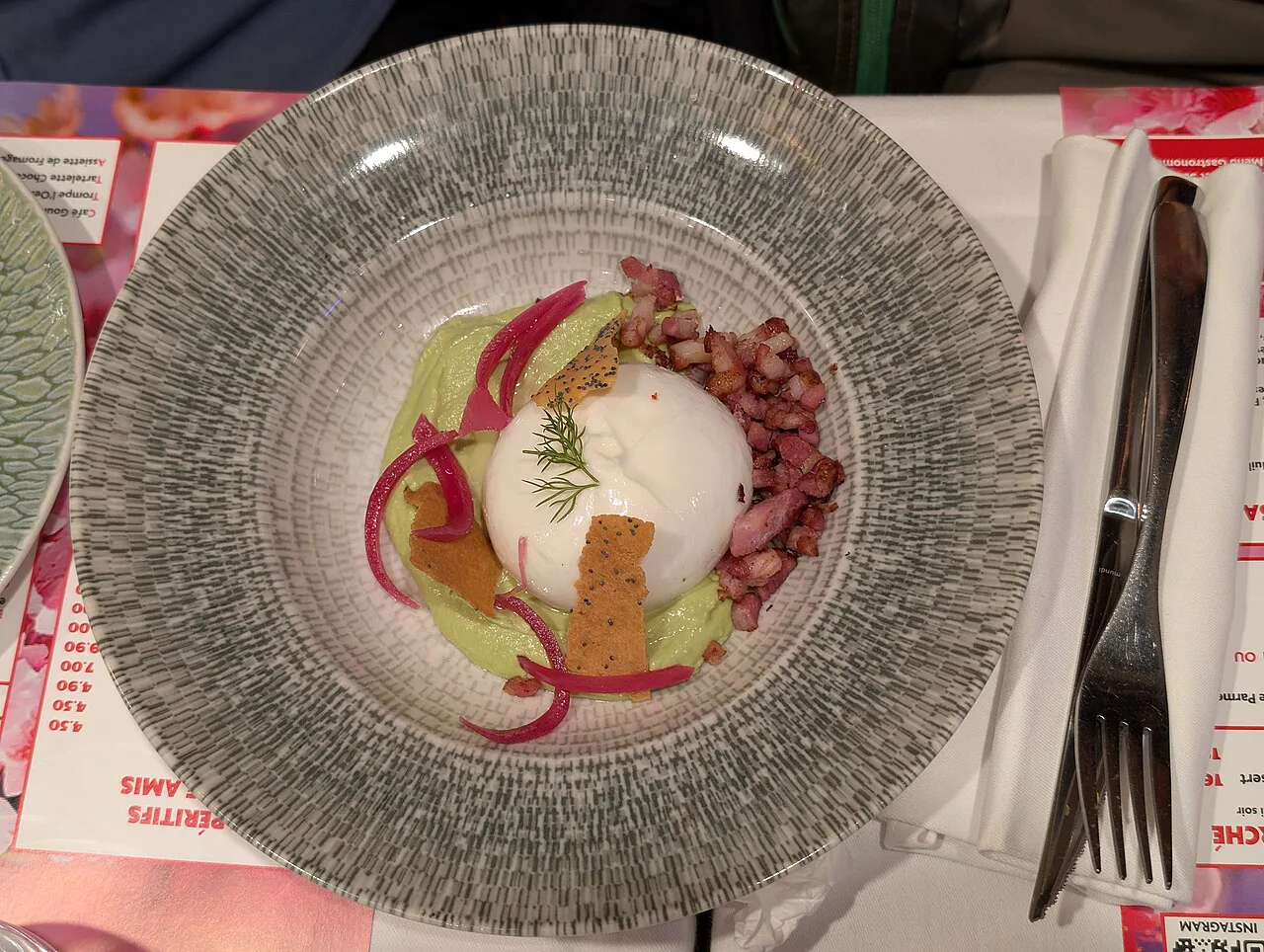
What burrata is made from and why the centre runs when you cut it
The recipe is short: milk, rennet and salt to make the curd, some of which is stretched in hot water into the outer sheet, the rest kept soft and loose for the filling, plus fresh cream. Because the middle is never worked or heated to firmness, it holds as a thick liquid inside the shell and escapes the moment the shell is breached.
Traditionally the ball is wrapped in the leaves of Asphodelus ramosus, a plant with leaves similar to leeks, before being tied and chilled, which holds the shape while the cheese sets. That wrapping is worth noticing at a deli counter, because it signals a cheese made in the traditional way rather than a machine-formed ball.
The same short make is why burrata belongs next to other fresh Italian cheeses rather than aged ones. If you enjoy this style, mozzarella di bufala made from the milk of Water buffalo is the nearest relative, and it follows the same rule of eating it as fresh as you can find it.
How to serve and eat burrata
Burrata is a mild, sweet fresh cheese, so the olive oil and tomatoes on the plate do most of the seasoning. A simple plate usually suits it better than one where the cheese is buried under other flavours.
If a counter offers more than one burrata, ask which is the plainest and start there: a mild, simple cheese is the easier pick for a shared starter with bread, because it does not fight other flavours on the table.
How to share it at the table
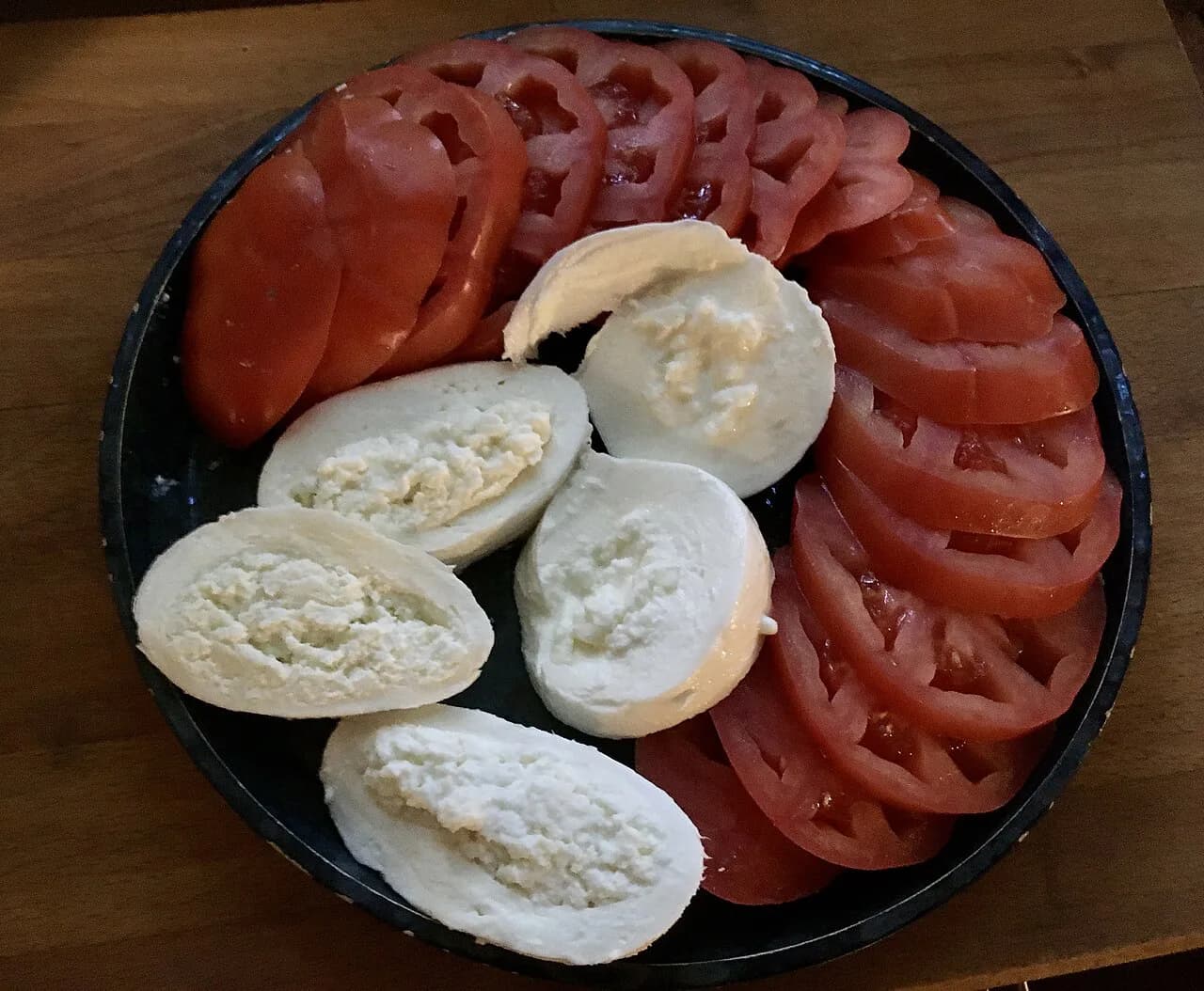
The classic serving in an Italian trattoria is burrata with tomatoes, a thread of extra virgin olive oil and basil, with country bread alongside to spread it on. Keep the tomatoes at room temperature and the oil good but not overpowering; the cheese is the expensive ingredient and the plate should show it off rather than bury it. A few drops of aged balsamic add sweetness, though it can swamp a delicate cow's-milk burrata, so add it at the table rather than let the kitchen decide.
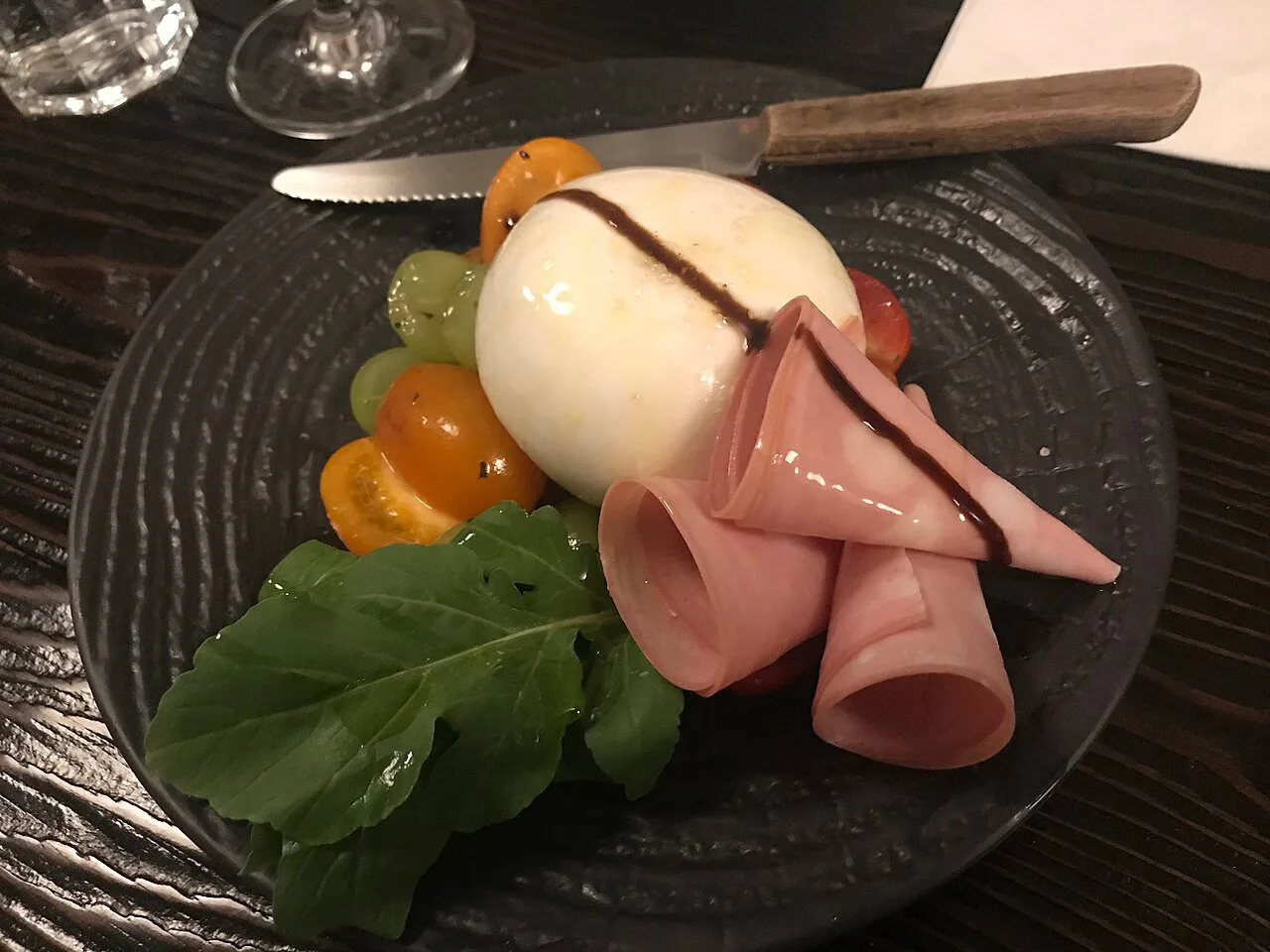
Served as part of an antipasto spread, burrata works with prosciutto or other cured meats, though the salt and the cream can tire the palate quickly. If the plate already carries salumi, order the burrata plain with bread and save the tomatoes for a separate course. A peppery leaf such as rocket gives contrast without competing, and the same logic applies to any cheese board where you want one soft cheese against something sharper.
It is also one of the few cheeses that can carry a whole starter on its own. A plate of burrata with bread and oil is often enough to start a meal for two, leaving room for a first course of pasta or a plate of vegetables.
What to look for when buying burrata
Order burrata as an antipasto and share it. A ball works best as a starter rather than as a main course, and a plate of bread to mop up the centre is part of the dish. In a restaurant, ask about the coperto, the small per-person cover charge on the bill.
In a salumeria or deli, at a fresh counter burrata is sold by the ball, so ask for it to be packed with its liquid so it survives the journey home, and say when you plan to eat it. Paying works as it does across Italy: at the till, with cash or card depending on the shop.
Why burrata is so rich
A fresh burrata should feel heavy for its size and give slightly when pressed, with a shell that looks intact. Check the packing liquid is milky and clean rather than sour, and look at the date on the label — this is a cheese with a short life, so buy it to eat quickly.
If you are flying home, burrata is a poor traveller: it needs cold the whole way and will not survive a long, warm journey in hand luggage. Buy it to eat on the trip, or look for a vacuum-sealed version sold for export if you want the idea of it at home, accepting that the texture will not match what you ate in Puglia.
How much burrata to order for a table
The richness comes from the cream in the centre combined with the fat of the mozzarella shell, which is why a small portion goes a long way. It is a high-fat cheese by any measure, so it sits best at the start of a meal rather than as the main event, especially if more cheese or cream follows later in the order.
On a table with other starters, one ball of burrata goes a long way; as a practical rule, share one between two if it is the only starter, and stretch it across a larger table when other dishes are also being passed around. The second half of a big ball stops being a treat and starts to feel heavy, and you will want appetite for what follows.
Serve it fresh, early in the meal, and share it
Burrata is best understood as a fresh, shared antipasto: a pouch of mozzarella curds and cream that wants nothing more than olive oil, tomatoes and bread, and that tastes best eaten young. Serve it early in the meal, and ask for a second plate of bread rather than a second ball. Buy it to eat within a day or two, and leave the export versions for the suitcase.
Explore more Italy food guides
Sources
Notes for your next meal in Italy
Optional updates to our food guides.
You might also like

Continue reading
More guides you'll find useful