Sardinian Bottarga: What to Buy and How to Eat It
Sardinian bottarga is cured grey mullet roe from the Cabras lagoon. Learn what it tastes like, how it is served in Italy and how to order it on the coast.
On this page
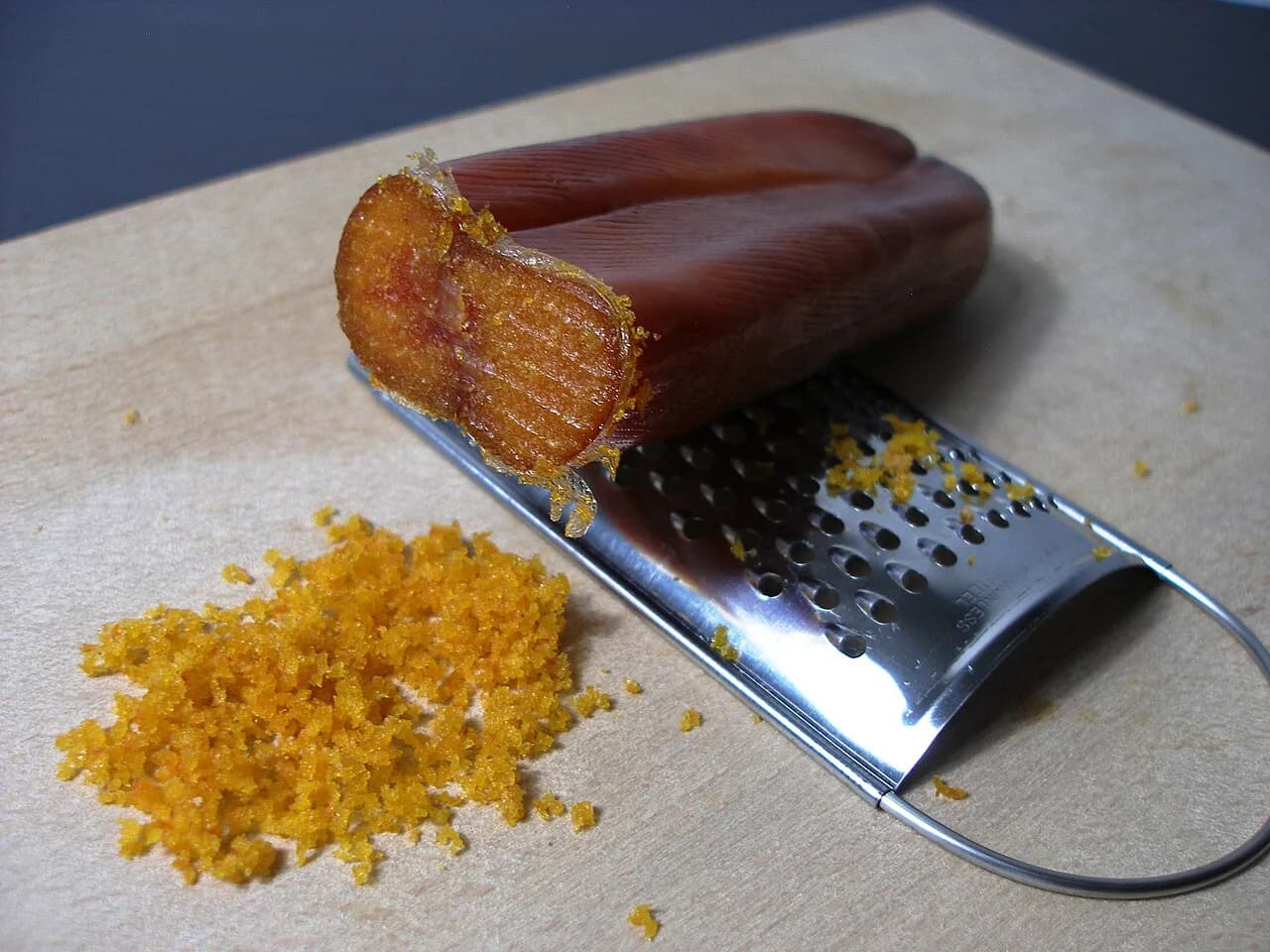
Sardinian bottarga is the salted, pressed and dried roe of grey mullet, and the name to look for on a label is bottarga di muggine. It arrives at the table either shaved into thin slices as an antipasto or grated over pasta, and both are worth ordering at least once on a Sardinian trip. This guide covers what it is, why Cabras on the west coast is the benchmark, how mullet and tuna versions differ, and how to buy and keep a piece once you have carried it home.
Treat it as a seasoning rather than a portion. A few slivers or a modest grating carry a lot of salt and flavour, which is why restaurants serve it sparingly with olive oil, lemon or a plain plate of pasta.
What Sardinian bottarga actually is
Bottarga is fish roe left inside its membrane, then salted, pressed and seasoned for four or five months until it firms into an amber, sausage-shaped piece. It is eaten sliced or grated, and the texture sits somewhere between firm cured fish and a dense, waxy cheese. The curing is what gives it its keeping quality and its concentrated, briny punch.
Production is concentrated in Sardinia but not confined to it: bottarga is also made along other Mediterranean coasts from Provence to Tunisia, and tuna or cod versions exist too. If you are mapping Italian cured foods, bottarga is a grating ingredient in the same table role as the hard cheeses covered in the Italian Cheese guide, though its origin and make-up are entirely different.
Why Cabras is the name to know
The mullet bottarga most worth seeking out comes from female thin-lipped grey mullet caught in the waters around Cabras, a lagoon on Sardinia's western shore. Those waters and the fish taken from them are what give the best mullet bottarga its colour and depth, which is why Cabras appears on good labels.
What is boutargue called in English? In English it is usually sold as bottarga or, in French-influenced writing, boutargue; both refer to the same cured, salted fish roe. The Italian name bottarga di muggine specifies grey mullet, which is the version most associated with Sardinia.
Why is mullet roe so expensive? Each piece is a single roe sac taken from a mature female mullet, then salted, pressed and cured for four or five months, so the yield per fish is small and the process slow. That combination of limited supply and long curing pushes the price up by weight.
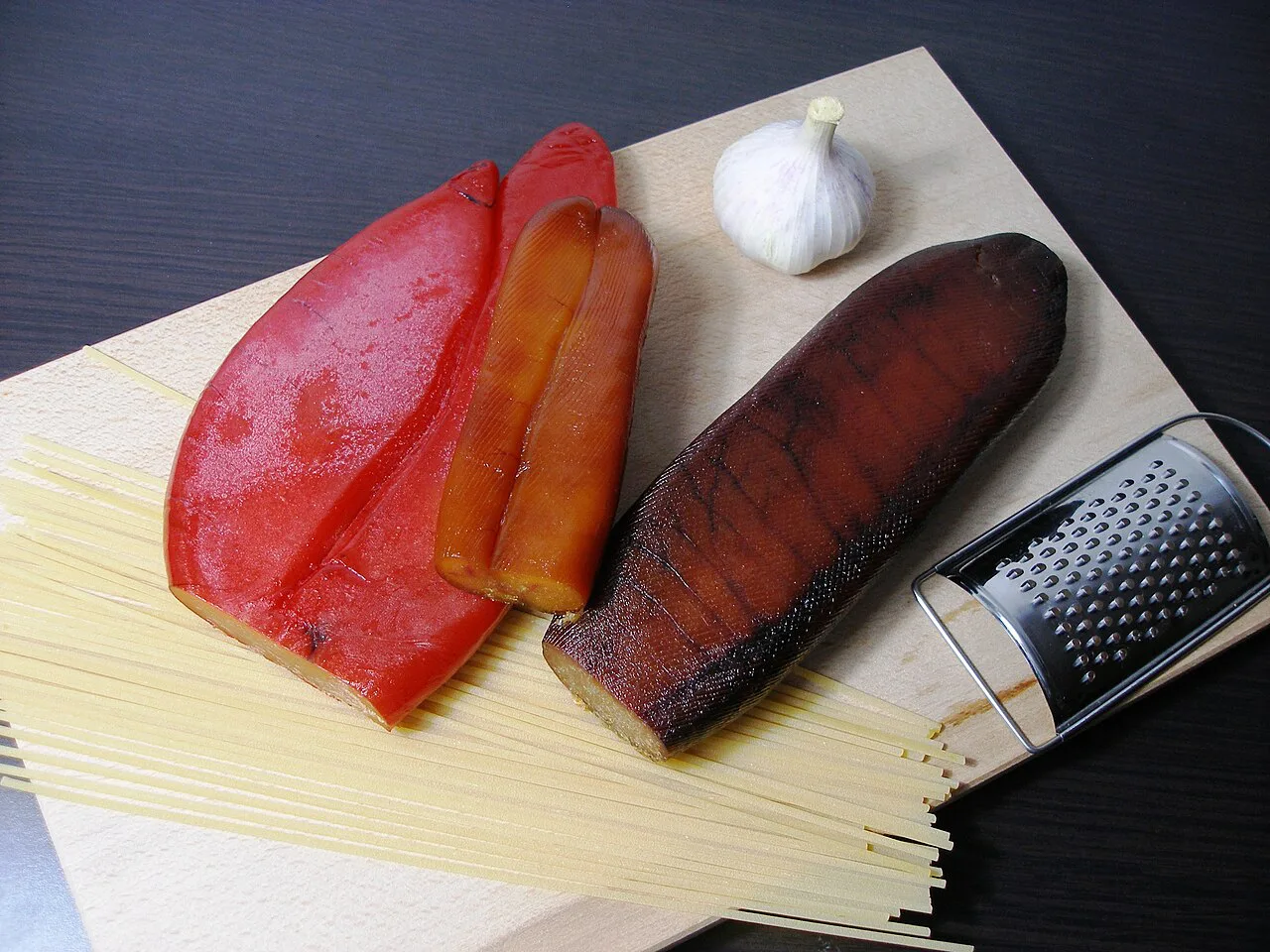
A whole piece is shaped like a flattened teardrop or tongue and ranges in colour from deep red-amber to bright orange-yellow. That shape is a useful cue in a shop: you are looking at a single cured roe sac, not a manufactured block.
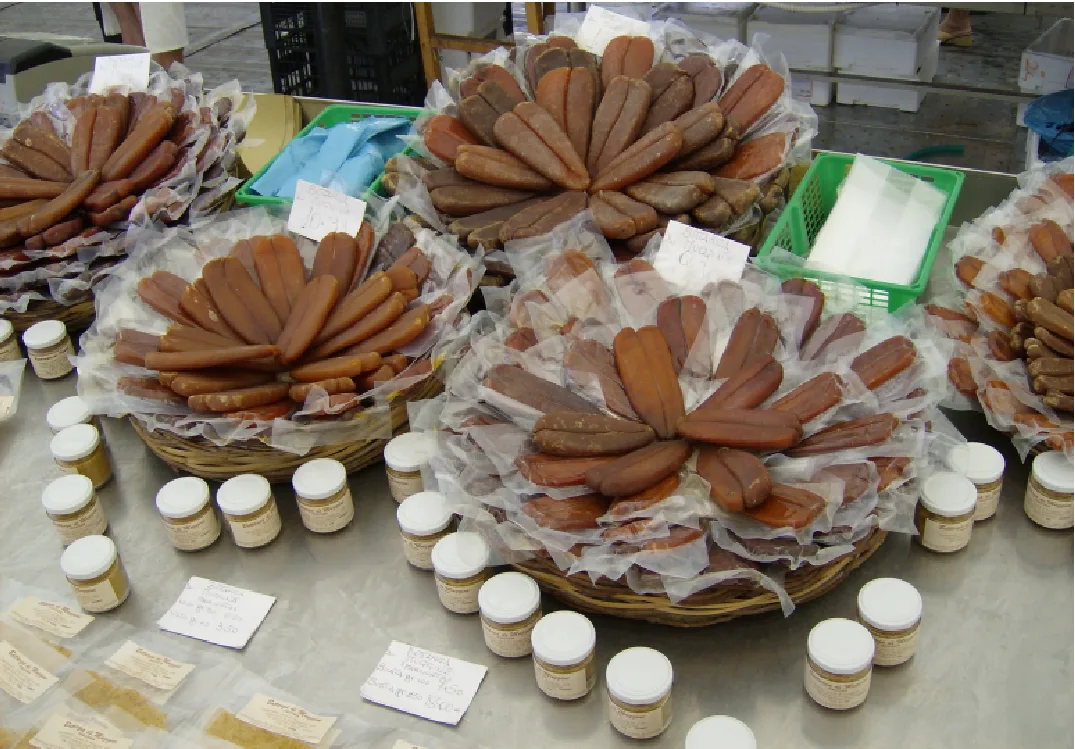
Mullet versus tuna bottarga
Mullet bottarga is the finer product: slightly bitter, quite salty and vaguely reminiscent of almonds, with a softer, more complex flavour. Tuna and cod bottarga are graded lower and carry a stronger aroma, so they suit anyone who wants a punchier, more overtly fishy hit rather than the subtle mullet character.
The trade-off is straightforward. Mullet bottarga rewards slow eating in thin slices; tuna bottarga is the more assertive grating for a weeknight pasta. Neither is cheap by weight, because you are buying a small, labour-intensive cured product, so buy a modest piece rather than a whole sac if you are trying it for the first time.
What it tastes like
The first sliver is confusing on purpose. The texture is a little waxy, then it melts and the flavour opens into something creamy, briny and gently fishy, with a warm, almost spicy edge and a faint metallic note that lingers. Expect a sequence rather than a single taste: firm, then soft, then a long savoury finish.
Because it is so salty, it works best against something neutral or fatty: bread, butter, eggs, cannellini beans or plain pasta. A small amount goes a long way, and a plate that looks under-dressed is usually correctly seasoned.
How it is eaten in Italy
The classic antipasto is bottarga sliced paper-thin and dressed with olive oil and lemon, sometimes marinated for a few hours in oil before it reaches the table. It also appears on pieces of toasted bread, and in home cooking it is grated over scrambled eggs or scattered through a green salad.
Order it at a seaside trattoria and it will often arrive as the simplest thing on the menu, which is the point. If you want more on other plainly served Italian ingredients, the mozzarella di bufala guide follows the same one-good-thing logic.
Bottarga and pasta
The pasta version, spaghetti alla bottarga (spaghetti with grated mullet roe), relies on a sauce of olive oil, garlic, lemon and pepper, with the bottarga grated over at the end so it melts into the oil rather than cooking. The neutral pasta base is what makes the flavour work: there is nowhere for the salt and brine to hide.
Spaghetti with clams and bottarga is the other combination worth knowing, where the shellfish sweetness balances the roe. For the oil, the Italian olive oil guide covers what to look for; taste as you go and keep the dressing modest so the bottarga stays in charge.
Buying a piece to take home
You will mostly find it whole or in vacuum-packed portions, sometimes pre-grated. A whole piece lets you control the slicing. Look for a firm but not brittle feel and a clean fishy smell rather than an ammonia one.
If you want a benchmark for how other Italian cured foods carry protected names, the cheese aisle is instructive: Parmigiano Reggiano is sold under strict rules, and that guide explains how the naming works.
Storing and serving it once you are home
Wrap a whole piece in foil and keep it in the warmer part of the fridge or a crisper drawer, where it will last up to several months. Once you cut into it, though, the clock shortens dramatically: eat the exposed piece within a few hours, so slice only what you need.
Serve it at room temperature rather than straight from the fridge, shaved as thinly as you can manage with a sharp knife. A vegetable peeler works for the harder, more seasoned pieces, and a fine grater is the tool for pasta.
Which bottarga should you buy first?
Start with a small piece of mullet bottarga from Cabras if you can find one, and buy it whole rather than grated so you can control how thin it goes. Use half of it shaved over toasted bread with olive oil and lemon, then grate the rest over spaghetti with garlic, lemon and pepper. Tuna bottarga is the cheaper, more assertive alternative if you want a stronger flavour for cooking.
In restaurants, order it as an antipasto at a coastal place where the kitchen treats it simply, and skip it in favour of something else if the menu buries it under heavy sauces.
Explore more Italy food guides
Frequently Asked Questions
What is boutargue called in English?
In English it is usually sold as bottarga or, in French-influenced writing, boutargue; both refer to the same cured, salted fish roe. The Italian name bottarga di muggine specifies grey mullet, which is the version most associated with Sardinia.
Why is mullet roe so expensive?
Each piece is a single roe sac taken from a mature female mullet, then salted, pressed and cured for four or five months, so the yield per fish is small and the process slow. That combination of limited supply and long curing pushes the price up by weight.
Sources
Notes for your next meal in Italy
Optional updates to our food guides.
You might also like


Continue reading
More guides you'll find useful