Mozzarella di Bufala: What It Is and How to Eat It in Italy
Mozzarella di bufala is a DOP water-buffalo cheese from Campania and neighbouring regions. Here is how it differs from fior di latte and how to eat it.
On this page
Mozzarella di bufala is a fresh stretched-curd cheese made from water-buffalo milk in southern Italy, and on an Italian menu the plain word mozzarella refers to it. Cow's-milk mozzarella carries its own name, fior di latte, so the distinction is the first thing to sort out when you order. This guide covers where the cheese is made, how the stretching shapes it, which dishes it belongs in and how to serve it at its best.
The cheese holds Protected Designation of Origin status, which ties production to a defined southern area and to traditional methods. That label, more than any restaurant claim, is what tells you the ball in front of you is the real thing.
What mozzarella di bufala is and why the name matters
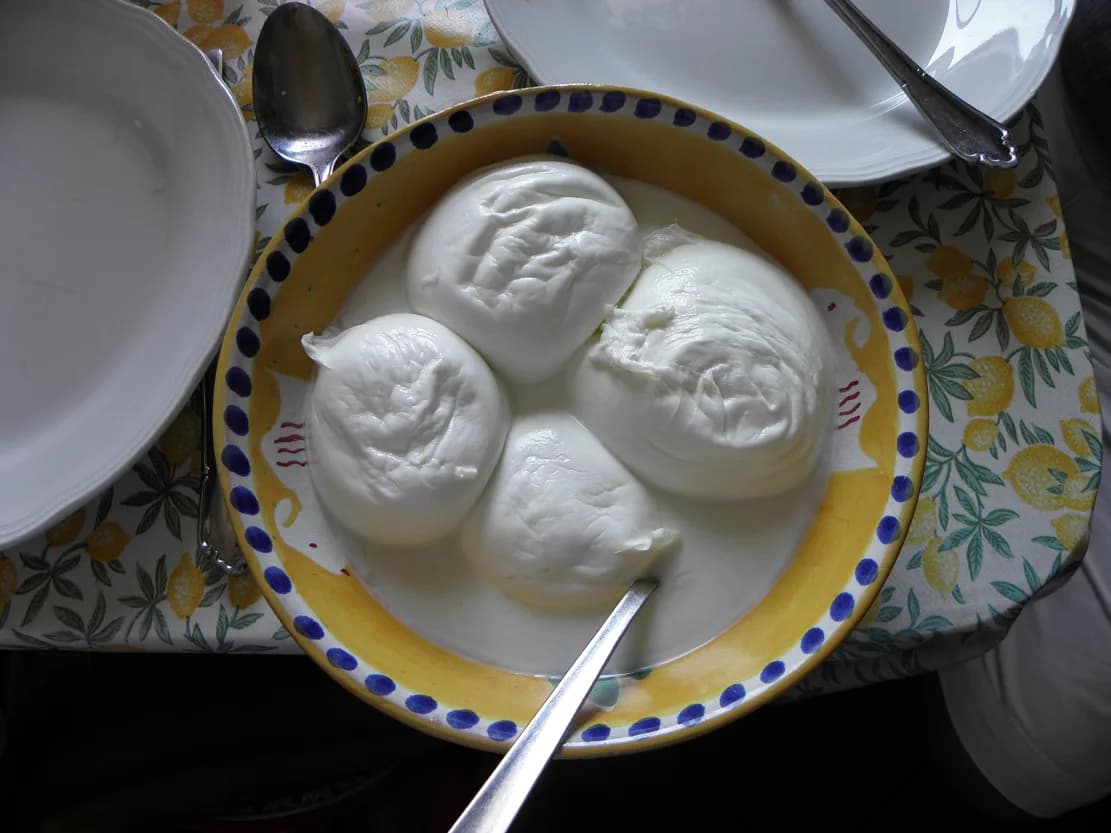
In Italy mozzarella technically means the buffalo cheese, and the cow's-milk version is labelled fior di latte, literally flower of milk. Outside Italy the word mozzarella has become a blanket term, which is why the buffalo cheese is usually sold as mozzarella di bufala to separate it clearly. Buffalo milk is rich in casein, so it is rarely drunk; it goes into mozzarella, burrata, ricotta, yogurt and even gelato.
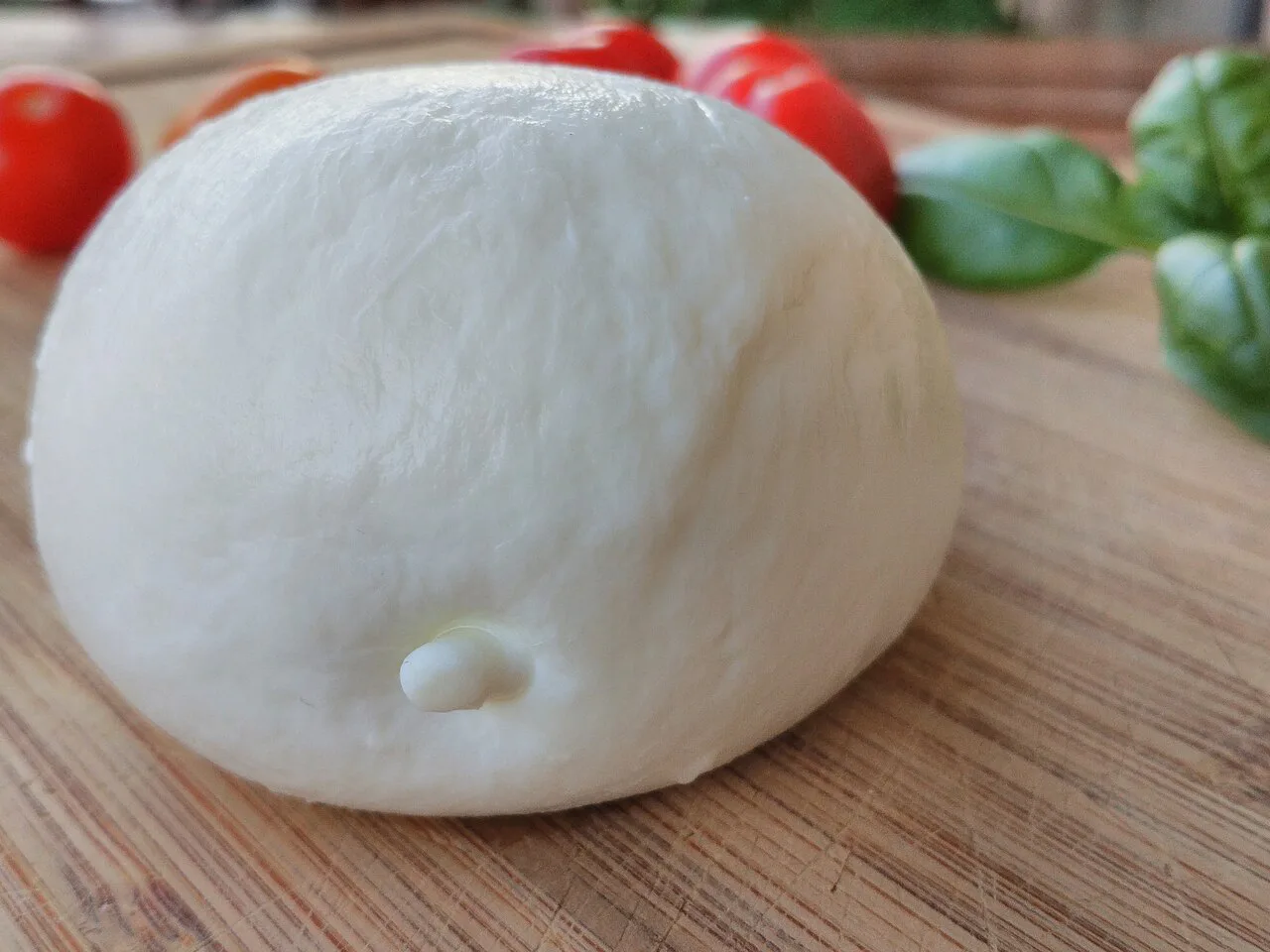
The cheese is fresh and unripened, with no rind, and it is packed in liquid to keep it from drying out. It tastes of fresh milk with a faint sour edge and melts with a distinctive stretch, which is why it became the classic pizza topping. For the wider family of Italian cheeses and how they sit alongside each other, see the Italian cheese guide.
Where it is made: the DOP zones
Mozzarella di Bufala DOP is made under strict rules in areas running across Campania, Lazio and Puglia. The heart of production sits in Campania, with parts of Lazio, Molise and Puglia also covered. The certification protects the product and the traditional know-how of the producers, not just the name on the packet.
Is burrata mozzarella di bufala? Burrata is a separate fresh cheese and not simply a mozzarella. Buffalo milk goes into burrata as well as mozzarella, ricotta and yogurt, so the two are related in origin but not interchangeable on a menu.
Where does mozzarella cheese come from? Mozzarella di bufala comes from the milk of water buffalo raised in southern Italy, mainly in Campania with parts of Lazio, Molise and Puglia also covered by the DOP. Cow's-milk mozzarella, fior di latte, is now made across Italy and in other countries, including the UK.
Which is better for pizza, fior di latte or buffalo mozzarella? Fior di latte is the easier topping: it is drier and springier, so it browns predictably. Buffalo mozzarella is richer and juicier, but it releases more moisture, which can leave a pizza wet if it is used too generously.
For a visitor, the practical point is that a DOP stamp on the label or a DOP mention on the menu is your evidence of origin; the cheese is made from the milk of domestic water buffalo raised in southern Italy. Fresh buffalo mozzarella keeps for a short shelf life under refrigeration, so it travels badly and is best eaten close to where it was made.
Pasta filata and mozzatura: how the texture is made
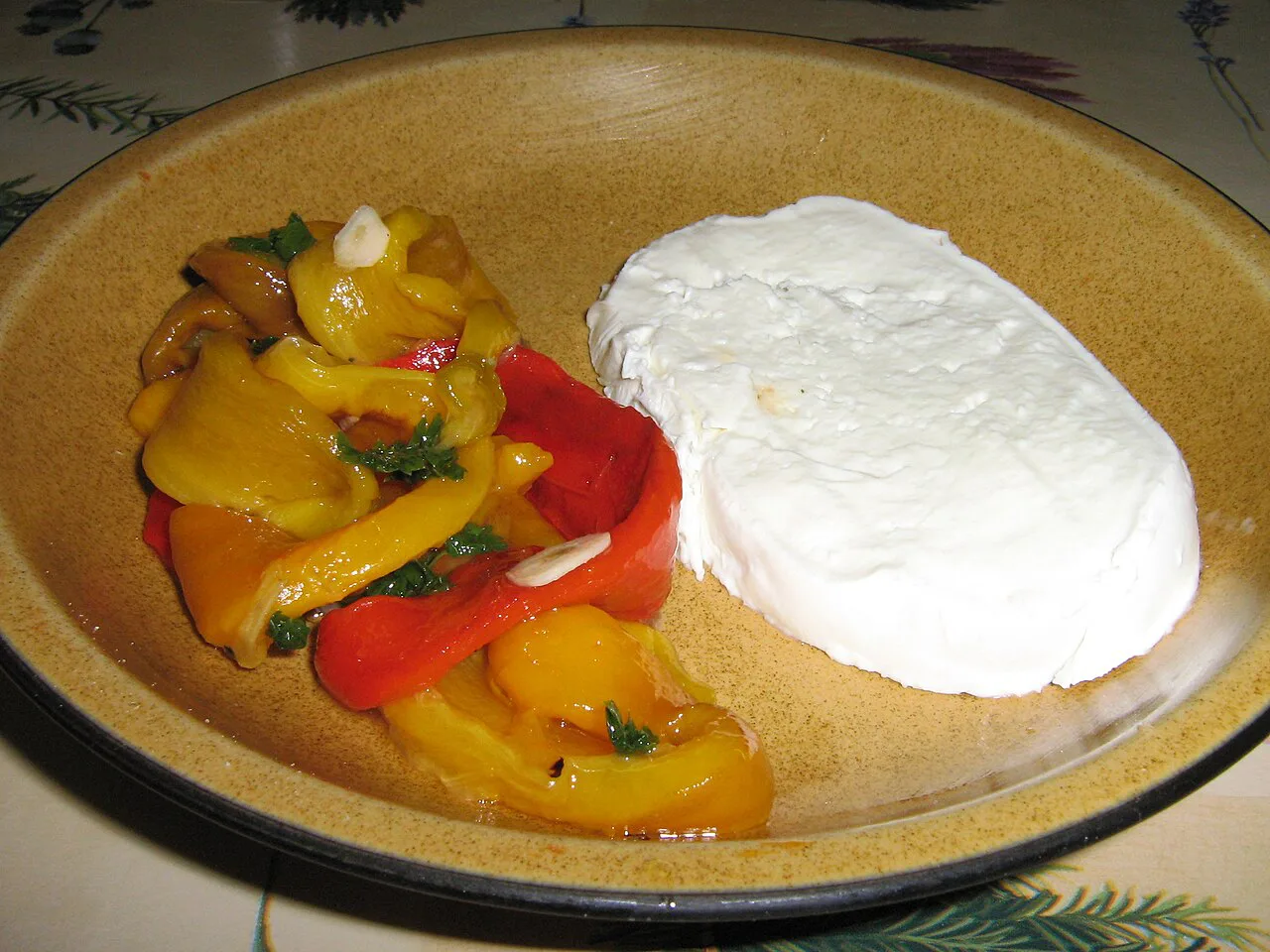
Mozzarella di bufala belongs to the pasta filata family, meaning the curd is stretched and kneaded in hot whey until it becomes elastic. The cheesemaker then cuts the rope of cheese into pieces, and that cutting action is called mozzatura, from the verb mozzare, to cut off. The name of the cheese comes directly from the step that gives it its shape.
Cow's-milk mozzarella goes through the same stretching technique; what changes is the milk, and with it the richness and the moisture. That is why buffalo mozzarella feels softer and juicier in the mouth, while fior di latte stays springier and milder. The technique is shared, the raw material is not.
The shapes you will see
Buffalo mozzarella is sold in several forms, and the shape on the counter tells you roughly how it will be served. Large balls suit slicing for a salad, while bocconcini, meaning little mouthfuls, are small enough to eat whole. Nodini are knotted forms and trecce are braids, both of which look good on a shared plate and hold their shape when dressed.
Small mozzarella balls are commonly sold in tubs, and buffalo mozzarella is more likely to turn up in a good deli or cheese shop than in a supermarket chiller. The size you buy should match the dish: whole small shapes for a starter, a large ball for slicing.
Buffalo mozzarella vs fior di latte
Compared with cow's-milk mozzarella, mozzarella di bufala is richer, more flavoursome and noticeably juicier. Fior di latte has a milder taste and a springier bite, and it is now made all over Italy and well beyond, including in the UK from both cow's and buffalo milk. Neither is automatically the better buy: buffalo gives you intensity and softness, fior di latte gives you a firmer texture and a gentler flavour that lets other ingredients speak.
Cheese counters in Italy often treat buffalo mozzarella as a seasonal fresh product, and the same shop will sell both types side by side. Asking for mozzarella without qualifying it should get you the buffalo one, but saying mozzarella di bufala removes any doubt.
What to order with it
Italians eat mozzarella di bufala simply: sliced with ripe tomatoes and basil as a caprese salad, paired with cured prosciutto, baked into aubergine parmigiana, or laid on pizza. A less obvious classic is mozzarella in carrozza, where the cheese is sandwiched in bread and fried until golden. Order it as a starter or a light lunch rather than a side dish, and let the cheese be the point of the plate.
Dress a caprese with good extra virgin olive oil, a little salt and torn basil, and put bread on the table to mop up the milky juices. If the menu also lists burrata, treat it as a separate order; for how it is made and served, see Burrata: What It Is, How It's Made and How to Eat It in Italy.
Buffalo or fior di latte on pizza
Buffalo mozzarella melts well and stretches, but it also releases plenty of moisture, which can leave a pizza soupy if the base is loaded with it. Fior di latte is drier and springier, so it browns more predictably and is the easier choice for a busy oven. If you want buffalo on pizza, expect a richer, wetter topping and a shorter cooking time to keep the base crisp.
On a menu, a margherita made with buffalo mozzarella is usually flagged as such because the cheese costs more and behaves differently. Choose it for a slower, sit-down pizza rather than a quick slice; the trade-off is intensity against neatness.
How to serve and store it
Take buffalo mozzarella out of the fridge about 30 minutes before serving so it comes to room temperature, which makes it softer and more aromatic. Keep it in the fridge covered in its own liquid so it does not dry out, and eat it as fresh as possible. A good mozzarella should almost cry its juices onto the plate.
Serve it with ripe tomatoes, basil, a drizzle of oil and bread, and use black pepper only if you like it. It is not a cheese to grate; it is too soft and too juicy for that, so slice or tear it instead. If you want a cheese to grate over a baked dish, reach for a hard cheese such as Parmigiano Reggiano instead.
What to look for on a menu or label
Look for the words mozzarella di bufala and the DOP mark, and use the full name on a menu where it is offered. A label naming Campania, Lazio, Molise or Puglia and the water-buffalo milk is a better signal than any front-of-menu claim. If a pizza list writes only mozzarella, remember that in Italy the word refers to the buffalo cheese, so the DOP mark or full name is what confirms it.
The same reading habit helps with other protected cheeses: Gorgonzola DOP on a cheese board, Pecorino Toscano PDO in Tuscany, or a sealed block from a trusted producer. Mozzarella di bufala is a fresh food with a short life, so buy it in the quantity you will eat that day.
Which mozzarella should you order?
Order mozzarella di bufala when you want the richer, juicier cheese at the centre of the plate, whether that is a caprese, a plate of prosciutto or a slow pizza. Choose fior di latte when you want a firmer, milder cheese that works in a baked dish or on a fast pizza. Either way, ask for it by its full name and look for the DOP mark on the label.
Explore more Italy food guides
Frequently Asked Questions
Is burrata mozzarella di bufala?
Burrata is a separate fresh cheese and not simply a mozzarella. Buffalo milk goes into burrata as well as mozzarella, ricotta and yogurt, so the two are related in origin but not interchangeable on a menu. Order burrata when you want it; if you want the stretched-curd buffalo cheese, ask for mozzarella di bufala.
Where does mozzarella cheese come from?
Mozzarella di bufala comes from the milk of water buffalo raised in southern Italy, mainly in Campania with parts of Lazio, Molise and Puglia also covered by the DOP. Cow's-milk mozzarella, fior di latte, is now made across Italy and in other countries, including the UK.
Which is better for pizza, fior di latte or buffalo mozzarella?
Fior di latte is the easier topping: it is drier and springier, so it browns predictably. Buffalo mozzarella is richer and juicier, but it releases more moisture, which can leave a pizza wet if it is used too generously. Pick buffalo for a slower pizza where the cheese is the point.
Sources
Notes for your next meal in Italy
Optional updates to our food guides.
You might also like



Continue reading
More guides you'll find useful