Italian Restaurant Types: Trattoria, Osteria and More
A plain guide to Italian restaurant types, from trattoria and osteria to ristorante, pizzeria, tavola calda and rosticceria, and how to pick one for your meal.
On this page
The sign over the door usually tells you what kind of meal you are getting: a trattoria means home-style cooking in a relaxed room, an osteria puts simple dishes alongside a serious wine list, and a ristorante is the most formal and priciest of the three. The counter places work the same way once you know the words, so a tavola calda means hot food behind glass, a rosticceria means rotisserie chicken and ready meals to take away, and a paninoteca means filled sandwiches made to order.
This guide works through the main Italian restaurant types in the order you are most likely to meet them during a day, then shows how to tell a trattoria from an osteria and a ristorante when you are standing outside reading the menu. It ends with which type fits a quick lunch, a long dinner or a family meal, so you can match the room to the moment rather than guessing from the façade.
What the main Italian restaurant types are
Italians are specific about the word on the sign, and each one carries its own style and expectations. A trattoria is historically family-run, with short handwritten menus and generous portions; an osteria began as a rustic tavern and now often combines heritage recipes with a modern approach; a ristorante is more upscale, with a menu that is not limited to typical Italian food.
Around those three sit the everyday places: the bar for coffee and a cornetto, the pasticceria for pastries, the gelateria for gelato, the pizzeria and the pizza al taglio shop for pizza, the tavola calda and rosticceria for hot food served quickly, the paninoteca for sandwiches and the enoteca for wine with food alongside. Knowing the word saves you from sitting down in a full restaurant when you wanted a slice eaten standing up.
Trattoria: home-style cooking in a relaxed room
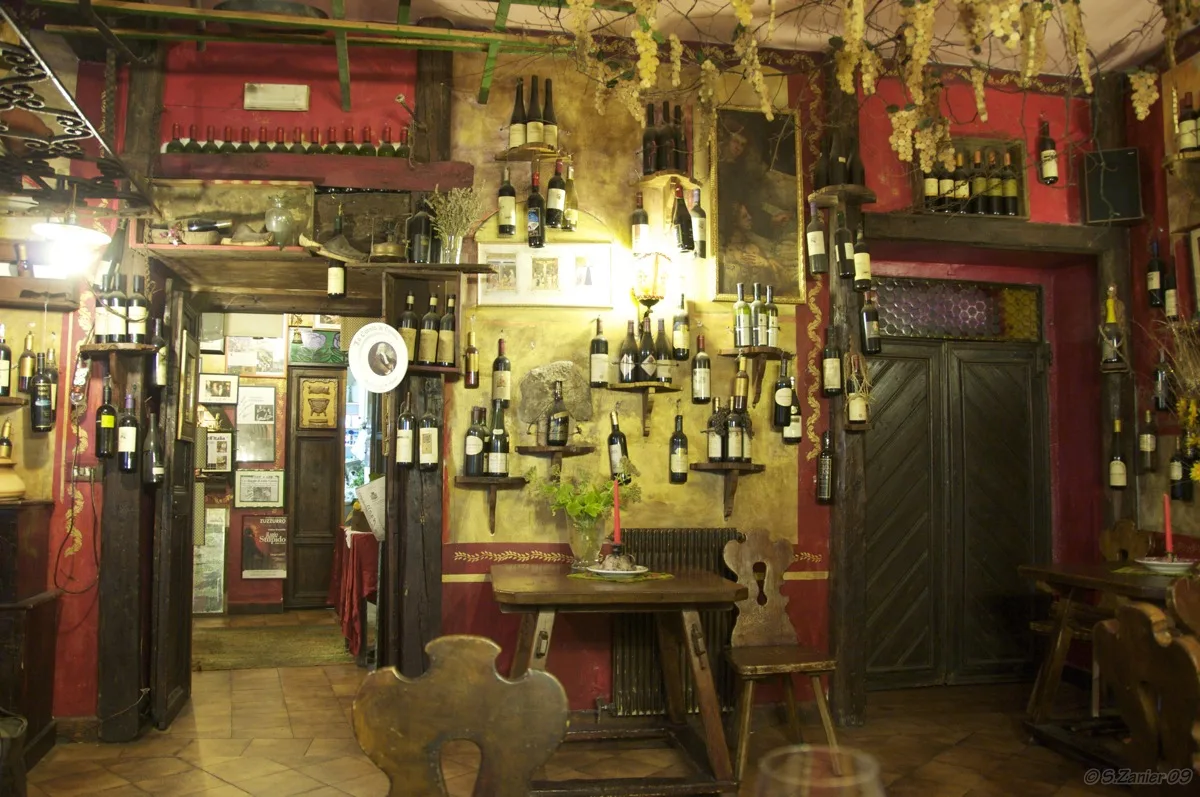
A trattoria is the heart of traditional Italian dining: cosy, usually family-run, with local home-style dishes served in a relaxed setting. Menus tend to be short, seasonal and handwritten, reflecting what is fresh that day rather than a long printed list, so expect regional specialities instead of haute cuisine. In Rome that might mean cacio e pepe or amatriciana, in Tuscany ribollita and bistecca alla fiorentina, and in Emilia-Romagna tagliatelle al ragù, the original dish behind what the world calls Bolognese.
What the main Italian restaurant types are: Italians are specific about the word on the sign, and each one carries its own style and expectations.
Trattoria: home-style cooking in a relaxed room: A trattoria is the heart of traditional Italian dining: cosy, usually family-run, with local home-style dishes served in a relaxed setting.
Ristorante: the most formal and the priciest of the group: A ristorante is more upscale and pricier than a trattoria or pizzeria, with a menu that often goes beyond typical Italian food.
Portions are generous and service is friendly but informal, which makes the trattoria the safest bet when you want real food without fanfare. If you are still working out how a full Italian menu is structured, Italian meal courses are worth reading before you order.
Osteria: simple dishes, a wine list at the centre
The osteria has changed over time. Traditionally it was a rustic tavern with simple food and local wine, often shared tables and a focus on conviviality, where you went to drink first and eat second; many today are stylish yet approachable restaurants that give food equal weight to the wine list.
In practice, an osteria is an unpretentious way to enjoy traditional food in a relaxed room, with appetisers and simple dishes that can be shared. That makes it a good middle ground when one of you wants a proper sit-down meal and the other wants something smaller with a glass of wine.
Ristorante: the most formal and the priciest of the group
A ristorante is more upscale and pricier than a trattoria or pizzeria, with a menu that often goes beyond typical Italian food. That formality shows in the room and the service as much as the cooking, so it suits an occasion meal rather than a quick plate between sights.
Bear in mind that a cover charge often appears on the bill in sit-down places, which is worth understanding before you compare one restaurant with another. It is a normal line item, not a scam, and knowing it is coming keeps the final bill unsurprising.
Pizzeria: pizza, and often primo and secondo too
A pizzeria serves pizza, but many also offer primo and secondo courses, the first pasta or rice dish and the second meat or fish dish. Some do not serve pizza at lunch at all, and those that do say so on the menu with the phrase pizza anche a mezzogiorno, meaning pizza is available at midday too.
If you are ordering a full meal rather than just a pizza, the course names are worth knowing before the waiter arrives. A pizza marinara is also a reliable choice for anyone eating vegetarian or avoiding cheese.
Pizza al taglio: sold by the slice, eaten standing or on the move
Pizza al taglio is pizza by the slice, served hot and ready to eat at small shops that generally have no tables and chairs. You eat it standing or take it away, which makes it the practical choice for a fast lunch between appointments or a bite while walking through town.
Because you pay for what you point at, it is easy to keep the meal small or make it a full lunch depending on appetite, and the shop's no-tables format makes it the obvious stop when you want to eat on the move rather than sit down.
Tavola calda: hot food behind glass, a tray and a quick lunch
A tavola calda, literally a hot table, is a casual eatery offering pre-cooked ready-to-eat meals, somewhere between a cafeteria and a fast casual diner. Dishes such as lasagna, roast chicken, aubergine parmigiana and vegetable sides sit behind a glass counter, and you point at what you want, pay, then sit down with your tray.
These places are popular with office workers and students because they deliver a satisfying meal without the time or cost of a formal restaurant. They also often feature local specialities, usually including roasted meat, salads and pizza al taglio, and they are generally self-serve with cafeteria-style trays.
Rosticceria: rotisserie chicken and ready-to-eat dishes to take away
A rosticceria serves whole rotisserie chickens and a range of ready-to-eat meals. Quality varies widely between one shop and the next, so it pays to look at what is actually turning on the spit and how busy the counter is rather than judging by the frontage.
A good rosticceria is exceptionally good value for a picnic or a hotel-room supper, and the food travels well. Look at what is actually turning on the spit and how busy the counter is rather than judging by the frontage.
Paninoteca: filled sandwiches, built to order
Panini is Italian for sandwiches, but a reputable paninoteca goes well beyond the word sandwich. Fillings are built to order, usually with cured meats and cheeses that carry protected names, so it helps to recognise a few labels when you read the board.
Panini is Italian for sandwiches, but a reputable paninoteca goes well beyond the word sandwich: fillings are built to order, usually from cured meats and cheeses on display. Knowing the difference between familiar labels helps you order quicker and get what you actually wanted. This is also a useful stop for anyone needing gluten-free food, since fillings on their own are easy to specify.
Bar and pasticceria: coffee, pastries and a stand-up breakfast
An Italian bar is not primarily a place for cocktails or nightlife but a cornerstone of the daily routine, where people go for coffee, pastries and conversation, often more than once a day. In the morning locals crowd the counter for an espresso or cappuccino with a cornetto, Italy's answer to the croissant, and standing at the bar is cheaper than sitting at a table.
Later in the day the same bar turns into a spot for a light lunch, a spritz aperitivo or a quick sandwich, which is why it works as an all-day meeting point rather than a single-purpose café. A pasticceria is the pastry shop version, with cakes, tarts and biscuits, and many double as bars serving coffee alongside the sweets; Sicily brings cannoli and cassata, Naples the sfogliatella, and the north delicate cream puffs and fruit tarts.
If you plan an evening meal, it helps to know that when do Italians eat dinner often comes as a surprise to visitors, so an aperitivo at the bar is a filler rather than the main event. Keep the spritz to one and eat properly afterwards.
Enoteca: wine first, food alongside
An enoteca is usually a little more formal than an osteria, with a greater emphasis on local wines, and often connected with local vineyards and wineries. You can taste by the glass and buy a few bottles to take home, which makes it a useful stop when you want to understand what a region drinks.
Food here plays a supporting role, so treat it as a place for a glass and a small plate rather than a full dinner. If you are buying bottles as gifts, think about what will survive the journey home before you commit.
Gelateria: artisanal gelato, eaten year-round
Italian gelato differs from ordinary ice cream in texture, richness and intensity of flavour: it is made with more milk than cream and less air, so it is denser and more flavourful. Look for gelaterie marked artigianale, meaning the gelato is made in-house from fresh ingredients rather than industrial mixes, and for gelato stored in covered metal tins rather than piled in neon-coloured mountains.
Beyond cioccolato, nocciola and pistacchio, you will find seasonal fruit sorbets and combinations such as ricotta e fichi, ricotta with figs. Italians eat gelato year-round, so a good gelateria is not a summer-only stop, and the counter stays busy long after the beach season ends.
How to tell trattoria, osteria and ristorante apart when you are standing outside
Read the menu before you read the room. A short handwritten list of regional dishes points to a trattoria, a page of heritage recipes with a long wine list points to an osteria, and a broader menu that strays beyond Italian cooking points to a ristorante.
Then look at how the place is dressed: paper tablecloths and informal service signal a trattoria, a stylish but approachable room with a serious wine list signals today's osteria, and white cloth and a fuller service team signal the ristorante. Never judge by decor alone, because in Italy some of the best cooking turns up in the humblest surroundings.
It is also worth knowing that a tourist menu by the sights and a local trattoria a few streets back can both call themselves a trattoria. The menu language is the clue: photographs of every dish and translations into four languages suggest a different kind of meal from a handwritten page in Italian.
Which type fits which moment: quick lunch, long dinner, family meal
For a quick lunch, the tray and counter places win: a tavola calda, a rosticceria or a slice of pizza al taglio gets you fed without a long sit-down, and a paninoteca works if you want something to carry. For a long dinner, book a ristorante or settle into an osteria where the wine list is part of the evening.
For a family meal, a trattoria is the easiest room to please everyone, with generous portions and informal service. For breakfast, the bar and pasticceria do the work, and a gelateria fills the gap in the afternoon; if you are heading into the countryside, agriturismo dining is another option worth knowing for a slower meal tied to a farm.
If you like to plan around regional cooking, it also helps to know the local specialities before you choose the room, since a trattoria's short menu follows the season and the region rather than a fixed national list. The same logic runs through how Italian Food Culture treats the day's meals, from a stand-up breakfast to a trattoria dinner.
Which type should you walk into tonight?
Match the room to the appetite rather than the price: counter for a quick lunch, trattoria for a family meal, osteria for a relaxed evening with wine, ristorante for an occasion. If you only learn three words, make them trattoria, osteria and ristorante, because that is the choice most evenings come down to.
Whichever you pick, two habits make the meal smoother: know that a cover charge may appear on the bill, and understand how tipping in Italy usually works. Neither is complicated once you have seen it handled properly.
Explore more Italy food guides
Sources
Notes for your next meal in Italy
Optional updates to our food guides.
You might also like
Continue reading
More guides you'll find useful